Archive | Community RSS feed for this section

Picture This – Keel Drug

5 Apr

West 2010 562

A few years ago, I found my way to Ballinger, Texas, a little town south of San Angelo. It sits a far piece off the interstate, and nothing of great historical importance happened there. It is simply a little town like thousands of little towns across the country. However, it was a place that I needed to go, and the need was to walk into Keel Drug Store.

This is the story of Keel Drug; the family who used to own it; and the reason I needed to walk through its doors.

Gene Keel was raised at the Masonic Home Orphanage in Fort Worth, Texas during the Great Depression. As the name implies, it was filled with kids who had little chance to succeed in the world, and Little Gene Keel was one of them. However, good things happened for him at the school. Although girls and boys were kept apart, he met his future wife at the home. He also found a chance with the football coach, Rusty Russell.

The story of the football team is a fascinating one and has been chronicled by Jim Dent in Twelve Mighty Orphans: The Inspiring True Story of the Mighty Mights Who Ruled Texas Football. A team that could not afford a football to practice with defeated almost everyone that they played, from small schools not much different from them to the big schools in the cities. Little Gene Keel was the quarterback for those teams and parlayed that experience into the store pictured above.

Attending Rice University on a football scholarship, Gene got married; became a pharmacist; and opened a drug store in Ballinger. He became well-known in Ballinger for providing medicine to those who couldn’t afford it and for serving the best treats in town at his soda fountain.

Gene Keel grew up in the Depression and lived in Ballinger, Texas. I grew up in the 1980s and live in the middle of Tennessee. What’s my connection?

Gene’s son, Johnny Keel was raised in the aisles of Keel Drug and on the links of the local country club. He grew up with his dad’s personality and flair but not with his football abilities. Johnny’s talents were with the golf club, and they took him to the golf team at the University of Texas.

Johnny stayed in Austin; opened a chain of health clubs; and became well-known throughout the city. Of course, owning a health club involves more than just running the day-to-day operations. At times, you have to attend conventions to keep up with the latest innovations. It was at one of these conventions that Johnny met my aunt, the owner of a local health club.

Johnny married my aunt, and, after some time living in Austin, they returned to middle Tennessee. Johnny became as well-known here as he was in Texas. He became involved in the community, and almost everyone came to like him for his enthusiastic outlook on life. He was fun-loving and wanted everyone else to have fun along with him.

I can’t remember all of the times that he and I sat at a Blackjack table together. Johnny always sat on first base, and I always sat on third base. He also tried to pass on his love of golf to me. We played many times, but I never grasped the game. Despite my lack of ability, we always had a great time.

Johnny’s outlook on life was brighter than anyone else I have ever known, and that outlook was needed when he was diagnosed with cancer. I will not go through the details, but he and my aunt fought the disease together. They tried everything to beat cancer and convinced everyone that they were going to succeed. They succeeded for ten years until Johnny could fight no more.

That’s why I went to Keel Drug in Ballinger, Texas. Johnny talked about his hometown so much that I wanted to see it for myself. Perhaps, it would help me to understand the strength and positive outlook that came from him everyday. Perhaps, there was something in Ballinger that made him help others who had cancer while he needed help himself. However, none of that was in Ballinger. It was in Johnny, and, he got it from Gene.

Johnny was still alive when I went to Ballinger, and my plan was to call him from the store. However, I couldn’t get a cell signal in the little town and had to call him when I got near a tower.

Johnny is gone, but his memory remains with everyone who knew him. His work to help others also remains with Go Johnny Go, a 5K fundraiser that my aunt started after his death. If you would like to donate or learn more about Johnny, then go to www.gojohnnygorun.com.

The Le-Al-Co Story – Epilogue

15 Mar

Part VII

In 1994, the Bell family sold Le-Al-Co to the Caradon Corporation in London. The facility in Lebanon produced windows and doors for another year with many of the same employees, but the operation eventually closed. Le-Al-Co products are no longer made and can no longer be purchased in cities across the nation. The sounds that filled the building at 301 Hartmann Drive are no longer heard – saws cutting aluminum; people talking in the break room; music blaring from the speakers; forklifts zooming around; telephones ringing in the office.LeAlCo

It would be easy to think that Charles Bell’s dream ended when the last product left the assembly line, but that is underestimating both Bell and his dream. Growing up, he wanted to succeed and possessed the necessary work ethic and dedication. Those, along with opportunity and help from others, allowed him to achieve the dream.

In the business world, success is measured by wealth, and, in life, success is measured in respect. Bell gained both through his work and commitment to the people who he worked alongside. This can be seen through the numerous industry awards that Le-Al-Co received, including the Home Depot Vendor of the Year in 1984; the National Home Center Show Award of Distinction in 1985; the DIY Home Warehouse Special Recognition Award in 1991; the Marvin’s Vendor of the Year in 1991; and, the Scotty’s Partner of the Year in 1992.

Production at Le-Al-Co has stopped, but, through the memories of the people who worked there, it will remain long after the last door and window are replaced.

If You Can’t Beat Them Then Merge With Them

14 Mar

Part VI

Charles Bell actually created two Le-Al-Co’s, and those who knew about one did not always know about the other. The Le-Al-Co that has been described was Bell’s business, but the other Le-Al-Co, a softball team, was his hobby. Bell ran his team with the same drive for success and enthusiasm that he ran his business.

Bell’s involvement in softball began in the 1960s when he sponsored a fast pitch team made up of men from Lebanon and the surrounding area. Most of their games were played locally, but Bell wanted to treat the players to a vacation and an experience they would not forget. He scheduled a double-header with the Clearwater Bombers of Florida, a team that had a two-year winning streak and was considered by most to be the best in the world. Shockingly, Le-Al-Co defeated the Bombers 1-0, in what could be the greatest upset in the Bomber’s history.

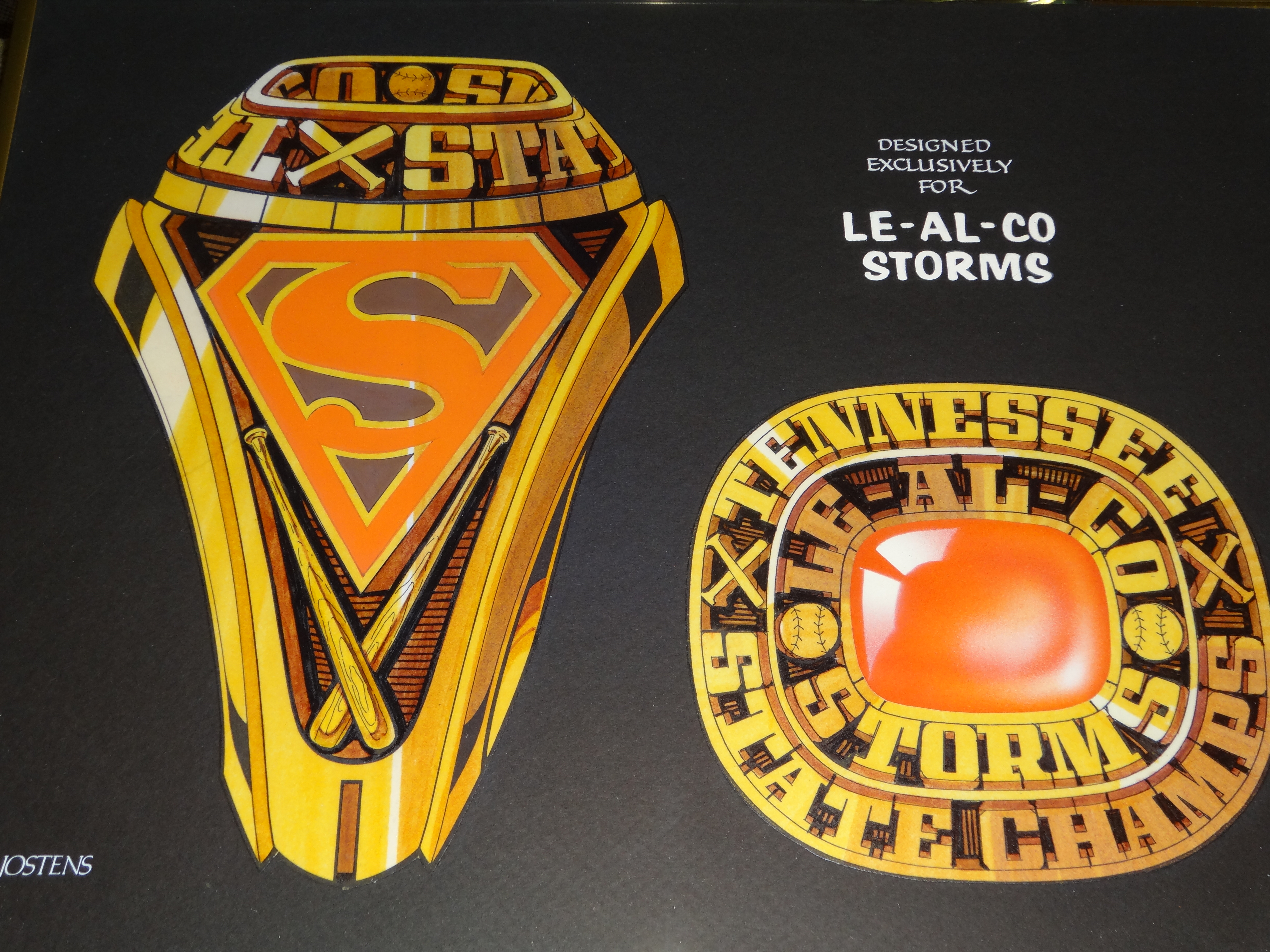
Obviously, Bell had a successful fast pitch team, but the players decided to try slow pitch, a new version of the sport. Le-Al-Co won its first slow pitch tournament and began a new course. Bell partnered with Allen Skeen to build a team designed to compete in the new sport. Soon, the Le-Al-Co Storms, named after storm doors and windows, were dominating the local competition with players such as Ray “Pop” Nixon and Alex Buhler.

In 1974, Bell and Skeen realized that to reach the ultimate goal, a state championship, new players needed to be added to the roster. Skeen recruited Mac Stalcup, a Knoxville player, to move to Lebanon and join the team. With Stalcup inserted into a strong lineup, Le-Al-Co defeated the nation’s top ranked team to win the state championship. This began a string of state championship that would eventually total ten, the most of any sponsor in Tennessee history.

Through the 1970s Bell and Skeen continued to pick up players from around the state to replace the local ones. Simply, when they saw a player that they liked they would ask his team’s sponsor if they wanted to merge. When an agreement was reached, they would cut the sponsor and keep the player they wanted. Bell and Skeen often said, “If you can’t beat them then merge with them.” Through this method Le-Al-Co won more games than any team in Tennessee history.

Le-Al-Co’s renown reached past the borders of Tennessee, as the team was consistently ranked in the nation’s top ten and was one of the original teams to be classified in the Super level. This distinguished Le-Al-Co as one of the top five teams in the nation. With its victories and the SuperStorm emblem on the uniforms, Le-Al-Co became one of the most popular teams in the nation.Ring Pictures 002

Softball was also a family affair as the hobby was shared with Charles and Elaine’s youngest son, Rick Bell. He spent the summer weekends of his childhood traveling to tournaments with his father and looking up to the players. As Rick got older, he took on more responsibility and eventually became the bookkeeper and assistant coach. When his father stopped sponsoring a team, Rick continued to coach nationally ranked teams. Despite these accomplishments, a memorable story took place during Rick’s childhood. As Le-Al-Co played on a Saturday night and into early Sunday morning, Rick, refusing to go to bed, leaned on his knees and fell asleep standing up.

After a brief hiatus, Bell sponsored the Le-Al-Co SuperStorms for the last time in 1991. The team finished second in the nation, and the roster included Bruce Meade, possibly the most famous player in slow pitch history. He joined Stalcup, who had played for all but one Le-Al-Co squad since 1974. Le-Al-Co’s success on the field led to Bell’s induction into the Tennessee ASA Softball Hall of Fame in 2010.

From a Cigar Box to a Multi-Million Dollar Company

13 Mar

Part V

 A lot of the people who worked at Le-Al-Co described it as a family and credited  Charles Bell with creating an atmosphere of caring and closeness. This feeling was enhanced by the events that took place within the confines of the company. Employees got married and divorced; celebrated births and faced death; and experienced triumphs and tragedies. The office and factory employed many people who were related, and this included members of Bell’s family.

Born the year before the creation of Le-Al-Co, Jack Bell, Charles and Elaine’s oldest son, literally grew up with the business. As a child, he treated the factory as his playground and the employees as his playmates. In fact, when the facility burned one of Jack’s most prized possessions, a motorcycle, burned along with it. In time, he became an employee as well and spent his high school summers loading trucks.

Jack impressed everyone with his hard work, and all realized that his destiny lay in following his father’s footsteps. He graduated from college in 1981 and immediately went to work in sales. However, it did not take long to discover that his strengths were in production. Through many years of hard work and arguments with his father, Jack became vice-president of production. In 1991, Charles Bell suffered an illness, and Jack took charge of Le-Al-Co until it was sold.

Bell’s hiring of relatives did not begin with his son. In 1964, Bell realized that someone needed to run the office. He spent a great deal of time on the road selling, and Thompson was focused on manufacturing. Bell needed someone trustworthy to handle the mounting paperwork and hired his cousin, Helen Parton. Soon, she realized that the job included more than filing documents as she oversaw bookkeeping, payroll, accounts receivable, accounts payable, purchasing and customer service. Known as “Granny” to the people who worked by her side, Parton described Le-Al-Co by saying that it went “from a cigar box to a multi-million dollar company.”Le-Al-Co Building 001

When her Le-Al-Co career began, Bell’s goal was to raise sells to $1 million a year. As Parton watched, sales increased to over $2 million a month.

With such growth, Parton’s job became too much for one person to handle, therefore the office staff increased. Through the years, dozens of people worked in the office, and Tim Denny was one of the most important. By 1985, Le-Al-Co’s business had reached a new level with the introduction of computers and the need for more sophisticated financial techniques. Denny brought knowledge in both of these areas as the chief financial officer.

Although Denny came with a degree in accounting, he always looked up to Parton and often said that he could not have done his job effectively without her expertise and help. Her knowledge of Bell and Le-Al-Co’s history provided him with the information to be successful. Under Denny’s watch and Parton’s continued hard work, accounting tabulated a 150% growth rate of the company.

You Are Going to Have to Buy a Better Truck

12 Mar

Part IV

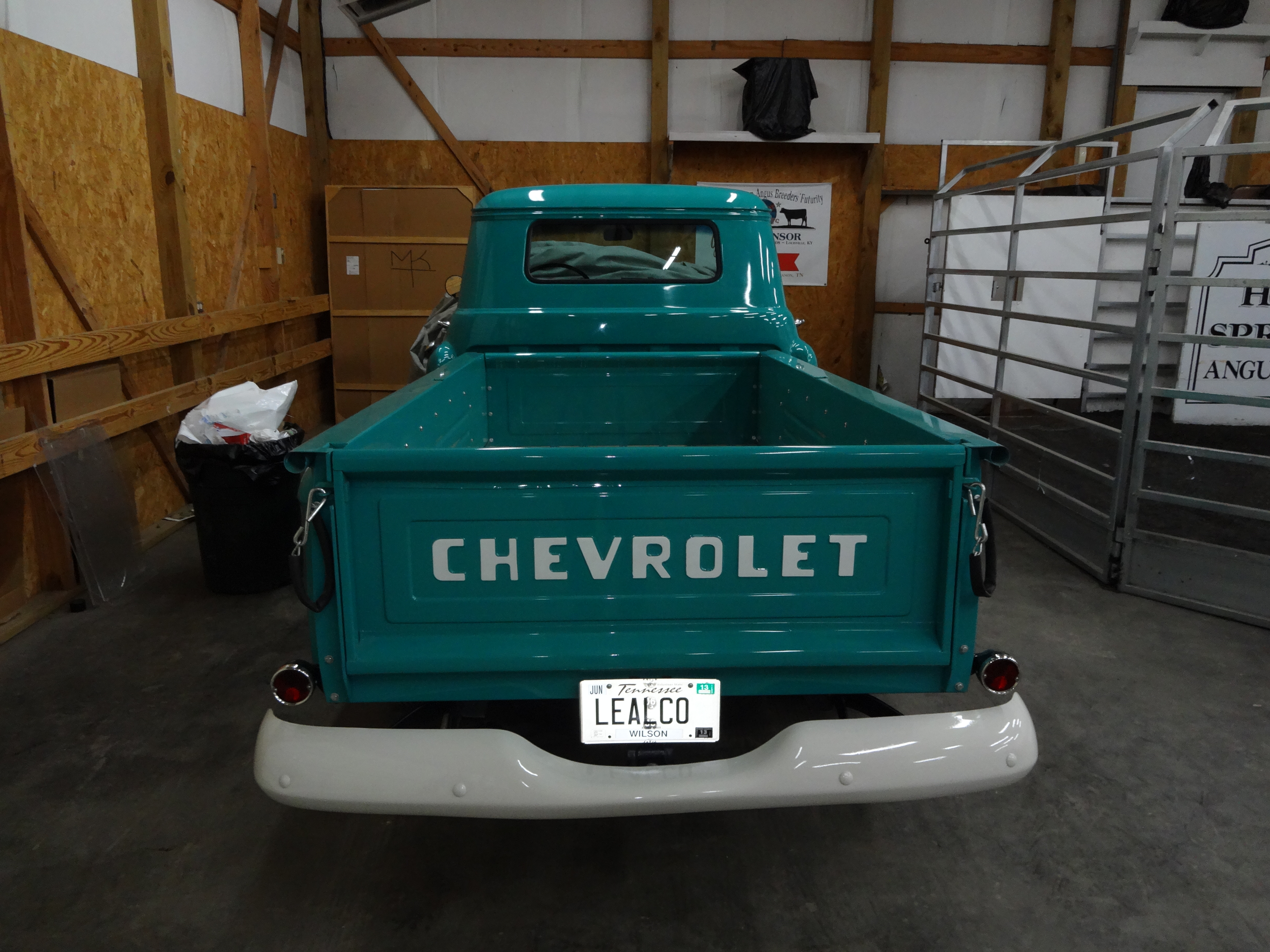
Once Charles Bell sold the products and Shelah Thompson built them, the windows and doors had to be shipped. In the beginning, they used a green 1959 Ford pickup with red lettering on the side.It worked perfectly for local deliveries and other small jobs. However, after a long delivery Bell received some advice.

In 1962, Jesse McMann drove the truck to Rigg’s Supply in Missouri. After unloading the shipment, the buyer from Rigg’s called Bell and said, “You are going to have to buy a better truck.” Bell took their advice and eventually built a fleet of tractors and trailers that made long hauls across the continental United States. Interestingly, that first pickup was not forgotten. Its colors became part of the company’s official logo, and, due to sentimental value, Bell did not sell it. The truck sat behind the factory for many years and was finally restored to mint condition. Le-Al-Co Truck 002

The fleet of tractors needed drivers and many hit the roads for Le-Al-Co through the years. Raymond Jones delivered in the early days and is remembered for getting lost and driving onto the airport runway in Louisville, Kentucky. J.C. Likens made a few deliveries to his customers and, needing assistance, took Bell on a trip to Memphis. The pair hit a major snow storm, and Likens had trouble keeping control. Each time the truck slid Bell hit the dashboard with his fists. It was the last delivery Bell ever made.

In the late 1960s Thompson hired a new driver that became one of the best and most loyal employees in Le-Al-Co’s history. Floyd Farmer originally worked for Bell Door, another company owned by Bell, but transferred to Le-Al-Co when the first tractor and trailer arrived. The first shipment was loaded by Harvey Driver and delivered by Farmer. The trip was the first of many for Farmer as he would deliver a shipment; pick up materials; unload; reload; and head out again.

Almost everyone has stories about Farmer’s abilities, and many of the tales are amazing. Once, he was moving boxes in preparation for a journey when his head hit a bar across the trailer. Farmer knocked out two of his teeth but made the delivery on time. After decades of driving, Farmer left the road and moved to the maintenance department. However, the rigors of the road left a toll on his body, and Farmer passed away before Le-Al-Co closed.

There came a point when Le-Al-Co’s fleet gave way to the more efficient method of leasing, and Dick Lang oversaw the leasing agreements of shipping in these later years. Despite the change, Bell never wavered from his belief that service was the key to success and, shipping was a key component. Products arriving on time and in good condition kept customers satisfied, and, many times, drivers were the only representatives of the company that customers saw in person. For these reasons, Farmer and the other drivers played a major role in the Le-Al-Co universe. In addition to being skilled representatives, the numerous drivers never had a major accident in over thirty years of service.

He Could Have Built a Battleship – Under Cost

8 Mar

Part III

Through hard work and perseverance Charles Bell became a master salesman who performed at the top of his field. The same can be said about Shelah Thompson in the area of manufacturing. Thompson joined the fledgling operation with George Redding and remained when Redding left the business. Through the years he built the manufacturing portion of Le-Al-Co from a one man operation to a factory employing over 400.LeAlCo

The building of windows and doors began in an old bus station east of the Lebanon square as Thompson assembled parts delivered by Winterseal. When the parent company closed, he followed Bell’s expansionist ideas and designed new manufacturing methods. Le-Al-Co moved to a larger building at West End Heights before relocating to a 20,000 square foot facility on Hartmann Drive, and within each structure Thompson created an efficiently operating factory. After hiring 29 laborers, he became the plant manager instead of a hands-on craftsman. In this new role Thompson designed the manufacturing process; hired employees; and purchased materials.

Thompson thrived in each aspect of his job but had a knack for purchasing both equipment and materials. As mentioned earlier, he traveled extensively to buy machinery from people caught in the closing of Winterseal. Never one to pass on a deal, he once bought equipment while driving through Kansas on vacation. However, his ingenuity shone brightly while buying materials. When a stack of metal extrusions got below his knee, Thompson knew more needed to be ordered.

He used another simple method to lay out the factory floor. Wooden blocks formed miniature production lines, and Thompson moved them around until he was satisfied with the arrangement. Then, workers placed machines in the proper places. Everything was moved by hand because Thompson did not want to spend money for a forklift. When materials arrived, production stopped while everyone unloaded it.

Machines and materials are needed for a factory to function, but Thompson knew that his most important job was hiring employees. Thousands of people worked the lines of Le-Al-Co through the years, and he was the first to admit that many of them were not very good. However, he hired many hard-working and loyal people. In 1964, Thompson hired Johnny Miller to work in the door department with three other people. Soon, Miller supervised the department that contained twenty people. Miller made a few sales calls on the side and remained at Le-Al-Co throughout its existence.

In 1968, Thompson hired Harvey Driver, an 18 year-old kid looking for a summer job. Driver began by operating a press before moving to a saw. Eventually, he supervised the loading dock. The summer job turned into a career as Thompson’s assistant and eventual successor. According to Driver, Thompson taught him everything about the business, and, most importantly, became a second father.

Thompson continued working at Le-Al-Co after giving up his responsibilities as plant manager. He became the wise sage who loved to tell stories about the people who had worked there through the years. Eldon Bates was one of Thompson’s favorites and was described as “strong as an ox.” Then there was Willie Rollins, a clean freak, who took a sick day. Thompson decided to play a prank and gave Rollins a call. He informed Rollins that the phone company was blowing out the telephone lines, and he needed to put a sack over the phone to prevent dust from going everywhere. Obviously, Thompson liked to have fun and work hard, a combination that led to success.

Because of his work ethic and abilities, Thompson held the respect of most that knew him. As Mike Dinwiddie stated, “He could have built a battleship – under cost!” However, his best work came from a disaster in 1968. Fire consumed the factory, and, as Bell used temporary offices to ensure customers that it would be business as usual, Thompson worked around the clock to make that happen. Le-Al-Co’s future was in jeopardy, but Thompson had production running in five days.

Bell and Thompson worked well together and stayed out of each other’s way – most of the time. An instance when they did not became legendary. Memorial Day weekend approached, but production was behind. As a result, there would be no day off. Angered, the storm window department marched into Bell’s office and demanded the holiday. Tears filled Bell’s eyes as he became enraged. He fired the entire factory and turned off the lights in the production area. Miller’s storm door department was working when the lights went out. When Miller asked what was happening, Bell told his department to go home and come back the next day. However, the window department never made it back.

Despite such instances, production under Thompson grew tremendously through the years. At the start, the shop built thirty windows and five doors a week. At the end, the factory produced thousands of products in the same period of time. In addition to storm windows and storm doors, Le-Al-Co made patio doors, prime windows and vinyl windows. At the end, production had increased by 15,000%.

It Was Like a Country Boy in the Big City

7 Mar

Part II

Charles Bell considered selling to be the most important aspect of his business. In fact, most people associated with the business considered it his passion. Bell’s love for selling grew as he went door-to-door offering his wares, but, as his skills developed, he came to believe that this mode of operation had its limitations. If Le-Al-Co was going to grow he needed to move away from households and toward stores and suppliers.

Bell’s chance to break into the world of wholesale and retail came from a friend who mentioned Tennessee Storm Window, owned by Lefty and Margaret Hardcastle. After discovering that it was Nashville’s largest supplier of storm products, Bell borrowed Thompson’s car for the drive to the Nolensville Road location. Shelah Thompson’s car was nicer than his own, and he wanted to make a good impression.

The Hardcastle’s did not buy anything on that first visit, but Bell visited them once a week for the next three months. Finally, his persistence paid off when they placed an order for 120 windows. The size of the order almost panicked Thompson, and he said the task was impossible. However, as he would do time and again when faced with such tasks, he completed the order. As a result, the Le-Al-Co and Tennessee Storm Window relationship lasted for many years, and Hardcastle always considered himself Bell’s benefactor. Regrettably, the Hardcastle’s felt resentment instead of pride when Le-Al-Co became too large to sell to them.

The growth of Le-Al-Co in the 1960s resulted from the hard work of Bell and a staff of dedicated salesmen. Sam McReynolds worked for Sears before making the transition to Le-Al-Co. Jack Robertson sold windows and doors for six years and has been credited with making great contributions to the company’s sales philosophy. Henry Harris managed the account of Hendersonville’s Jones Homes, Le-Al-Co’s second largest customer. Tragically, Harris suffered critical injuries in an automobile accident. He recovered and returned to the company years later to oversee the parts department.

Tennessee Storm Window and Jones Homes, the two largest accounts, provided a strong foundation for a growing group of customers that included Missouri-based Riggs Cash and Carry. Indiana was the home of Lensing Wholesale and Lumberman’s Wholesale. The sales territory stretched into Georgia with Atlanta’s Addison Millwork. Tennessee customers included Dealers Warehouse in Knoxville; Cole Manufacturing of Memphis; and Madison Millwork in Jackson. However, Louisville’s Jacob Levy and Sons was the most valued customer of this era.

In 1966, Bell met with their buyer, Harold Skaggs, and began a special relationship. Skaggs respected Bell as a salesman and a person and went to great lengths to help the young entrepreneur. He provided Bell with the quotes of competitors and covered any delivery problems with his superiors. This began a business arrangement that remained throughout the existence of Le-Al-Co.

The 1970s brought changes to the industry and to Le-Al-Co. “Do-It-Yourself” stores began to appear on the scene and looked to be the future of the market. Historically, locally owned stores sold products to builders, but DIY’s were chains that catered to homeowners wanting to improve their residences. With an eye on an altering future, Bell decided to change the ideology of his company.

In 1972, he raided a major supplier, Alumax Extrusions, for a young salesman, Mike Dinwiddie. After a series of negotiations, Dinwiddie became the vice-president of Le-Al-Co and changed its direction immediately. Instead of hiring salespeople directly, Le-Al-Co used sales representation firms throughout the nation. Among these firms was SJS Sales in Brooklyn, New York. Jeff Saul, owner of the business, fascinated Bell and Dinwiddie. He impressed them with limousine tours around Chicago and with stories of his days as a champion swimmer. Unfortunately, Saul’s body was found floating by his boat. Apparently, he had dealings with organized crime that ended badly.

Despite the detailed sales strategy and the interesting characters that it introduced, the sales representative idea never took flight. With representatives throughout the nation, Bell realized that he and Dinwiddie were making all of the sales. Eventually, contracts with all of the firms ended. A sales force that once consisted of over twenty people and grew to a force of representatives around the nation shrank to a total of two.

Soon, Bell discovered that selling to large chain stores did not differ from selling to the “Mom and Pop” stores of the 1960s. Simply, the salesman sold himself, and the products would eventually be bought. Everyone associated with Le-Al-Co agreed that Bell could employ his skill and personality better than anyone, as most in the industry respected and liked him.

A perfect example of his abilities took place while making a sales call to Atlanta-based Williams Lumber in 1978. As Bell waited to meet with their buyer, he began a conversation with another salesman who mentioned a new store in the area. After the meeting, Bell had some spare time before catching his flight.

Sensing an opportunity, he visited the offices of the new business and found a card table and a telephone. No chairs could be found. He soon learned that they wanted to open a store, but no one would sell to them because of bad credit. Bell gambled and sold them an order before leaving. However, the deal had one stipulation. Le-Al-Co would deliver half a shipment and send the rest after payment. With the agreement in place, the first Home Depot opened and, through the years, would purchase over $50 million worth of products.Home Depot

More chain stores followed as Bell sold products to Angels in California; Cashway in Texas; Marvin’s in Alabama; and Scotty’s in Florida. There was also Handy City, Handy Dan, K-Mart and J.C. Penney. Through these stores and others Le-Al-Co products could be found in 49 states and in Great Britain.

In 1984, Dinwiddie left Le-Al-Co and was replaced by Tom Ruban as vice-president of sales. Over the next ten years annual sales increased from $12 million to $25 million. This can be attributed to Bell’s abilities as a salesman and Ruban’s abilities as an organizer.

He hired Tim Burroughs to oversee customer service, the department that took daily orders and worked closely with store employees. Ironically, Burroughs had grown up close to the Bell household as a friend of their oldest son, Jack. He had never experienced the business side of the family but soon realized that it was not too different from the personal side. Burroughs remembered traveling to his first convention with Bell. As he stated, “We rode around Chicago looking at the buildings. It was like a country boy in the big city.” Burroughs had to learn the window and door business quickly and was mostly helped by the women who worked for him. Two of the most helpful were Pam Helm and Shirley Dematteo, Elaine Bell’s aunt.

Bell and Ruban could not be the only salesmen of a rapidly growing business; therefore more people were brought in. Alabamian Nick Compton was considered by many to be the best of these. However, Walt Costello was undoubtedly the most colorful. He received word that some windows had been installed but were not working correctly. As the salesman, he had to visit the site to determine a solution to the problem. Upon arrival, Costello discovered that he was at a nudist colony. Shockingly, it took all day to replace the windows. Later, he learned that his aunt was one of the residents.

Obviously, many changes in the sales department of Le-Al-Co took place over 35 years. Sales philosophies, salesmen and customers came and went. However, Charles Bell was always there. Sales were his passion, and he believed that they were the driving force of success. In the early days, he drove through the night and sold during the day. Eventually, he flew to the customers. However, through the decades and the changes Bell always remembered one thing – it does not matter how many windows and doors can be made if they can not be sold.

Give Me My Money Back, and I Don’t Care What You Do

6 Mar

Part I

The story of America often consists of two lines of narrative – reality and myth. At times the two are clearly defined, and at others they can barely be discerned. The idea of the American Dream fits into the latter. Is it reality or myth? Is America a place where someone can rise through societal and economic barriers through hard work and opportunity? Through the decades many people have believed in the American Dream, and a few have been lucky enough to achieve it. Is the American Dream real? In 1960 it was real and was the genesis of a success story in Lebanon, Tennessee.

The year 1960 was one of transition in the United States as the perceived innocence of the 1950s gave away to the turbulence of a new decade. It was also a year of transition for a young family in Lebanon, Tennessee. Charles Bell and his wife, Elaine, struggled as he held a series of jobs and was finally laid off by Avco, a manufacturer of airplane parts. Bell realized that he needed a new direction, and he found it with the help of his father-in-law, J.W. Vanhook.

As the leading constructor of homes in Lebanon, Vanhook knew most of the building suppliers in the area. This included George Redding, who wanted to invest in a franchise for Winterseal, a company that made parts for storm doors and storm windows. The parts would be shipped to franchisees around the country that assembled the finished products and sold them. Redding, needing investment capital, approached Vanhook about becoming a partner. Vanhook, in turn, saw an opportunity for his young son-in-law.

The enterprise began with Redding operating the business side and Bell, along with Shelah Thompson, handling the manufacturing. Thompson was shown how to assemble a window by a Winterseal representative and eventually became, along with Bell, a driving force in the success of the company. However, Bell began to show his business instincts when he suspected that Redding was keeping certain aspects of the partnership to himself.

Vanhook became upset when he was told and bought Redding’s share. According to family lore, Vanhook told Bell that the business was his to do as he wanted and followed that by saying, “Give me my money back, and I don’t care what you do.” Bell gradually paid Vanhook back by giving him products for his construction business.

Now, it was up to a green kid to sell products while a handyman built them. For a month, Bell hit the streets alone but soon discovered that he needed help. The hiring of Jim Lyles brought the salesmanship and experience that the business required. He sold products but, most importantly, taught Bell how to sell products. Lyles shared all of the tricks of the trade, including how to find customers and organize the workday. He took Bell to the bank to find out who could afford to buy windows and doors and who could not. After all, there was no reason to waste time knocking on the doors of people who had no money.

With Bell and Lyles selling and Thompson building, the business grew to unimaginable heights. The sales force expanded to include twenty people, including Gene Hallums, Richard Holman, J.C. Likens and Fred Vanhook, who worked for incentives such as a free suit for reaching a certain goal. Shortly, windows and doors were being installed from southern Kentucky to northern Alabama. At age 21, Bell attended the Winterseal convention and made a speech about the success of his business.

The future looked bright for Bell and his foundling business, but the situation took a turn for the worst. Lyles, suffering with alcoholism, left the business, and Bell found himself without his sales mentor. Then, Winterseal, the parent company, went out of business in 1964. This would prove disastrous for franchises across the nation; however Bell found opportunity among the carnage.

He had been warned of the impending closure and immediately took action. First, Bell called a Detroit bank to inquire about $100,000 that he owed Winterseal. Luckily, the bank settled for $9,500. Second, he knew that other franchises were going out of business, and Thompson traveled the country to purchase their equipment at basement prices. Third, they found George Levy, who was selling extrusion for 60% of the cost that Winterseal had been charging through the years. As Thompson stated, “Save your nickels and dimes, and the dollars will save themselves.” With that philosophy, Lebanon Aluminum Company, commonly known as Le-Al-Co, emerged.LeAlCo

Beauty Boutique

19 Feb

This past week was pretty big in my world, as my girlfriend bought a new business – Beauty Boutique. After years of working for other people in the makeup and home decorating industries, she decided that it was time to try something for herself. I could not be more proud of her for taking this step. As my dad has always said, “It’s hard to make money working for somebody else.” Unfortunately, I didn’t totally listen to his advice.

Beauty Boutique has been in existence for a couple of years and has proven to be successful. I know that my girlfriend can use its prior success as a foundation on which to grow. The boutique offers lines of women’s fashion, accessories, and beauty products. It also offers services such as hair styling, waxing, massages, facials and most anything you can think of that makes people feel and look good. In fact, I am hoping it does some miraculous things for me.Beauty Boutique

For those of you who live nearby, please top by Beauty Boutique and see what it has to offer. For those who don’t live nearby, I hope you visit the Nashville area one day. When you do, please make Beauty Boutique one of your destinations. After all, one can only spend so much time in the Honky Tonks.

Be sure to tell the staff that you heard about Beauty Boutique while strolling through the SBI World. Who knows? You might get a discount.

Time for a Little Bragging

11 Nov

The latest edition of Travel and Leisure contains an article about America’s favorite cities in 2012. Apparently, over 40,000 people voted for cities in different categories. You guys know that I am addicted to lists, but I am writing about this list for an important reason – Nashville, my city, made the list. I know it’s a great place; other people in this area know it’s a great place; and, it’s good to know that other people are discovering the great aspects of Nashville.

So, where did Nashville gain points?

It ranked first in the Friendly category.

Nashville came in second in Safety and Affordability.

The city’s collection of Antique Stores pulled it up to fifth in that category.

People who like Happy Hour ranked Nashville fourth.

Music lovers said that Nashville’s Music Scene comes in second to New Orleans. They must have miscalculated on that one.

It also finished highly ranked in the following categories.

People

Attractive #6 (I don’t know why they didn’t include a picture of me.)

Driving Ability #3 (Again, where is the picture of me in my car?)

Intelligent #9 (Uh, they should have just called me for some pictures.)

Charming Local Accent #4 (Charming? That’s one way to describe it.)

Proud of Their City #3 (This is definitely true.)

Sports-Crazed #8 (This would be higher if the Titans didn’t suck.)

Stylish #8 (Yeah. Lots of style here once you look past the rhinestones.)

Type of Trip

Base for Day Trips #6 (There’s a lot to see around here.)

Family Vacation #7 (Just keep the kids out of the honky tonks.)

Girlfriend Getaways #3 (Hmmm.)

Wild Weekend #5 (I wonder if this can be combined with the one above.)

Nightlife

We have a lot of this one. Cocktail Lounges? Check. Singles Scene? Check. Sports Bars? Check

Culture

Yes, we have culture, and I don’t mean agriculture.

Historical Sites/Monuments #9 (This is good for the history professors among us.)

Street Performers #2 (Hit a corner on a Saturday night, and you will hear someone who should have a recording contract.)

Theater/Performance Art #7 (There’s more than just Country stuff around here. I promise.)

Food/Drinks/Restaurants

Nashville ranks highly in Barbecue, Hamburgers, Ice Cream and Pizza. (Let me say something about hamburgers. You haven’t had a hamburger if you haven’t been to Rotier’s. It’s the place that inspired Jimmy Buffett to write “Cheeseburger in Paradise”.

Quality of Life and Visitor Experience

Apparently, Nashville is clean because it ranks #3 in Cleanliness. You can hang around out clean city and take part in People-Watching, where Nashville ranks #6. It will be a nice day because it ranks #7 in Weather. Oh, you can do all this while playing on your iPad because Nashville is #1 in Wireless Coverage.

So, when are the Best Times to Visit? the survey says 4th of July, Christmas, Fall, New Year’s Eve, Spring Break and Valentine’s Day. But, I think you should drop by anytime.