Archive | History RSS feed for this section

Nashville Nights (And Days)

12 Jan

As my last post indicated, I have been lucky enough to travel throughout the United States and struck up conversations with people from all regions and all walks of life. When I speak, they never fail to ask where I am from. I suppose it is due to my southern accent. Although I live in a suburb, I always say Nashville because most everyone knows where that is. Most everyone has a preconceived notion of it as well. Either, everyone here wears cowboy hats and sings, or everyone here wears cowboy hats and watches Hee Haw. Well, there are plenty of people here who have jobs outside of the music industry. Hee Haw hasn’t been on television in decades. And, the only people I see wearing cowboy hats are the tourists.

Obviously, Nashville, nicknamed Music City, is known far and wide for country music and it has been the driving force behind the city for decades. However, there is more to our fair city than that. It is a cosmopolitan city with a thriving scene built around art, dining, and various forms of entertainment that includes all kinds of music. I have written a couple of posts about places to which I have traveled. Now, I want to tell would be travelers what they may find around here.

What Every Tourist Must Do

People come to Nashville to discover the roots of country music and maybe see somebody famous along the way. The quest needs to begin at the Ryman Auditorium, the mother church of country music, where the Grand Ole Opry was broadcast for decades. The radio show made Nashville the country capital of the world, and a backstage tour of the music hall is essential. Behind the Ryman sits a row of Honky Tonks that have become favorite tourist hangouts. This is where you will see the cowboy hats. Each bar is essentially the same with live music and plenty of alcohol. However, Tootsie’s Orchid Lounge is the destination for most. It gained fame as the place where Opry performers spent time between sets. Legend has it that Willie Nelson was so despondent about his singing career that he walked out of Tootsie’s and laid in the middle of the street. There are no famous people there now, but it is a fun place to go.

The performers of the past no longer haunt Tootsie’s, but they can be learned about at the Country Music Hall of Fame, a great museum with priceless artifacts. To find singers in their natural habitat, a trip to Music Row is required. If you are lucky, then you may be able to see someone going in or out of a recording session. More than likely, your sightings will only include some giant statues of nudes. However, I have seen more celebrities at Green Hills Mall, an upscale shopping destination, than anywhere else.

Being a historian, I must mention some locations that do not involve history. Nashville was prominent city long before the music industry existed, and several historic sites reflect this. The first would be the Hermitage, home to President Andrew Jackson. It is a good place to learn about one of our most powerful presidents and of life in the south before the Civil War. A second would be the Belle Meade plantation. Like the Hermitage, it is a pre-Civil War home with a distinction. Every Triple Crown winning horse is descended from a horse on the plantation. Our legislature, in its infinite wisdom, outlawed gambling and drove the thriving thoroughbred industry to Kentucky.

What the Locals Do

Nashville residents like live music as much as tourists do, but it may not be country or at Tootsie’s. There are several options that locals enjoy.

The Bluebird is pseudo-touristy and fun. Songwriters sit in the round; talk about their songs; and play them. Plenty of alcohol is served, but it is more of a classroom atmosphere as talking is not allowed. It is an intimate setting of the true music industry.

Sambuca, in the Gulch, is one of my favorites. A restaurant but more bar, it has a live bands of different genres throughout the week.

Bourbon Street Blues Club sits in Printer’s Alley, an area with a history of underworld mystique. For good blues and fabulous guitar playing, this is a great place to go.

However, the Schermerhorn Symphony Center is my favorite place to listen to music. A state of the art music hall, it is home to the Nashville Symphony and hosts performers, both classical and otherwise, from all over the world.

Of course, Nashville has a lot of watering holes where live music is not played, but they are cool hangouts nonetheless. Many of these are located in Midtown. Losers. Winners. Broadway Brewhouse. South Street. The list goes on and one. Taylor Swift also lives in the area, so a sighting could take place.

Up the street, there are other great hangouts such as Tin Roof and Whiskey Kitchen.

What Locals Do for Non-Music Entertainment

Obviously, man cannot live on music and liquor alone, and Nashville provides other forms of diversion as well. Small art galleries dot the city map, but the Frist Center remains the center of Nashville’s art community. Housed in the old post office, it hosts collections from the best museums in the world. Cheekwood Mansion also hosts artistic and historical collections and currently houses an exhibition of western artifacts from the Buffalo Bill Cody Museum.

Nashville is also home to many parks, the most famous of which is Centennial Park. Created during the city’s centennial celebration, it is home to an exact replica of the Parthenon in Greece. Why is the Parthenon in Nashville? Because the city has another nickname, Athens of the South, due to the number of universities in the area.

However, for a really good time, go to the Belcourt Theater, an old movie house that has been refurbished. It now serves as a viewing room for independent films, documentaries and movie classics. Also, there is a stage for intimate musical performances by some very famous people.

Where the Locals Eat

Visitors to Nashville can always eat at the Hard Rock Cafe, Margaritaville, or Cracker Barrel, which was founded in my hometown. However, to get a true taste of the city people should branch out. The following are a few of my favorites.

Bricktop’s – Americana food with a little flair. It is a great local hangout with a cool bar.

Virago – The best sushi in the city and a porch/bar with a great view of downtown.

Tayst – Serves organic food produced by local farmers. The best dish is the bread pudding made from a Krispy Kreme doughnut.

Rotier’s – Legend says that Jimmy Buffett wrote “Cheeseburger in Paradise” about this place. Enough said.

Pancake Pantry – Nashville’s favorite breakfast spot. Be ready to stand in line.

Eastland Cafe – Americana food with a lot of flair.

I Dream of Weenie – Any kind of hot dog you want served out of a 1960s mini-van.

There you have it – a guide to the Nashville experience from a person who has been around Nashville all of his life. Nashville has changed a lot in my lifetime, and it keeps changing for the better. Everyone is always welcome, and they can even bring their cowboy hats if they want.
Touching Them All (50 States That Is)

10 Jan

I have been lucky enough to do quite a bit of traveling. As I was growing up, my parents took road trips for family vacations and took me to various places on the map. Because of them I was able to visit each of the states in the U.S. by the age of 24. Several posts on this blog have chronicled the places they took me and the places I have visited in adulthood. This post does the same but with a different tack. I will list the states in alphabetical order and match them with my favorite location in each. Many states will be difficult to limit while some will be difficult to list at all. Obviously, the list will have a historical leaning, but there will also be other types of places. I will not write any descriptions. However, if anyone wants to know more about something then give me a comment. I will be happy to post about it later. Here goes:

Alabama = The All Steak House in Cullman

Alaska = Glacier Bay

Arizona = Jeep Tour in Canyon de Chelly

Arkansas = The Farmer’s Market in Little Rock

California = The Green Door Room in the Mitchell Brothers O’Farrell Theatre in San Francisco

Colorado = The Strater Hotel in Durango

Connecticut = Yale University Campus in New Haven

Delaware = The Coastal Drive Up Highway 1

Florida = The Thomas Edison and Henry Ford Winter Estates in Fort Myers

Georgia = The Varsity in Atlanta

Hawaii = The Arizona Memorial at Pearl Harbor

Idaho = The Oasis Rooms Museum in Wallace

Illinois = Abraham Lincoln’s Home in Springfield

Indiana = The Indianapolis Motor Speedway in Indianapolis

Iowa = John Wayne’s Birthplace in Winterset

Kansas = The Kirby House Restaurant in Abilene

Kentucky = The Louisville Slugger Museum and Factory in Louisville

Louisiana = The Town Square of Carencro

Maine = The L.L. Bean Store in Freeport

Maryland = The United States Naval Academy in Annapolis

Massachusetts = The House of Seven Gables in Salem

Michigan = The Palace of Auburn Hills

Minnesota = The Softball Fields in Brooklyn Park

Mississippi = Square Books in Oxford

Missouri = Harry S Truman Home in Independence

Montana = Last Stand Hill at the Battle of Little Big Horn

Nebraska = A Gas Station in North Platte

Nevada = The Blackjack Tables at the Mirage

New Hampshire = Where the Old Man of the Mountain Once Stood

New Jersey = The Meadowlands in East Rutherford

New Mexico = The High Mesa Trail in Chaco Canyon

New York = Niagara Falls on the Niagara River

North Carolina = The Lobby at the Grove Park Inn

North Dakota = Fort Abraham Lincoln in Mandan

Ohio = The Professional Football Hall of Fame in Canton

Oklahoma = The Oklahoma City National Memorial in Oklahoma City

Oregon = Crater Lake National Park

Pennsylvania = The Hotel Hershey in Hershey

Rhode Island = The Breakers in Newport

South Carolina = The Five Points District in Columbia

South Dakota = Mount Moriah Cemetery in Deadwood

Tennessee = My Mom’s Kitchen

Texas = Keel Drug Store in Ballinger

Utah = Monument Valley in the Navajo Nation

Vermont = Interstate 91 from Massachusetts to Maine

Virginia = Mount Vernon near Old Town Alexandria

Washington = The Space Needle in Seattle

West Virginia = West Virginia University Campus in Morgantown

Wisconsin = The Softball Fields in Stevens Point

Wyoming = The Old Faithful Inn in Yellowstone National Park

If I could choose one place in each state to go, then this is the list. Obviously, other people will have a different list. Let me know what a few of those locations might be.

A Historian’s Office

6 Jan

Two days of constant meetings have melted my mind, and the only sounds I can hear over the drone of voices are my brain cells screaming as they leap to their deaths. As I sit in my office in an attempt to recover, I  can’t think of anything clever or interesting to write about. Therefore, I am going to take the easy way out and describe what I see – my office.

My office has turned into a popular hangout on campus, and I sometimes describe it as the El Paso train station. People are always coming and going. Students and teachers drop by to visit on a regular basis, and they often comment on the things I have scattered about. Of course, that is once they get past the darkness of it all. I keep all lights off except for one desk lamp. I have been accused of being a vampire; of trying to be mysterious; and of being a cave-dweller. I usually reply that I do my best work in the dark, but the truth is that the bigger lights hurt my eyes. Whatever the complaints and smart comments, people must like my office because someone is always in it.

With that in mind, I am going to attempt this blog experiment to test my descriptive skills. I am going to sit at my desk and describe the things I can see. We will do this in categories.

Category 1 – Wall Hangings

As I look to my left, there are four things hanging on the wall.

1. An old print of a cattle drive that I stole out of one of the classrooms. The teacher in that room is a Native American, so I figured he didn’t want cowboys in there anyway. Two cowboys are riding hard to stop a stampede that began with a lightning storm.

2. A photograph of Ulysses S. Grant. It is an iconic photo of the general as he leans against a tree. The best part is his original signature that is matted underneath.

3. A collection of Confederate money. There are six Confederate bills – One, Two, Five, Ten, Twenty, Fifty – matted and framed. There are a lot of Sons of Confederate Veterans members around here who wish the money was still good.

4. A photograph of Adolph Hitler and a Nazi arm band. It is a typical picture of the tyrant in civilian clothes. Like the photo of Grant, the most interesting part of this item is the document included with his original signature. I explain to everyone that I am not a Nazi. I simply think it is a remarkable piece of history.

Now, I move to the wall in front of me.

1. Above the door, there hangs a panoramic of the Tennessee Maneuvers. When the U.S. entered World War II, the military believed that troops needed to be seasoned with war games before going to Europe. Tennessee is geographically similar to where they were going, and the area was selected for that purpose. My university was chosen as the headquarters, as troops fought battles; liberated cities; and built bridges across rivers.

2. A plaque given to me after serving as honorary coach for our men’s basketball team. It was a resounding victory.

3. A plaque given to me in recognition for serving on the community council of a local bank.

4. A plaque given to me as the “Most Outstanding Faculty Member” for last year. I was proud of this because I beat my mentor before he retired. He had won the award a million years in a row.

5. A certificate honoring me as a Colonel Aide de Camp for the governor of Tennessee. They pass these things out like candy. It is the same certificate given to Harlan Sanders in Kentucky. He wasn’t a real colonel. He was  a fake one like me.

6. A drawing of the old county courthouse. It was consistently voted the ugliest courthouse in Tennessee and was demolished before I was born.

I hope this is not getting monotonous. On to the wall on my right.

1. My favorite plaque. It reads, “On This Site In 1897 Nothing Happened”. I got it at the Longwood Plantation in Natchez, Mississippi. Some of you may know it better as the home of the king of Mississippi in “True Blood”.

2. A license of prostitution given to Rosita del Oro in 1876. This probably attracts the males to my office because it is included with a photograph of a nude woman playing a harp.

3. The next item covers a lot of the wall. I took a lot of pictures of the Dumas Brothel when I researched it in Butte, Montana. Upon my return, I had a local artist paint a few of the photographs. This one depicts the interior of a crib, a one room shack that prostitutes would work out of. A woman is sitting by the window in an attempt to draw customers. I will blog more later about the women of the cribs.

Finally, the wall behind me.

1. Another painting of the Dumas depicts the outside of the building. It is a two-story brick building that the artist placed in a Victorian setting. I am not real happy about the woman in the window. She looks a lot like Morticia Addams.

Category 2 – Filing Cabinet Decor

1. A magnetic fish with legs and Darwin written inside of it. I picked it up in Santa Fe and have to hide it when my parents come around.

2. A sticker of George Washington with a dialogue bubble that says, “I grew hemp.” I believe he was the largest producer in the colonies.

3. A magnetic voodoo doll that I bought in New Orleans. I haven’t tried it out yet, but people better watch out.

4. A bumper sticker with an alien on it that says, “You Don’t Scare Me. I’m A Teacher!” It came from the UFO Museum in Roswell, New Mexico, one of the greatest museums ever.

5. On top of the cabinet sits an original World War I German helmet – the kind with the spike on top. They would jab it into the ground and use it as a cooking pot. They used it as another got of pot as well. You can use your imagination.

Category 3 – Bookshelf Without Books

Top shelf first.

1. A miniature of the Roman Coliseum. I got it in Rome.

2. A candle from the San Xavier del Bac in Tucson, Arizona. An ex-girlfriend got it for me, and I finally visited the site last year.

3. A model of the Mayflower, the boat filled with pilgrims searching for religious freedom. Ugh. The real story of the Mayflower is a lot more interesting.

4. Two bobbleheads. One is a sheik wearing sunglasses. The other is a Muslim woman wearing an abaya. This is not an attempt at a political or religious statement. They were given to me by an ex-girlfriend who moved to the UAE. They sold them. She bought them. I displayed them.

Next shelf.

1. A textbook on Western Civilization. This is very outdated.

2. A book called, “Pauline’s: Memories of the Madam on Clay Street”. It was given to me by the university president and chronicles the life of a madam in Bowling Green, Kentucky.

3. Another book titled, “Life of Tom Horn”. He was a prominent figure in the cattle wars of Wyoming. Bad ending, they hung him.

4. And another book called, “Intimate Papers of Colonel House”. I have not read this. It is an old book gifted to me by a professor who passed away.

5. A little set of nuns and priests playing poker. This is from the same ex-girlfriend who gave the candle to me. These little guys came from Italy. I wouldn’t want to sit across the table from any one of them.

5. Along side those things is my Masters thesis about prostitution in mining camps of the American West. I don’t have much to say about this, except that I finished it.

The bottom shelf (I know. Thank God!)

1. A replica of a statue on campus. It was built to honor the laborers who built my building during the Great Depression. It is meant to symbolize the New Deal and other aspects of the era. Unfortunately, it is out of proportion and looks like a midget.

2. A brick from this building that was dislodged during renovation. It was originally laid in 1936 and looks like it.

3. A beer stein decorated with John Wayne pictures. I can’t help it. John Wayne is my all time favorite actor. Inside the stein, I placed glass sunflowers that a weird female student once gave me. Don’t ask.

I suppose this should end, but I can’t describe a historian’s office without listing a few books. We all have to have books. So, I will name the first book I see on each shelf.

Category 4 – Books

1. “Soiled Doves: Prostitution in the Early West” by Anne Seagraves

2. “The Pueblo Revolt of 1680: Conquest and Resistance in Seventeenth-Century New Mexico” by Andrew L. Knaut

3. “Parlor Politics: In Which the Ladies of Washington Help Build a City and a Government” by Catherine Allgor

4. “Authenticated History of the Bell Witch, and Other Stories of the World’s Greatest Unexplained Phenomenon” by M.V. Ingram

5. “Awash in a Sea of Faith: Christianizing the American People” by Jon Butler

6. “Mining Town: The Photographic Record of T.N. Barnard and Nellie Stockbridge from the Couer d’Alenes” by Patricia Hart and Ivar Nelson

Thankfully, that’s it. Oh, you may be wondering about my desk. Classes haven’t started yet, so there is nothing on it except sunglasses and a lamp.

Victorian Brothelese

23 Dec

That’s a strange title isn’t it? I heard that term while taking a tour of a brothel museum and, through my travels and research, have not seen or heard that term since. The owner of the museum threw it out there and, I assume, made it up. However, it is a good way to describe the experience of many in the Red Light Districts of the American West. When people hear the word Victorian, they think of a historical era of proper manners, speech, fashion and writing; a time of economic prosperity and technological advancement. Of course, brothelese brings to mind houses of prostitution. Put those two words together, and you have a good start at understanding the brothels that I have studied.

Prostitutes of the West worked in a hierarchical class structure, or a “whorearchy” (my term), in which the brothel was the highest rung. Also called parlor houses, they provided elaborate surroundings, luxuries, amenities, and the protection of a male bouncer if the clients became too rough. At the dawn of the twentieth century, one house in Colorado used electric lights, running water and a telephone. A staff of seven, including a bartender, a maid, and a musician, provided services other than sex. Of course, there were always five or six prostitutes. The Dumas Brothel in Butte, Montana was a three-story brick building that contained forty-three rooms and used pocket doors to create large rooms for parties.

Brothels differed in size and location, but the business structure for each remained basically the same. Respected businessmen owned most of the parlor houses but did not want their financial involvement to become commonly known. To accomplish this, they placed deeds under false names or in the names of their wives.

Madams were hired to oversee the day-to-day operations. These women usually emerged from the ranks of older prostitutes with experience in the profession and the knowledge and skills to recruit employees and customers. In fact, a few madams owned their own businesses.

Madams oversaw the business aspect of the brothels while the prostitutes did the work. A work shift began with the woman put on display. Therefore, when a man entered an establishment he found the women lounging in a parlor room. Here, he could choose someone in which to spend some time. When a customer chose a prostitute, he gave the money to the madam or someone else charged with the task. The amount paid depended on several factors, including house rate, the amount of time, and the beauty and skill of the woman.

Brothels built their business on pampering and catering to men who could afford the services. On average, a quick “date” cost five dollars, and an entire night cost between fifteen and thirty dollars. Owners depended on volume for profit by running twenty-four hours a day. With a shift of twenty-four hours, a women could conceivably have sex with twenty-five men and produce a tremendous amount of money. The house collected most of the fee, while the girls kept tips, sold photos and drinks, and stole from their customers. From this amount, the prostitutes paid their expenses, including clothes from local merchants at inflated prices, taxes to the local government, and bribes to the police.

Of Red Lights and Research

19 Dec

When I began my career as a graduate student in History, I knew that I wanted to focus on the American West. While popular culture has developed the myth of the lone rider traveling the region with absolute freedom, I realized that the truth was more complicated than that. People who went into the West were not looking for freedom. They were looking for economic opportunity. Therefore, I became interested in the economic aspects of the West rather than the typical subjects, such as gunfighters and outlaws. Of course, economics encompasses a great deal, and I was informed by my guiding professor that some limitation were in order. Then, the following transpired.

I would like to study the cattle industry.

There’s already a lot of research on that. What else are you interested in?

The mining industry was huge. How about that?

That’s been done to death, too.

Ok, what about the lumber industry?

That won’t work either.

(This is when I realized that I should go ahead and ask him what I should do.)

Ok, what should I do?

Did you ever think about researching prostitution? People are just not starting to look into it.

Sounds great to me. Thanks.

With that short conversation, I began life as an expert on prostitution in the American West. Through the years, I have read, researched, written and spoken about the economics of prostitution in the West and the everyday lives of the people involved in the industry. When people (especially men) find out about what I know about, they immediately start in. What are the brothels in Nevada like? Leave it to you to study whores. Ever study the whores on Dickerson Road (a notorious spot in Nashville)? I am left to explain that I have conducted scholarly research about dead prostitutes – not ones that are currently working. And, I did not choose the topic because I am a pervert. With this in mind, here is a synopsis of my life as a historian of prostitution in the West.

I went to graduate school in Tennessee, and my fellow students said only I would choose a topic halfway across the continent to research. People usually research something more conveniently located. However, I was not going to pick the Civil War or Andrew Jackson over the American West. I read all I could locally but knew that I would eventually have to travel. Luckily, I found two brothel museums fairly close together. The first was the Dumas Brothel in Butte, Montana. I spent several weeks in Butte and came to know the city quite well. Actually, there’s not much to know. I spent a lot of time at the Dumas, the archives and the Denny’s. I met some great people who helped me considerably and learned a great deal about the history of the city and of the Red Light District.

Wallace, Idaho sits just over the Idaho/Montana border and was home to the second museum, the Oasis Rooms. I only spent a few days in Wallace, but the people there were more than helpful. I took some great pictures and got some greater information.

With the information gathered from these locations and documents about the industry throughout the West, I was able to write a concise history about prostitution. In the midst of getting my graduate degree, I was hired at my current teaching position. As a new faculty member, students had no idea what to expect. Honestly, I had no idea what to expect either. But, I was determined not to let the research go to waste. I was going to talk about whoredom every chance I got. The first class was stunned when I gave the lecture on the 19th Century sex industry, and it was not long before word got around. I was the cool teacher that studied prostitutes instead of something uncool like regular History. From then until now, my classes constantly fill, and my office is always busy. They come by to see the photographs of prostitutes and the paintings of brothels on my walls.

As a small university, we are also expected to speak to community groups and perform other types of community service. This has created some interesting speeches for me. I am a member of the local Rotary Club and was asked to speak when I first joined. They insisted that I talk about my research. I tried to warn them that it wasn’t all fuzzy stories about Miss Kitty and the “whore with the heart of gold”, and they said it was fine. So, I gave them all the gory details. I think half of the audience was gone by the time I was finished, as several women walked out in disgust. Interestingly, no men left. I learned something that day. While people say they want to know history, they would rather not know the darker sides of the subject. I toned down the presentation after that experience.

Many people think that if I know about prostitution in the 19th Century American West, then I also know about prostitution at all other times as places. A retired colleague thought that and told the Daughters of the American Revolution that I would speak to them. When I said that they probably know more about the revolution than I do, he replied that I should talk about prostitution. I knew nothing about prostitution in the American Revolution, so I did some research. But, with the Rotary experience behind me, I was nervous about talking to a room full of elderly women. To make it go smoother, I used a historical code word – camp-followers – instead of a more descriptive term. As I spoke, I heard the following conversation between told ladies in the back.

What’s he talking about?

Camp-followers.

What?

Camp-followers.

What?

HE’S TALKING ABOUT WHORES!!!

Oh, now I understand.

So, now I am famous in my little town as the expert on whores. An older man in town, who has since passed away, came to me with a book that he had read about a madam in New Mexico. He had found a name in it that he recognized – mine. I was used as a footnote in the introduction, which was written by the professor who sent me on the journey through the Red Light Districts. I was proud to see my name in print and, for the first time, felt like a real historian. I bought a copy for my parents. They looked at it, and my mom said, “All those years of study, and you are in a book with a picture of a naked women on the front of it.”

Yep, I had made it.

Maybe I Should Give You Some History

16 Dec

As a historian, I feel that I have neglected my calling by not writing about some interesting aspect of the past. I haven’t written about it for several reasons.

1. I like to think that I am a well-rounded person with many interests and many things to write about. I hope those who have stumbled across the blog find those things entertaining and insightful.

2. History is my job, and I need this blog to be an escape from my job and other aspects of my everyday life. It is hard to escape my job because a lot of people have an interest in some aspect of the past. Often, they will ask me questions about a person or an event that they have already established an opinion about. The Civil War is really bad in these parts. They are Civil War buffs and think that I should be as well. You can’t realize how many times someone has started a conversation by asking, “You are a history buff aren’t you?” Actually, I’m not. I am a professional historian.

3. A lot of people find history boring. These are the ones who were probably forced to memorize dates by some football coach/teacher in high school. I figured that if I was going to get a lot of hits, then I should not focus on historical subjects.

With those in mind, I feel the need to give a little history lesson. As I thought about what to write, I realized that I did not want to throw out a big lecture. Then, I remember that several years ago my university came up with an advertising idea. We would buy radio time and provide 30 seconds of historical tidbits. The history faculty came up with some short stories to be read in these spots. It took quite a bit of time, but the ads were never recorded. I am thinking that there is no reason to let them go to waste. So. periodically I will put one of them on the blog. Not surprisingly, each one has a connection to my home state. Here is the first one.

Did you know that one of America’s most highly regarded sports writers was from Tennessee? Born in Murfreesboro in 1890, Grantland Rice began his journalistic career at the Nashville News before finally becoming a writer for the New York Tribune. When his column became nationally syndicated, Rice’s writing style – a combination of sports news, gossip and commentary – lead to popularity throughout the United States. Through Rice’s vivid descriptions and artistic use of the English language, fans could visualize teams that they had never seen. Famous for naming the “Four Horsemen” of Notre Dame, perhaps Grantland Rice’s most remembered line is derived from a poem. “For when the One Great Scorer comes to mark against your name, He writes – not that you won or lost – but how you played the game.”

Childhood Memories – Road Trips

14 Dec

I am amazed at what my friends call a vacation. They talk about going to the beach; staying in a condo; eating seafood; and, generally, lying around for several days. They talk about how great it is to relax in the sun and read books. I know that many people think this is the perfect idea of fun and frivolity. I think it is hell on earth. It’s hot. It’s sweaty. Sand gets everywhere. Seafood is not meant to be eaten for a solid week. But most of all, sitting around all of that time is mind-destroying. I need to see something besides the same waves coming in from the same horizon before eating the same crab legs while wearing the same lobster bib. And I know whose fault it is that I think this way…

My dad dreamed of being a truck driver when he was a kid. He did not reach his dream but did become successful in the business world. With his dream of being a trucker dashed, my dad made sure that he ventured on that endless black ribbon by taking his family on road trips every summer. Other families went to the beach. We picked a cardinal direction, usually west, and headed out for a couple of weeks of constant changes in hotels and landscapes. My dad’s motto was “never burn daylight”, so we went from daylight to dark touring the country and checking out the scene. My mom even packed a cooler with sandwich stuff and drinks, so we could eat on the move. We were the real Griswold’s, and nothing from a movie can come close to what we experienced.

Because of my dad, I had visited all 50 states by the time I was 24. I developed a love for history from visiting the places where history happened. Some of my greatest memories are from the road, but it wasn’t all pleasant. Spending that much time in a cramped vehicle led to funny events that weren’t very funny at the time.

1. The Great Winnebago Trip – One year my dad got the bright idea to rent a motor home to drive cross-country. It started out good enough with my dad driving while the rest of us whooped it up in back. However, problems soon arose. The Winnebago broke down. And it broke down again. And it broke down again. In fact, it broke down all the way to California and back. It ended up with three fuel pumps that my brother had to hose down every time we stopped. The trip is legendary in these circles and can’t be accurately depicted here, but a few things stand out.

On a Saturday night, we broke down in Amarillo while heading west. The next Saturday night we broke down in Amarillo on the way east. The same mechanic worked on it both times. My mom took his picture. In between those two stops, we broke down in the middle of the Los Angeles freeway. We also broke down in a blasting zone. There was also the time we broke down in Needles and watched them fry eggs on the sidewalk. That was the last motor home.

2. The “My Mom Lost Her Mind” Trip – We spent the night west of the Colorado/Kansas border with the plan to drive to St. Louis the next day. Road trips are a loop, and the turn home was always seen as the home stretch. My mom was driving as we neared St. Louis in a rain storm. It was then that we discovered no rooms at the inns. St. Louis, big city that it is, was completely booked. My mom drove on. And drove on. And drove on. We tried to get her to stop, but she held a death grip on the wheel and wouldn’t listen. Her eyes got wide as she focused on the road. Ignoring the pleas of myself and my dad, she drove all the way home. We drove from Colorado to Tennessee in one day.

3. The “Speed of Sound” Trip – In junior high, my teacher asked us to write an essay about our summer. I wrote about our road trip, and she gave me an F for making it up. My mom had to call her and explain that it was all true. Simply, we drove to Virginia and toured the sights around Washington. We saw Mt. Vernon, Monticello, Arlington Cemetery and the Smithsonian. We then drove to Philadelphia and saw the history made there. Next, came New York (which I will discuss in more detail in #4), and a drive up to Niagara Falls. After the falls, we went into Canada and reentered the United States at Detroit. There we toured the Ford Museum. All of that took five days.

4. The “Tour of New York” Trip – Technically, this is the “Speed of Sound” Trip, but it deserves its own number. By this time, I was the official navigator and map-reader, and this was my job as my dad drove through the streets of New York City. He wanted to see Central Park, so I got him there. As we went through the park, I set the map to the side and looked around. When we came out of the park, we began to notice a degradation of our surroundings. Cars were on blocks. Windows were smashed out of buildings. It looked like a war zone. I picked up the map and told my dad not to stop at any cost. Don’t stop at red lights. Don’t stop if someone walks in front of us. My dad was driving his Cadillac down the street that separated Harlem and the Bronx. His orders were to drive to Yankee Stadium as fast as possible and get on the interstate.

5. The “That’s A Big Hole” Trip – Like a lot of people, my dad always wanted to see the Grand Canyon, and he made sure to stop the first chance he got. We parked the car and walked to the edge. As we stood there my dad declared, “That’s an awfully big hole.” We replied that it was. Then, he asked, “Ready to go?” In unison, we said, “Yes.”

Everyone should see the Grand Canyon once. It’s one of those things that makes the American landscape what it is. But, I’m not impressed with it. I think that it may be too big to appreciate, but it is not my favorite natural wonder. My nephew camped in the bottom last year and said it was great. That may be true. Riding the mules or flying over in a helicopter may be great too. However, I would rather see a lot of things than stand at the edge of the Grand Canyon and look into a big hole.

I know. All of this sounds terrible, and you are thinking that we would have been better off at the beach. However, these bad experiences were few and far between and gave us great stories to tell at family gatherings. The road trips were great bonding experiences and gave me the opportunity to see things that many people do not. For that, I am eternally grateful. Therefore, I am going to end this post on a positive note and list my favorite historic sites and natural wonders. I owe my parents for the love I have for these places.

My Favorite Historic Sites

1. The Little Big Horn Battlefield – I have mentioned this several times in other posts and will not go into great detail here. Just know that this is the one place where I can mentally take myself back in time.

2. Alcatraz – The first time I saw it the prison wasn’t open for tours. The second time it was and proved to be an amazing experience. You haven’t done anything until you have stood in Al Capone’s cell.

3. Biltmore Estate – This is the largest privately owned home in the United States. Built by an heir to the Vanderbilt fortune, it is the perfect example of Guilded Age decadence. No castle in Europe has anything on this.

4. The OK Corral – Tombstone, Arizona is the quintessential tourism laden ghost town. It looks kind of hokey today, but it held an important place in Old West history as the location of America’s most famous gunfight. As a bonus, Ben Traywick, who is from my home county, is the unofficial Tombstone historian.

5. Pearl Harbor – Technically, I did not see this on a road trip. Even my dad couldn’t drive to Hawaii. However, this is a historic site that everyone should see. Walking onto the Arizona Memorial is a spiritual experience.

My Favorite Natural Wonders

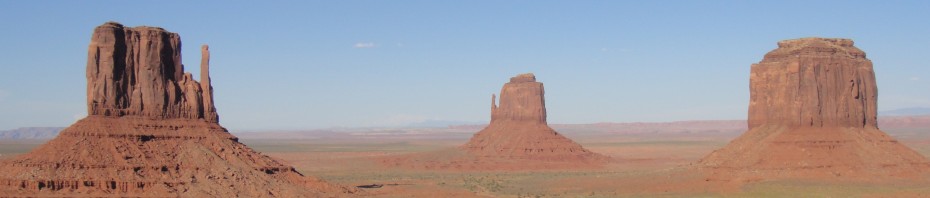
1. Monument Valley – The banner at the top of this blog is a photo I took at Monument Valley. Those buttes have been shown in countless movies and have long been symbols of the American West. It sits in the Navajo Nation and serves as a reminder of what they lost in the United States’ drive toward Manifest Destiny.

2. Yellowstone National Park – There is so much in the park that it is indescribable. Therefore, I will boil it down to my favorite thing. There is nothing like waking up in the Old Faithful Lodge; walking onto the porch; and, seeing buffalo walk through the steam of the geysers.

3. Sequoia National Park – Imagine trees sold old that they started growing when Jesus supposedly walked the earth and so large that they look as if they had been constructed. That is the best way I can describe this park. I will leave out the time I got lost in it when I was two.

4. Bryce Canyon – This is a canyon filled with rock formations called “hoodoos”. They fill the landscape and make you feel that you have landed in another world.

5. Denali National Park – We did not drive to Alaska, but Mt. McKinley is the most amazing thing I have ever seen. We were lucky enough to view it on a clear day and see the peak. I have no idea how big the mountain is, but I know that it filled the landscape from miles away.

There you have it. My road trip adventures. Isn’t that better than a beach?

Boarding Mr. Peabody’s WABAC Machine

7 Dec

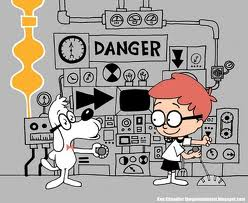
When I was a kid, “The Rocky and Bullwinkle Show” was shown in reruns, and I would often catch an episode or two. It wasn’t my favorite show by any means because Bullwinkle always drove me crazy. I think it was his voice, but it could have been any aspect of his goofy self. However, I was fascinated by Mr. Peabody and his WABAC Machine and the idea of going back to witness historic events. Obviously, I was a weird child to like the time-traveling, talking dog over the goofy, talking moose. Through the years as a historian, I keep going back to Mr. Peabody and thinking how cool it would be to actually be present at historic events. I have even been known to mention the WABAC Machine in class. I know the students have no idea what I am talking about, but they aren’t usually listening anyway.

Of course, time travel, as we know through countless references in popular culture, has it drawbacks. We could alter the course of history and change the world as we know it. That’s why I favor the “duck blind” method from “Star Trek”. Use a force field to hide a viewing station in the natural terrain. If walking about is needed, then use an individualized force field for hiding a protection. See, problem solved. All you have to do is combine the worlds of Mr. Peabody and Mr. Spock, and the problem is solved.

So, if I could board Mr. Peabody’s WABAC Machine to travel to a “duck blind” from “Star Trek”, then these are the historic events I would venture to see.

1. Montana Territory, 1876 – George Custer and the 7th Cavalry find their way to the banks of the Little Big Horn River. There they find Sitting Bull, Crazy Horse and hundreds of Sioux and Cheyenne warriors. The Battle of Little Big Horn does not end well for Custer and his men, but for the Native Americans it is a classic case of winning the battle and losing the war. After the defeat of one of America’s most famous soldiers, the U.S. Army makes it a point to bring an end of the Indian Wars. The battlefield is my favorite historic site, as I can sit on the hill and sense the history around me. It is probably the markers that designate the places where soldiers fell (although inaccurately) that make the battle easy to track over the terrain.

2. Dayton, Tennessee, 1925 – As a publicity stunt, leaders of Dayton arrest John Scopes of breaking a new law disallowing the teaching of evolution in public schools. The stunt gets out of hand when two of the nation’s most famous lawyers. William Jennings Bryan and Clarence Darrow, agree to fight it out in court over the difference between the creation story of the Bible and the theories of Darwin. It must have been a fascinating scene as a circus atmosphere descended upon the town. I love teaching about the Scopes Monkey Trial and have even taken a group of students to the actual courtroom to discuss it. I am amazed that 86 years later we are still fighting over the same issue.

3. The Moon, 1969 – Neil Armstrong and Buzz Aldrin became the first people to walk on a celestial body that was not Earth. This is the greatest achievement in human history. Watching the astronauts leave the capsule and walk around would have been a literal other-worldly experience. Also, viewing this event as it happened would prove to the skeptics that it wasn’t faked. Next semester, one of our history professors is offering a class on conspiracy theories and why people latch on to them. You would be amazed at the amount of students who do not believe that the truth is known.

4. Maryville, Tennessee, 1974 – This event is on a more personal level. My dad used to sponsor a men’s slow pitch softball team, a hobby for which he was inducted in the Tennessee Softball Hall of Fame. His teams won 10 state championships, but the first came in 1974 against the Number 1 ranked team in the nation. Actually, I was there, but I do not remember it. I was 4 years old at the time. The game was close and came down to a diving catch for the last out. I would like to go back for several reasons. First, I would like to watch the game. Second, I would like to see my dad and all of the people who I know as they looked in 1974. Third, I would like to see what I was doing as a 4-year-old.

Those are my WABAC wishes. If I really had a machine, then I would go to those events first. Of course, I would not be able to stop there and would get addicted to the travel. I would also probably start messing up the timeline. Where would you go if you had access to the WABAC Machine?

Why is Starting to Write Always the Hardest Part?

3 Dec

As as a historian, there are two aspects to my profession. Obviously, we are expected to teach, and that is what I got into the business for. I really like to talk about history, and that’s what the classroom is all about. However, we are also expected to write and publish articles and books. This is where I am lacking. That may sound weird since I am writing a blog, but I am hoping that this will help loosen up my writing in other areas. I can never get started. I had a terrible time with my Masters thesis because I could never figure out how to start it. It rolled out as soon as I got going. I also faced the same problem with my Doctoral dissertation. So, here’s the question? Why is starting to write always the hardest part? Does the subject not inspire me enough?

I wrote a short story once. The whole thing just came to me all at once. It was running like a movie through my head, and I had to get it out. I wrote and wrote until there were 60 pages. It was about a couple whose daughter had been abducted and murdered. As a result, the marriage struggled until they moved to a faraway city. There he became a detective who specialized to finding lost children. I won’t tell the whole story here, but, suffice it to say, it was the only time I was inspired to just sit and write with the length and detail I need for my profession.

And, here is the thing. The story came to me while I was listening to one of my favorite songs, “Badge” by Cream. Each line led me to a different part of the story. I even used the lyrics throughout the story. They are not used in order. I took a song; rearranged it; and made something else out of it. If you don’t know the song, then here are the lyrics:

Thinkin’ ’bout the times you drove in my car.

Thinkin’ that I might have drove you too far.

And I’m thinkin’ ’bout the love that you laid on my table.

I told you not to wander ’round in the dark.

I told you ’bout the swans that they live in the park.

Then I told you ’bout our kid, now he’s married to Mabel.

Yes, I told you that the light goes up and down.

Don’t you notice how the wheel goes ’round?

And you better pick yourself up from the ground

Before they bring the curtain down,

Yes, before they bring the curtain down.

Talkin’ ’bout a girl that looks quite like you.

She didn’t have time to wait in the queue.

She cried away her life since she fell off the cradle.

I have no idea what all that means, and I don’t know where the story came from. I only wish that something could inspire me to write history as well as that song inspired me to write the story – the only story I have ever written. I even wish I could write another one of those.

In an attempt to find inspiration for another story, I downloaded an app called Inspiro. It comes up with phrases or scenarios to spark the imagination and maybe a narrative. However, it’s kinda dumb. As an experiment, I will crank up the “Scenarios” section and show you what comes out.

1. a sheep involved in a love triangle with a weasel (I wonder what the third animal is.)

2. a violent real dickhead sitting in the library next to your neighbor (This has possibilities for a serial killer story I suppose. The cause of death could be suffocation by condom.)

3. a real dickhead doing a slo-mo “beach run” towards a lighthouse keeper (A phallic symbol running toward another phallic symbol. The lighthouse keeper needs to hope that he is not the third in this love triangle.)

4. an Elvis impersonator loving a politician (Now, this has some possibilities. I imagine the politician being Nancy Pelosi, but she is beneath Elvis impersonators on the “importance to America” scale.)

Now, a few from the “Muse” section.

1. careless locksmiths with Danzig (Danzig was/is a great band. I can see locksmith’s losing their keys while jumping and shouting to “Mother”.)

2. lugubrious jackets up your ass and around the corner (What does lugubrious mean?)

3. potbellied spies possessed by a demon names Pazuzu (Hey, this is good. Think about an old Sean Connery and an old Roger Moore being taken over by demons and getting in a fight with Max von Sydow.)

4. mummified drawings as a punch line to a bad joke (What do you call Egyptian tomb filled with marijuana? High-roll-glyphics)

Not very inspiring is it? Maybe I’m still stuck with nonsensical lyrics to classic rock songs. But, what am I going to do about writing history?

The search for inspiration continues.

Events of November 25 (My Birthday)

25 Nov

November 25 is my birthday, and, as a good historian, I like to know what happened on this very important date in history. Therefore, today’s post is a list of a few events.

1. 1783: The last British troops left New York City three months after the signing of the Treaty of Paris. (To get this straight, the American Revolution was over, and the British were still sticking around. The United States must have learned something from them. We tend to hang around after the occupied areas want us gone.)

2. 1876: In retaliation for the American defeat at the Battle of Little Big Horn, United States Army troops sack Chief Dull Knife’s sleeping Cheyenne village at the headwaters of the Powder River. (If anyone has a right to protest in the United States, then it is the Native Americans.)

3. 1947: The “Hollywood Ten” are blacklisted by Hollywood movie studios. (I am a staunch capitalist, but the Red Scare was a sad time in American history.)

4. 1963: President John F. Kennedy is buried at Arlington National Cemetery. (People often ask me about Kennedy’s presidency. Their opinions vary from his sainthood to his evilness. Honestly, I don’t think he was in office long enough for anyone to know how good he would have been. However, I think he, like most, was somewhere between the two extremes.)

Other people born today:

1835: Andrew Carnegie (He was slightly successful in the business world.)

1844: Karl Benz (He was slightly successful in the automotive world.)

1846: Carrie Nation (She wanted prohibition of alcohol in the United States. Can you imagine?)

1914: Joe DiMaggio (He owns baseball’s most unbreakable record and married Marilyn Monroe. What else can you say?)

1920: Ricardo Montalban (As Mr Roarke, he offered people the chance to live their deepest fantasies. The show would have been a lot better on Cinemax.)

1926: Jeffrey Hunter (He played Captain Pike in the pilot episode of “Star Trek”, but I like him better in the greatest western of all time, “The Searchers”.)

1941: Percy Sledge (He sang “When a Man Loves a Woman”.)

1960: John F. Kennedy, Jr. (That famous photograph of him saluting his father’s casket was made on his third birthday.)

1983: Joey Chestnut (He is the current world champion in various eating contests, including hot dogs.)

As Walter Cronkite used to say, “That’s the way it is – November 25, 2011.”