Tag Archives: Longmire

Northwest Trek – A Great Debate and a Great Big Rock

20 Aug

We spent quite a bit of time debating what to do next. My nephew wanted to see Olympic National Park, but, while it would have been cool, I felt that it was too far. Instead, I thought we should see Mt. Rainier. We made our points before he got to the crux of the matter. He was afraid that we would look at the mountain; say something about it being a big rock; and drive on down the road. He had reason to worry because we are prone to do that. Patience is not our virtue.

I promised him that we would stop anywhere that he wanted to stop. If he saw a trail that he wanted to walk, then we would walk it. On top of that, we would not complain about it. He was not convinced.

Honestly, I think going to Olympic would have been cool, but we were not set up for it. If I had it to do over, then we would have spent all of our time in Washington. That way we could have done both. Crater Lake was interesting, but we spent a lot of time just to see one thing.

With the debate behind us, we set out for Mt. Rainier. Along the way, we went through several towns where logging was the major industry. I always think it is interesting to drive through towns. As Del Gue says in Jeremiah Johnson, “Here’s where the people is.” I wonder if Jeremiah, Del Gue and Bear Claw ever made it up to Mt. Rainier.

Anyway, we drove the high road to the mountain, and Mt. Rainier is truly an impressive thing to see.DSC00358
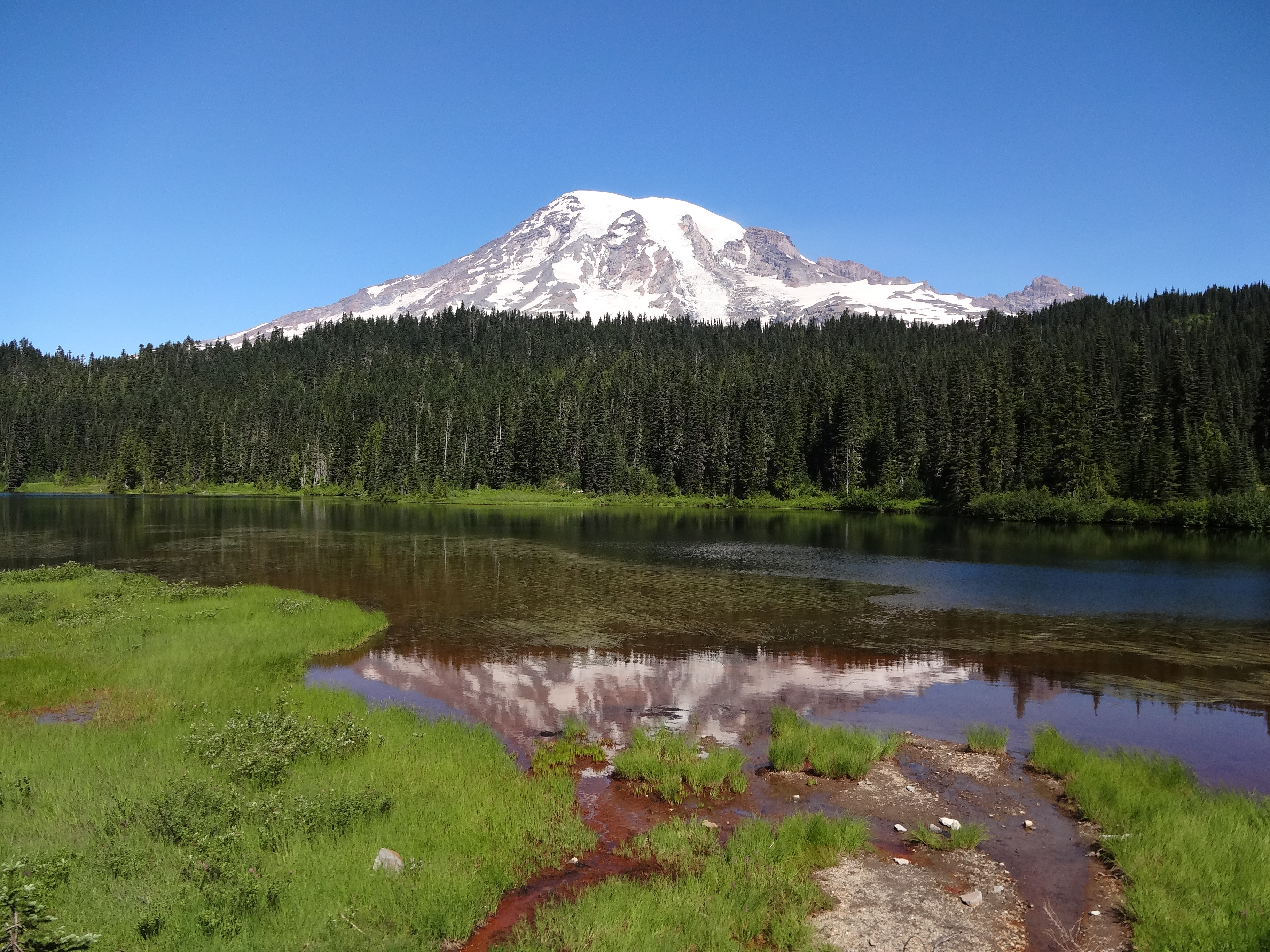
However, it is still a big rock, and I do not have much to write about it.

On the way down from the mountain, we stopped by a mountain stream that was interesting. My nephews and I took the trail and crossed a small bridge to the other side. There were a lot of rocks and a little water, but there are probably times when the water is pouring down.IMG_2888
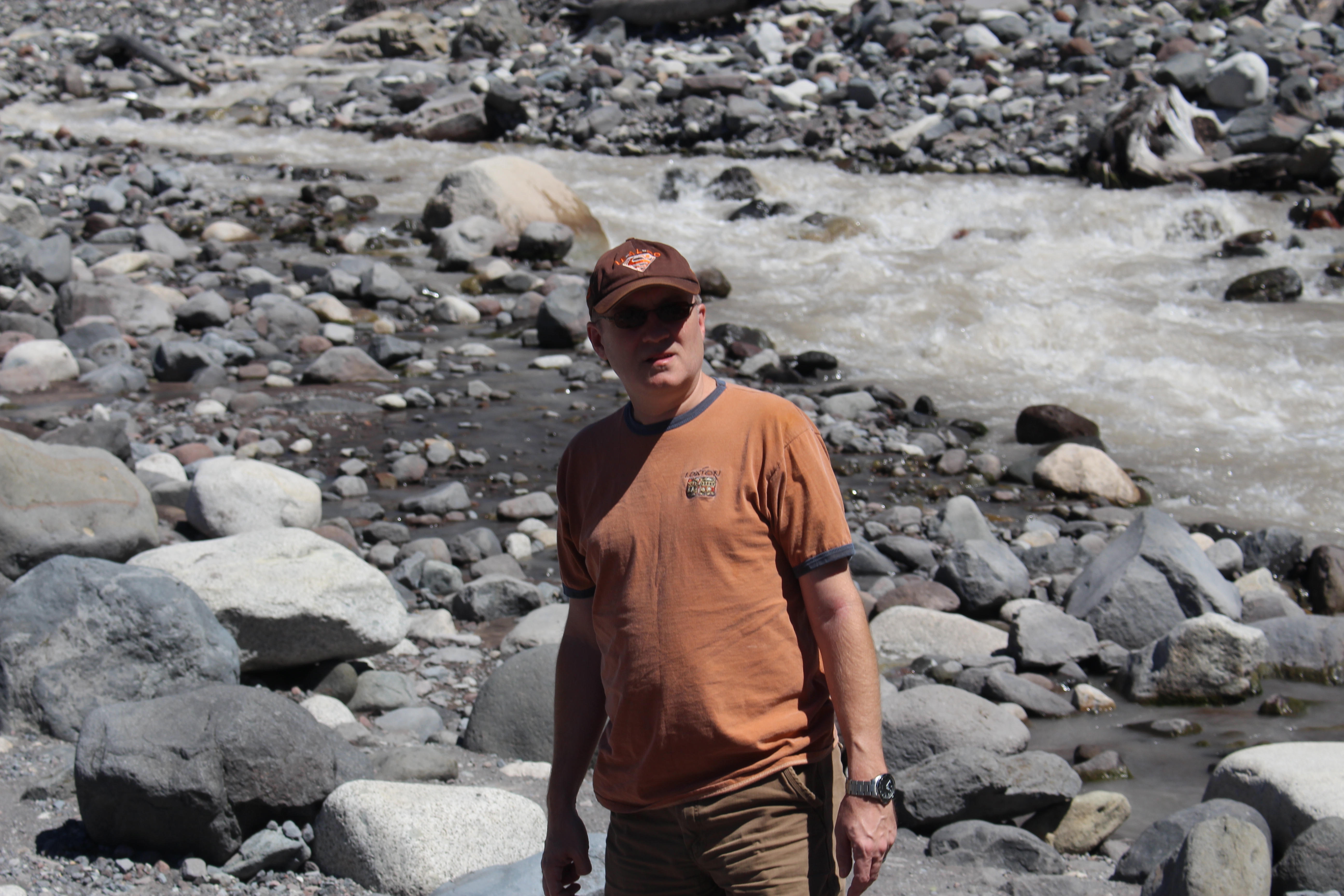
There is a funny story about my youngest nephew losing his footing on the trail, but I will spare him the embarrassment of putting it out here for everyone to read.

After all of this, we stopped in Longmire, Washington for lunch at the National Park Inn. We had thought about eating at the lodge in the middle of the park, but this turned out to be a better decision. Besides, my dad’s favorite show is Longmire, which made this a fitting place to spend some time.

We made our way back to Longview, Washington and more pie at Shari’s. This time, I skipped Marionberry and went with Pecan. It tastes more like home.
Imagining the West

5 Jun

When the United States completed the Louisiana Purchase, a question arose among politicians and citizens around the country. What exactly did Thomas Jefferson buy? Some of it was known, but, frankly, a lot of it was a mystery. Like today, mysteries led to wild rumors and speculation. Some thought that the land was filled with mammoth. Others theorized that giants walked the land. Even the reports of Lewis and Clark did not quell the wild stories about the land that they traveled through.

This began a long fascination with the western landscape among Americans. While some ventured into the region, the vast majority was content with staying in their comfort zone and leaving the visions of the West to their imaginations. While they read dime novels exaggerating the exploits of the people in the West, they were also fed exaggerations of the images of the West.

It is easy to see how someone in the 1800s could incorrectly imagine the West as they read a book that was designed to be as adventurous as possible. The visuals were left up to them, and they only knew what the writer wanted them to know. However, the 1900s brought the invention of films. Now, the story could unfold in front of their eyes. No more imagining. They could see the real West.

Unfortunately, that’s not exactly the way it happened. The first “westerns” were filmed at Thomas Edison’s studio in New Jersey. I’m not even sure it was in western New Jersey. When the motion picture industry moved to Los Angeles, things did not get much better because movies were filmed close by. In other words, a story that was based in Texas was filmed in California. As people watched, they began to assume that Texas, and the West in general, looked like the place they were seeing on the screen.

Last night, all of this came into focus for me as I watched television with some friends. Longmire, a new show about a modern-day sheriff in Wyoming, premiered on A&E, and I had been looking forward to it. To my disappointment, it was a weak attempt to copy th success of Justified, but I digress. My friends, who have never been to Wyoming, were talking about the scenery and how beautiful it was. I have been trying to convince them to take a trip to the West instead of their usual beach excursion, and they began to get excited about going to Wyoming and seeing this beautiful place.

Wyoming is beautiful. It is one of my favorite states. However, if my friends want to see the landscapes of Longmire, then they will need to go to northern New Mexico, the filming location. I thought it looked familiar because I was just there. Anyway, I had to explain that westerns are not always filmed where the story takes place and that it has confused audiences for decades. I wondered how many people will watch the show and think that Wyoming looks like New Mexico.

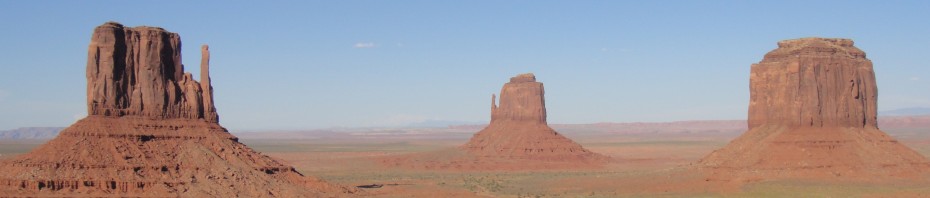
Today, another example of filming that confused the audience popped up on my television. The Searchers, starring John Wayne as Ethan Edwards, is one of my favorite movies. It follows a loner who goes on a decade-long trek to find his niece who was abducted by Comanche. I could write about this movie all night but need to focus on the scenery in which the action takes place. The director, John Ford, used his favorite filming location, Monument Valley, because of its grand vistas. In fact, I used a photograph of Monument Valley for the banner above.

The problem is that the story takes place in Texas while Monument Valley sits in Utah. Through the years, I wonder how many people think Texas, an iconic locale for western stories, looks like that. I can promise that it doesn’t.

People have always imagined the West differently. In the 1800s, misconception was understandable because technology and transportation did not offer easy opportunities to see it. During most of the 1900s, a trip into the West was also difficult for many. However, today, with interstates and internet, there is not excuse for imagining the West incorrectly. I urge everyone, if provided with the opportunity, to travel through it and see for yourselves.

Wyoming does not look like New Mexico, and Texas does not look like Utah. However, each of those places and all of the rest have a beauty all their own. Don’t be fooled by the movies and television because the West is more magnificent than they can show and you can imagine. Plus, it will all be in the right places.