Tag Archives: Movies

Your Assignment…Should You Choose to Accept

27 Jan

This semester I have the good fortune of teaching my favorite class, a history of the American West. This is my major area of study, and I get a kick out of talking about all of the things I have researched and written about. However, it needs to be fun for the students as well. I believe that many historians do a wonderful job of making an interesting topic as boring as possible, and I attempt the opposite. History is fun for me, and I want the students to have the same experience.

Several years ago, I developed something that the students call the “Movie Assignment”. They watch a movie based within the time period we are discussing and compare it to actual events. The scenery and action of the films provide them with a visual clue of what may have been like, and the story often gives them an idea of life itself. Obviously, not all movies are appropriate for this type of activity. Pearl Harbor may have been the dumbest plot ever written. Therefore, World War II class did not get the option to watch it. They got movies with deeper meanings and more of a foundation in reality.

In the American West, students have the pleasure of watching films from my favorite genre. Except, there is a different aspect to the assignment. Western settings have long been used to offer more contemporary lessons. Think of it as the Mt. Olympus of the United States. It is the place with myths are made, and flawed heroes face decisions with no correct answers. To get the students on the right path, I recently assigned each of them a movie to watch. We haven’t discussed what they should look for because I want them to watch the movies for enjoyment first. This post lists the movies and why I chose them. If you get the chance to watch them, then perhaps these are things you can look for.

1. Rango– I know, it’s a cartoon. However, it pays homage to westerns throughout the decades. Watching closely, you can pick up small details that bring to mind the great western movies and western actors. Besides, how can a movie be bad when “The Man With No Name” shows up as the Spirit of the West. I only that the original “Man With No Name” could have been used to voice the character.

2. The Man Who Shot Liberty Valance – “This is the West, sir. When legend becomes fact, print the legend.” One of the great lines in western history and an statement that describes how difficult it is for historians to dig through the legend to get to the fact. This film is filled with symbolism, as each character represents an aspect of the “taming of the frontier” experience.

3. Fort Apache – The second John Ford/John Wayne movie on the list (TMWSLV was the first), this is one of the first movies to show Native Americans in a positive light. It takes real battles of the Indian Wars and combines them into a fictional one. In the process, it shows the misguided policies of the United States toward native peoples. This could be relavent for a lot of times in history – Indian Wars, Vietnam War, Gulf War.

4. The Searchers – The third John Ford/ John Wayne installment (I promise that they don’t make up the entire list) is an epic about a man searching for his niece, who was kidnapped by Indians. It shows his maniacal racism toward these people and how it increases throughout the film. Most of the underlying currents were missed by the audiences of the time, but they come to light as the years pass.

5. The Magnificent Seven – A remake of the Japanese film, The Seven Samurai, this movie was had a compliation cast of stars in an action packed adventure. However, many don’t realize that the original Japanese film was a western placed in a different time and place. So, a western copied a foreign film that copied a western storyline. This shows that the themes of the western genre are actually universal.

6. Dances With Wolves – The Kevin Costner movie won the Academy Award for Best Picture. did you know it’s more popular “remake” lost the same award? Avatar has made more money than any movie in history, but it should be renamed to Dances With Aliens. It’s the same storyline. Watch them back to back and see what I mean. This shows that the western never disappeared. It simply got better graphics and tuend into Sci-Fi. For example, Gene Roddenberry was a writer for Wagon Train when he pitched Star Trek as “Wagon Train to the stars”. And , can’t you picture the black-hatted darth vader as a cattle baron building his empire on the backs of settlers (before the later movies became some convuluted political statement)? Also, when Luke returns to find his uncle’s homestead burning, it reflects Ethan Edwards returning to find his brother’s homestead burning in The Searchers.

7. Pat Garrett and Billy the Kid – Sam Peckipah uses this movie to depict his idea of the destruction of the American west. Look at all of the western character actors that are killed or shown in stages of degeneration. Peckinpah’s version of western history is inaccurate, but his portrayal of the disappearing frontier is poignant. Plus, Slim Pickens dies with Bob Dylan singing “Knockin’ on Heaven’s Door”. The best dying scene ever.

8. The Outlaw Josey Wales – There should be a law that says everyone has to watch this movie once a year. Josey sees his life ripped apart by the ravages of war. In response, he becomes a gunfighter to reap revenge on those who killed his family. Along the way, he picks up a surrogate family of people who have seen their lives destroyed by violence and hardship. It turns out that the “loner” isn’t alone after all. Filmed in the mid-1970s, the Civil War and its aftermath can easily be seen as the Vietnam War.

9. Bury My Heart at Wounded Knee – An attempt to depict the plight of Native Americans as they saw their lifestyle and land taken away. It is a noble attempt. Unfortunately, there are a lot of inaccuracies. The Native American story needs to be told and can be told in an accurate and informative way. This movie, in an attempt to tell the other side of the story, goes to far the other direction. As in all conflicts and clashes of cultures, there are good and bad people on both sides. Portraying that inaccurately takes the meaning away from all of them. On top of that, the portrayal of the Battle of Little Big Horn is shameful.

10. High Noon – This movie is not exciting at all. And, I cringed each time I see the sheriff ask for help. However, there is a reason he does. This movie places real life events in another setting as the sheriff represents those victimized by the House on Un-American Activities Committee that was led by Joseph McCarthy. Audiences of the time would never watcha movie about a supposed communist, but they would watch a movie about a sheriff in trouble.

11. Jeremiah Johnson – Based on an actual mountain man, Robert Redford shows the harshness of life as a Rocky Mountains trapper. There are accuracies and inaccuracies, but the overall story is true to the experience. The scenery is fantastic and the dialogue is witty and appropriate. Under the current, you find the story of a man who tries to run away from civilization only to find that it is never far away.

12. The Good, the Bad and the Ugly – A western about the Civil War in New Mexico that was filmed in Europe. What else can I say? When it came out, many movie critics panned it because everyone knows that the Civil War took place in the east. Wrong. It is based on a reall mission to capture what is now New Mexico. This movie shows how westerns influenced film makers in other countries and how they, in turn, influenced the genre and the view on the region’s history. Also, the musical score is the best of any western ever. And, an American didn’t compose it. Weird for those people who believe the west is all about independence and the American ideal. It wasn’t about that at all.

So, there is the list for my students. Can you think of any other movies I should have used instead? Do you think my students will stumble upon this in their research. If they ever get away from Wikipedia that is.

Brought to You By the Number 50

26 Jan

The “Surrounded by Imbeciles” world hit a milestone yesterday with its 50th post. With that in mind, this installment is dedicated to the number 50 HA HA HA HA!

I never realized until this moment that his name is Count von Count.

50/50 – The chance that I would reach 50 posts when this blogging experiment began.

50 First Dates – Adam Sandler + Drew Barrymore + Groundhog Day = 50 million dead brain cells. Also, when was the last time you saw something about Hawaii without the Israel Kamakawiwo’ole version of “Somewhere Over the Rainbow” included on the soundtrack. Great song but don’t overdo it.

50 States – Do you know why it’s an even number? Because they had to bring states in two at a time before the Civil War to make sure that the number of free states and slave states was equal.

Hawaii 5-0 – Are you Team Jack Lord or Team Alex O’Loughlin? Honestly, I have never seen an episode of either incarnation. The opening is cool, but I could never get past it.

50 Ways to Leave Your Lover – Actually Paul, there are countless ways to leave your lover, but 50 makes a good round number for a song title. When I was a kid, I could sing the parts like “slip out the back, Jack” and “make a new plan, Stan”. However, as an adult my favorite line is the first – “The problem is all inside your head”, she said to me. Truer words have never been sung. Just ask my ex-girlfriends.

50 Cent – Is he a good rapper? I have no idea. However, he hooked up with Chelsea Handler, so I have to include him for that accomplishment.

50 Hard-Boiled Eggs – “What we’ve got here is failure to communicate.” One of the great lines in movie history. What does that have to do with eggs? Cool Hand Luke ate 50 hard-boiled eggs to win a bet. Later, the speech was given while he lay crumpled in a ditch.

50 Bonus Points – There is nothing (well, there may be a few things) better than using all of the letters in Scrabble and getting the bonus points.

50 Steals – Ty Cobb stole home a record 50 times. He did that while beating up a man with no hands; investing in Coca-Cola; being a racist; and, spending his days being an all around prick. They claim that he covered for his mother when she shot his father by accident. She was with her lover at the time. Not sure that’s a good enough excuse for a lifetime of degeneration.

1950 – A year of great events. “Peanuts” debuted in American newspapers. Victoria Principal, the hot wife on “Dallas”, was born. “All the King’s Men”, a fictionalized account of Huey Long, won the Academy Award for Best Picture. The game show “Truth or Consequences” debuted. A New Mexico town was later renamed in the show’s honor.

There you have it. A short homage to the number 50 HA HA HA HA

For the Love of Post Apocalyptic Movies

30 Dec

I love post apocalyptic movies, and I am not sure why. The entire premise involves the destruction of life as we know it and the decimation of the human race….wait, maybe that’s it. The theme invokes a fantasy of solitude that we can never truly reach and also offers a do-over for the mistakes that the human race has made. Many of us are fascinated by this genre, and it just occurred to me that it could be because of a hidden message. Post apocalyptic movies are not just about the end but also about a new beginning. They can also be classified as futuristic westerns (which is my other favorite genre) since they inherently create a new frontier.

But, enough philosophizing about movies and their hidden themes and attractions. Here is the list of my favorite post apocalyptic movies. Like other lists on this blog, there is no particular order.

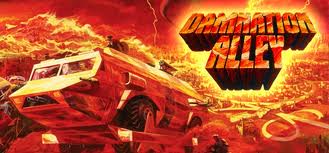
1. Damnation Alley (1977) – Nuclear war has disrupted the planet’s atmosphere and caused the skies to become a psychedelic ceiling of a disco. Giant bugs roam the desert around a distant military outpost. The survivors build awesome vehicles to move them across the barren landscape to a radio signal coming from Albany, NY.

This film provides cool 1970s special effects and acting. It has George Peppard transitioning from suave (Banacek) to his later roles as a commando (A-Team). It also has two of the great 3-named stars of the 1970s, Jan-Michael Vincent and Jackie Earle Haley.

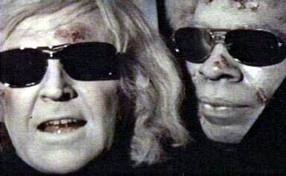
2. The Omega Man (1971) – Charlton Heston stars as the “last” man on Earth after a virus has killed almost everyone and turned the rest into zombies that are a cross between Hippies and black robe wearing members of the Church of Satan. There is a lot to like about this movie – Heston driving through an abandoned Los Angeles and going to the movies (why would you sit in the dark when that’s where the zombies live?); Heston’s home with a balcony where he can give speeches to the zombies; the hot woman who Heston has sex with before she turns into a zombie (remember, he is that last man – not last human); the ritual/torture scene in the middle of a football stadium; and Anthony Zerbe as the news anchor turned zombie leader.

Will Smith tried to recreate this in “I Am Legend”, but how can you beat those sunglasses?

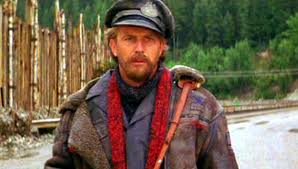
3. The Postman (1997) – In 2013 (wow, that’s not far off), the United States has collapsed after another Civil War. Kevin Costner roams the land while trying to avoid the militaristic leaders who have taken control of different regions. Think of feudalism of the Middle Ages coming to America. Anyway, Costner stumbles on some mail and begins to deliver it as a way to access fortified towns. Eventually, this becomes a unifying practice that brings hope of a rebuilding government. Feudal lords do not need a rebuilt government, so fighting commences.

The fighting mailman wins and helps repopulate the globe by impregnating another man’s wife. In the end, the United States is back and regular looking people are dedicating a statue to him. In essence, it’s like the end of civilization never happened. I just hope that Tom Petty got to keep his cool house on the dam.

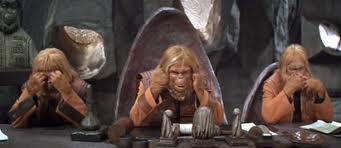
4. Planet of the Apes (1968) – Charlton Heston strikes again as an astronaut that finds himself on a planet of backwardness. The apes can talk and are in charge while humans can’t talk and run around the wilderness. Unfortunately for him, he has a throat injury that hinders his speech for a while, and his surviving space mate has had a lobotomy. When Heston finally talks, the apes are stunned.

Of course, we do not realize that this is post apocalyptic Earth until the very end and the iconic scene of the destroyed Statue of Liberty. It goes to prove that if you are recruited to go on a time shifting space mission, then you should stay at home.

5. Logan’s Run (1976) – Life inside the dome is perfect. Days are filled with leisure, and everyone is attractive. If you want some private time with one of these attractive people, then all you have to do is dial one up on the computer. However, there are some pesky problems – at the age of 30 everyone must take part in Carousel (DEATH), and the ones who try to run from it are tracked down by Sandmen. Clothes (what little of them there are) are color coordinated according to age. Wearing red means your time is running out. Green means you are alright (as you can see).

Sandman Logan is given the task of investigating the rules of society. In the process, the becomes a runner with the damsel above and is chased by his former best friend. During the run, Logan escapes from the domed city and reaches a destroyed Washington, D.C., where he finds an old man living in the Capitol with a bunch of cats (I am sure they are smarter than the cats we have there now.). Logan kills his former friend and returns to the city with the old man, proof that you don’t have to die at 30. But, you can still dial up sex partners if you want.

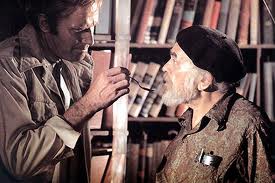
6. Soylent Green (1973) – This must be Charlton Heston’s “end of the world” period, but I am not sure this qualifies as post apocalyptic. The world is overcrowded and food is at a premium. Only the wealthy can eat steaks and stuff. Everyone else must eat soylent green, which is supposedly made of plankton. Heston is a New York City police officer who embarks on a mystery.

At the end of his investigation, Heston discovers that “SOYLENT GREEN IS PEOPLE!!!”. That’s one way to feed an overcrowded population. Kill two birds with one stone, so to speak. And, Edward G. Robinson, in his last movie, commits suicide and presumably gets eaten.

7. Priest (2011) – This is definitely post apocalyptic, but it could be another world. Does that mean it doesn’t count? It still counts on my list. The world has been ravaged by a war between humans and vampires. The humans won by employing Priests, a team of church trained commandos, and vampires are confined to reservations. Now, the vampires are tired of reservation life and are on the rampage. They attack a homestead and kidnap the niece of a war veteran. He, along with a sidekick, go on an epic journey to save his niece (which is really his daughter) and put the vampires back in their place.

It is a typical movie, but as I watched it I got the feeling that I had seen it before. First, “savages” attack a homestead and kidnap a young girl. Second, her uncle, a hardened veteran and old “savage” fighter goes after her. Third, a young sidekick who cares for the girl travels by his side. Fourth, the uncle says he will kill her if she has turned “savage”.

This is “The Searchers” with vampires in the place of Native Americans and the Priest in the place of John Wayne. They took my favorite Western and placed it in a post apocalyptic setting.

There you have it – a short list of my favorite post apocalyptic movies. Some of them are considered classics and some of theme are considered a waste of film, but I found something to like about all of them. There are others that could have been included:

Blade Runner (although I fell asleep watching it)

The Book of Eli (a cheap knock-off of “The Road” before “The Road” could be made into a movie)

Escape from New York (call me Snake)

The Running Man (with an awesome Richard Dawson)

V For Vendetta (Remember the Fifth of November and its connection to Halloween)

Rollerball (JONATHAN! JONATHAN!)

12 Monkeys (watch out for familiar looking guys in airports)

The Road (better than Denzel’s version but not as good as the novel)

But honestly, I got tired of typing. There are so many movies in this genre that I find enjoyable that I couldn’t include them all. What is your favorite movie genre? If you like post apocalyptic stuff, then what are your favorites? And don’t forget, “The Hunger Games” are about to begin.

“If You Could Read My Mind” There’s No Telling What You Would Find

24 Dec

The other day I caught the ending of “Wonderland”, a movie starring Val Kilmer. It chronicles the life of John Holmes, porn legend, and his possible role in a murder/robbery. The ending is the best part of the movie. Holmes and his girlfriend are parked in the desert discussing the future. He then takes off while the movie tells us what the future held for them and others portrayed in the film. All of that is great, but the best part is that Gordon Lightfoot’s “If You Could Read My Mind” was playing over the scene. This was one of my favorite songs as a kid and like it to this day. I even saw Lightfoot in concert just to hear this one song live.

When I was young, my favorite songs were ones I could visualize. I could see the guy trying to frantically check out of the “Hotel California”. I could also see the car going down Interstate 40 in “By the Time I Get to Phoenix”. However, nothing hit my imagination like “If You Could Read My Mind”. I know that I took things too literally and missed the deeper meanings of the lyrics, but I still can’t listen to these songs without watching the childhood created movie in my head.

Obviously. Lightfoot’s song is about a love that has run its course.

I don’t know where we went wrong

But the feelins’ gone

And I just can’t get it back.

See. he spells it out plainly. But, my child’s imagination focused on other lines.

If I could read your mind love

What a tale your thoughts could tell.

Just like the paperback novel.

The kind that drugstores sell.

I could actually see a woman buying a paperback in a drugstore. Then, there was the part about the movie.

I’d walk away like a movie star

Who gets burned in a three-way script.

Enter number two.

A movie queen to play the scene

Of bringing all the good things out in me.

Again, I could see a movie set where actors are playing the roles that Lightfoot is describing. However. the best part was in the beginning of the song.

Just like an old-time movie

‘Bout a ghost in a wishin’ well.

In a castle dark or a fortress strong

With chains upon my feet,

You know that ghost is me.

And I will never be set free

As long as I’m a ghost you can’t see.

This part was easy to imagine because I had seen exactly what he was describing. I loved watching Abbott and Costello movies, and all of them were basically the same. Abbott played the straight man to Costello’s bumbling character. But, one movie was different. In 1946, they made “The Time of Their Lives”, about star-crossed lovers killed during the American Revolution. Their ghosts are trapped on an estate, specifically to a well, until they can prove their innocence. Each time I heard “If You Could Read My Mind” I thought about Abbott and Costello and the ghost movie that they made.

I have often wondered if this was something I conjured up, or did Gordon Lightfoot use the movie as his inspiration? How weird would it be if a 1940s Abbott and Costello movie led to a hit song about dying love in the 1970s? I have no idea if Lightfoot ever saw the movie, but I like to think that I figured out his secret and was able to read his mind, to paraphrase from the song. If not then I know that this song and others did what good songs are meant to do. They allowed me to enter my imagination and take what I wanted from them. From “If You Could Read My Mind” I took Abbott and Costello; combined them with a woman buying a paperback from a drugstore; and put them all on a movie set to my own made up studio where I was the star.

A Requiem for Josey Wales

28 Nov

In 1976, Clint Eastwood directed and starred in “The Outlaw Josey Wales”, which could be considered the last great film of the Western heyday. Obviously, “Dances With Wolves” and “Unforgiven” won Academy Awards in later years, but they came after the popularity of the genre had passed. “The Outlaw Josey Wales” marks the end of an era when Hollywood saw the Western as a major aspect of its production. The next year saw the release of “Star Wars” and the advent of modern Science Fiction. There would be new heroes to fill the minds of kids, and the quick draw cowboy would become a thing of the past. Few of the Science Fiction lovers realized that space and post-apocalyptic earth were mere replacements for the plains and deserts of the American West, and they were watching Western stories with special effects. But, that is another story for another day.

“The Outlaw Josey Wales” is a favorite of many Western lovers for its hero/outlaw who operates in solitude and kills anyone who gets in his way. As Lone Watie, who rides with Josey, says, “I notice when you get to dislikin’ somebody they ain’t around for long neither.” However, this is a misconception of the movie and the meaning behind it. Westerns have been the perfect genre to portray the issues of our world. “High Noon” was about the Red Scare and actions of Joseph McCarthy. “The Searchers” is an exploration into racism. “Pat Garrett and Billy the Kid” is about the destruction of the West by American society. “The Outlaw Josey Wales” is about the evils of war.

In the beginning, Josey Wales is a simple farmer who witnesses his family being killed in an attack on his land. The Civil War is raging, and gangs under the guise of military action are terrorizing the border of Missouri and Kansas. Josey joins marauders from Missouri to gain revenge on his attackers, Redlegs of Kansas. When the war ends, Josey finds himself an outlaw simply because he was on the losing side. The rest of the movie is an epic chase as Josey is chased by his enemies through Indian Territory and Texas.

This is where the misconception of the movie begins. First, Josey does not kill for the sale of killing. He fights to protect himself and to protect others. He shoots men who are attempting to rape a Native American woman and kills Comancheros who have attacked pioneers from Kansas. Josey also finds himself face-to-face with Ten Bears, a Comanche chief. Instead of fighting, Josey states that “men can live together without butchering one another.” Second, Josey Wales is not the lonely rider of the plains. He rides with marauders during the war, and, as the movie continues, he finds allies along the way:

Jamie – the young man who fought with Josey during the war and died along the trail.

Lone Watie – the Cherokee elder who saw his way of life destroyed just as Josey had.

Little Moonlight – the Native American woman whose life was filled with abuse.

Grandma Sarah and Laura Lee- the pioneers from Kansas attacked by Comancheros.

Rose, Travis, Ten Spot, Kelly and Chato – the only residents of a dead mining town who help rebuild the ranch of Grandma Sarah’s son, who was probably one of the men who attacked Josey’s farm.

“The Outlaw Josey Wales” is not about a lone gunslinger. It is about a man whose life was destroyed by war. His family was taken away, but he found a new family whose lives had also been affected negatively. People who faced tragedy created a new community of happiness and hope on a ranch far away from the pain that drove them there. Unfortunately, Josey’s peace did not last long as his trackers finally arrived. But, the man who thought he was alone learned that he never really was. Captain Terrill, Josey’s archenemy states, “You’re all alone now. Wales.” Lone Watie sticks his rifle out of a window and declares, “Well, he’s not exactly alone.”

At the end of the movie, Josey has killed his enemy but been shot in the process. After lamenting the destruction of war, he rides away bleeding and slightly slumped in the saddle. Did Josey return to the ranch and the love of his new family? Did he ride off into the sunset never to be seen again? Did he die from his wounds? That is left to the imagination, but it really doesn’t matter. In the end, Josey realized that he wasn’t the only victim of war and that he was never really alone.

John Wayne and Edgar Allan Poe

16 Nov

A lot of blog subjects passed through my mind today. I contemplated sharing my classroom experiences and even the lunch I had with my friend Dave. However, I am not in the right frame of mind to write about Latin America, World War II or the experience of eating at the Colonel’s Buffet.

I have been thinking quite a bit about the Natalie Merchant concert. I attend many concerts, but it is the rare occasion when I continue to think about them a few days later. However, this one reached me to the core. I found her poetry songs interesting and have perused iTunes (there goes my iAddiction again) while contemplating purchasing a few. While listening, I began to think about my favorite poems. I am not a big poetry fan, but, as with everyone, some catch my fancy.

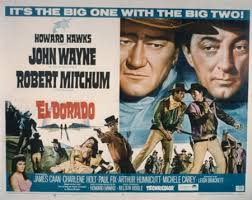
“Eldorado”, by Edgar Allan Poe, is my all-time favorite. The weird part is that I didn’t learn it from an English class or from discussing poetry in a coffeehouse. I learned it by watching a John Wayne movie.El Dorado

While I was growing up, my dad and older brother watched John Wayne movies all of the time. Wanting to be involved, I watched them too and began to memorize some of them. I especially latched on to “El Dorado”, which starred Wayne, Robert Mitchum and James Caan. Wayne played Cole Thornton, a gunfighter who owed a local ranching family for a tragic accident. Mitchum was J.P. Harrah, friend of Thornton who became a drunken sheriff. Caan played Mississippi, a young gambler that Thornton befriends. As the movie unfolds, the three of them, along with the comedic sidekick, fight against and defeat the rich, bad guy rancher.

Throughout the film, Mississippi recited lines from a poem about a gallant knight that I thought the writers of the movie came up with. As I researched the movie, I learned that it was the poem by Poe. Goes to show you that anything can be learned from any source. John Wayne taught me poetry and led me to become a historian who researches the history of the American West.

So, today’s mindset led me to poetry, and, for those who have never read it, here is “Eldorado”.

Gaily bedight,

A gallant knight,

In sunshine and in shadow,

Had journeyed long,

Singing a song,

In search of Eldorado.

But he grew old-

This knight so bold-

And o’er his heart a shadow

Fell as he found

No spot of ground

That looked like Eldorado.

And, as his strength

Failed him at length,

He met a pilgrim shadow-

“Shadow,” said he,

“Where can it be-

This land of Eldorado?”

“Over the Mountains

Of the Moon,

Down the Valley of the Shadow,

Ride, boldly ride,”

The shade replied-

“If you seek for Eldorado!”