Tag Archives: Tennessee

Monty Pope – Teacher and Mentor

18 Jun

A few days ago, I had lunch with Monty Pope. Most of you have never heard that name, but please allow me to introduce him. Monty recently retired from a long career teaching history that began in the public schools of Nashville and ended at Cumberland University.

I was working on a Master’s degree when I first met Monty. He was offering a class on Historical Geography, and I needed to fulfill some hours. It turned into a class that I will always remember. Monty took us on a tour of the town that I grew up in and, through architectural styles, showed us when and how the town developed. Riding on that van, I had no idea that Monty and I would teach together for over a decade.Monty Pope

When I was hired, I did not know what I was doing. I had never taught a class. I had never made out a syllabus. I had no notes from which to lecture. Luckily, Monty was there to be a mentor and show me the way. Simply, he taught me how to teach.

Monty taught me that there is more to the job than talking about history in a classroom. We are to be mentors to the students just as he was a mentor to me. We are to help students when they have problems. We are to be advisors and counselors.

As I type those words, something should be clear. Certainly, we are to be academic advisors and counselors, but we are to be ready to face other issues. What do we do when a student comes to us crying because a family member has passed away? What do we do when a student is pregnant and expecting during finals week? What do we do when a student asks for advice because they lost their job?

Monty taught me that we advise students in history, but we also advise them in life. Monty taught me that we should go by the book, but, sometimes, situations arise that the book does not cover.

Monty taught me how to teach, but, more importantly, he taught me how to be a teacher.

Monty also taught me History. I have been enrolled in countless history classes, but my only class with Monty was the one I mentioned. However, I learned more History sitting in Monty’s office than I did in most of those classes.

He is a Jacksonian and knows as much about Andrew Jackson and Tennessee history as anyone. His tales of the old days in this area are fascinating. Monty can weave a historical narrative better than anyone I have ever known. His secret, perhaps, is that he never lets the facts get in the way of a good story. As I have heard many times, a Pope has been at every significant event in American history.

Monty has taught thousands of students through the years, and each one of them could write a post about him. I am certain that the vast majority of them would say the same thing. Monty was their history teacher, but he was also their mentor.

If You Missed the Trial of the Century, Then Wait. There Will Be Another One Soon.

17 Jun

June 17, 1994 – I was at a Bluegrass festival being held at the Ward Ag Center in Lebanon. Porter Wagoner was the emcee, and I have no idea why because he was not a Bluegrass artists. Jim and Jesse performed, but I cannot remember who else was on the docket.

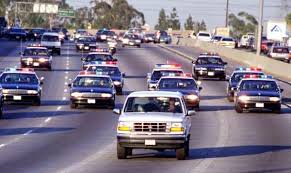
Why remember a long ago Bluegrass festival? Because word filtered through the crowd that O.J. Simpson, whose wife had been brutally murdered with her friend a few days earlier, was leading a low-speed chase through the freeways of Los Angeles. Helicopters were hovering over the white Bronco as O.J. and Al made their way through the city.White Bronco

As millions of people were mesmerized by the chase, I was listening to some of that good old mountain music. Through the years, I have seen the documentaries and the reruns, but the live version went on without me. In those days, you could not even bring it up on your phone. I know that is hard to imagine.

Of course, the events of that week led to a nationwide fascination with the case and the trial that found O.J not guilty. It was known as the Trial of the Century because everyone had an opinion.

This post could be about a lot of things. It could be about collective memory and the notion that everyone can remember where they were when a high event happened. It could be about the verdict and the opinions that followed. However, it is not about those things. It is about the fact that there was more than one Trial of the Century.

Everyone who remembers the O.J. Simpson trial thinks that it is the biggest legal event that ever happened. That know Judge Lance Ito. They know that it was the first time they ever heard the name Kardashian. However, there were earlier trials just as huge and just as fascinating to the general public.

1924 – The Leopold and Loeb Trial

Nathan Leopold and Richard Loeb were students at the University of Chicago School of Law who wanted to commit the perfect crime. Together, they spent months planning the crime and murdered Bobby Franks, a 14 year-old boy. Clarence Darrow was hired to defend them, but his real job was to keep them away from the death penalty.

Loeb was killed in prison, and Leopold was released after serving 33 years.

1925 – The Scopes Monkey Trial

Tennessee outlawed the teaching of Evolution in public schools, and business leaders in Dayton decided to use that to gain some publicity. They “arrested” John Scopes for teaching the theory and sent word that a trial was to be held. It grew into more than they could have imagined with William Jennings Bryan agreed to serve as prosecution and Darrow agreed to be the defense.

The trial was broadcast on radio throughout the nation and became a fight between the forces of religion and the forces of science. Bryan died from the stress of the trial, and Darrow was foiled in his attempt to take the case to the Supreme Court. A technicality overturned the guilty verdict.

1935 – The Lindbergh Baby Trial

Charles Lindbergh was the first person to fly a plane non-stop across the Atlantic Ocean. This gained him more fame than he could have ever dreamed of. It also brought tragedy. His child, less than 2 years-old, was abducted, and ransom was demanded. There was an attempt to pay the money, but the child’s body was found a few miles from the Lindbergh home.

It seemed that everyone got in on the investigation, and suspicions finally fell on Richard Hauptmann, who was tried, sentenced and executed.

There have been numerous theories about this case. Did Hauptmann do it? Did the real killer get away with it? As the trial was going on, millions of people wanted to know.

Americans are fascinated by crimes. Heck, how many times a week does a crime get solved in an hour on some television show. However, those shows cannot compare to the real thing, and the public latches on to these stories as if they were “made for TV.” I guess those early ones were “made for radio.”

With that curiosity, we can be certain that there will be Trials of This Century just like there were Trials of the Last Century. Actually, we have already had one. I wonder what ever happened to Casey Anthony.


The Legacy of the Phoenix

13 Jun

A couple of posts ago, I mentioned that we attended the Phoenix Ball, an annual fundraiser for Cumberland University. For decades, the Phoenix has been the symbol of our institution. It is represented on the uniforms of our teams and is etched in the stained glass of Baird Chapel.Baird Chapel

This is strange to a lot of people because we are called the Bulldogs. They always ask why we have a bird as a symbol if our mascot is a dog. Well, this is why.

Cumberland University was founded in 1842 and quickly established itself as one of the best institutes of higher learning. Its claim to fame was having the first law school west of the Appalachian Mountains. However, problems arose in 1861 and the start of the Civil War. Most of the students and faculty enlisted in the armies of their states and made their way to the battlefields.

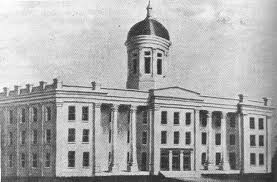
Eventually, the Civil War made its way to campus, and the original buildings were burned.Cumberland Original

Some say that the campus was burned by the Union army. Others say it was burned by the Confederates when they found out that the campus had been used to house African-American soldiers of the Union. It does not matter who did the deed. What matters is that Cumberland University no longer had a home.

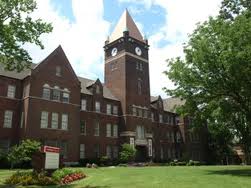
When the war ended, the leadership of Cumberland University was determined that the school would continue. For years, classes were held in buildings around town. In 1892, the generosity of others allowed the university to purchase land for a new campus and build a new building. Memorial Hall was completed in 1896.Memorial Hall 2

The university was destroyed by fire and rose from the ashes. That is why the mythical Phoenix became the symbol of the university. However, the university has risen several times from the brink of disaster.

It survived the loss of support from both the Presbyterians and the Baptists.

It survived as students went off to more wars. In fact, it became the headquarters of the Tennessee Maneuvers that trained soldiers for the invasion of Europe in World War II.

It survived a tornado that ripped across Memorial Hall. The scars of its reconstruction can still be seen.

It survived the loss of its law school, which was renown for its graduates. One of those graduates was Cordell Hull, the Father of the United Nations.

It survived the move to become a junior college and returned to being a four-year institution in the 1980s.

Today, Cumberland University has the highest enrollment in its history. We offer undergraduate degrees in many disciplines. We also offer several graduate degrees.

As a graduate and faculty member at Cumberland University, I know the trials that the school has endured and its ability to survive and thrive. It is a special place with a long and proud history, and I can think of no better symbol than the Phoenix.

A National Championship and the Lessons of History

4 Jun

Last week, the Cumberland University baseball team won the NAIA national championship. It is the third time in the past ten years that the baseball program has claimed the top prize. The coach, Woody Hunt, is a legend in these parts and has led the program for three decades.Cumberland Baseball

A couple of days ago, we had a celebration for the team. There was a parade, and hundreds of people showed up at the baseball field to honor the players and the coaches. Several people spoke, and I was lucky enough to be one of them. As Faculty Athletic Representative, I track the academic progress of all student/athletes and make sure that they are on the way to completing their degrees.

A lot of the baseball players have been in my classes and, hopefully, have gotten the point that history is important. We can learn from our past and use that information to move into the future. In fact, a lesson from the past convinced me that they were going to win the NAIA World Series.

The event was held in Lewiston, Idaho, home of Lewis-Clark State College. That is important because their team was in the World Series, as well. In fact, that is who the Cumberland Bulldogs had to beat to win the championship.

Lewis-Clark State College is names after Meriwether Lewis and William Clark, who Thomas Jefferson chose to lead an expedition into the Louisiana Territory. It is one of the most famous stories in our nation’s history. Lewis and Clark, with the help of Sacagawea, led a band of men through uncharted land to determine exactly what Jefferson had purchased. They returned in a couple of years with fantastic tales of the land and its people.

They were heroes and were treated as such. However, that is not the end of the story. After the journey, Meriwether Lewis faced difficulties in several aspects of his life. Finally, he left his home in New Orleans to travel to Washington, D.C. Lewis want to see Jefferson, his old patron. He traveled the Natchez Trace toward Nashville and was almost to the city when he stopped at a roadside tavern.

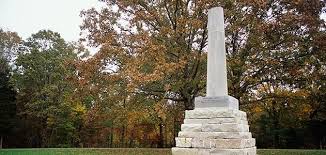
Meriwether Lewis never left that tavern. He was fatally shot, and the mystery of who did it continues to this day. The proprietors buried him in the yard, and his grave can be visited. A broken obelisk stands above him.Lewis Grave

So, how did this story convince me that our baseball team would win the national championship? Meriwether Lewis survived great dangers on his journey into the West. However, he could not survive his journey into Tennessee. With that in mind, I saw no way that a school named after him could beat a team from Tennessee.

The Day Austin Peay Blew Up My Stats Page

26 May

Last night, I opened up my WordPress account to read the latest blogs. At the corner of the screen was the familiar orange beacon telling me that there was a message of some sort. Usually, it is a star to point out that someone liked a post, or it is a dialogue balloon signaling that someone had made a comment.

This beacon was saying that my stats were booming. The blog was receiving a lot more traffic than usual. I have seen this one pop up several times, and it always makes me wonder what is happening.

Did a new reader discover the blog and make their way through a bunch of posts? It is always cool when that happens, and it is easy to determine. The stats will show a bunch of posts have been read by a few people. Yep, someone spent a long time reading my mundane writings, and I appreciate them for it.

Was one of the posts on a topic that has suddenly become a popular search term? I think that has happened a couple of times when older posts jumped to the top of the stat line.

Did I write about something obscure enough that when someone searches for it this blog will show up? I am pretty sure that has happened a couple of times. I am not trying to brag, but I believe this site has become the go-to place for a couple of topics.

Is there some bot out there that found some phrase on my blog and ran with it? I have often wondered how many bots are out there lurking around.

All of those questions went through my mind when I saw the booming beacon but clicking the stats made me wonder what was going on.

A post that I wrote last Fall, “Let’s Go Peay!“, was off the charts. It has gotten more hits in the past several hours than it has in the last several months. How did that happen? Was there suddenly a bunch of people interested in a chant from a small university in Tennessee?

I wrote the post because I always thought the chant was cool, but I never thought it would be something that would bring a lot of readers. Apparently, it is more interesting than I thought, or someone’s browser messed up.

Last week, the university’s football field collapsed into a sinkhole.Sinkhole

You can go ahead and insert a Bane joke. I am sure everyone else has.

That could have made Austin Peay a popular search term, but I would think that interest has past.

Anyway, I am not complaining. Everyone wants a lot of people to read their stuff. I just find it interesting that an old post has suddenly found fame. Heck, it is now the most viewed post of the past quarter. For all the people who read it, I appreciate you stopping by and hope you will stay for a while. I also hope you are real people.

A Picture Is Worth a Thousand Words, But That Is Not Always Enough

21 May

My brother sent an email that he thought I would find interesting. It contains a slide show of old photographs that have been colorized. As the series of photos appear on the screen, melancholy music plays in the background. I must admit that it is a cool thing to look at.

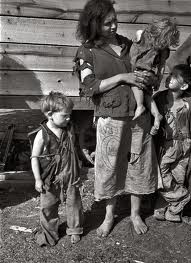
Each photograph has a caption that explains the images. Some of them are of famous people and famous events. Others are of regular people doing regular things. However, one of them stood out from the rest. The caption read, “A mother and her children living on US Route 70 near the Tennessee River 1936.”Poor Woman

This photo struck me for several reasons. Obviously, the imagery is striking as it portrays absolute poverty. The mother had made a skirt from a flour sack, and the children are wearing rags. They are all barefooted and dirty. We can only imagine how hungry they are. Despite these circumstances, the child on the right looks to be having fun. He is pulling on his sister’s foot and smiling at her. She could be laughing or squealing. The scene tells a complicated story.

However, the image was not the only thing that struck me. The picture was made in my state of Tennessee, and that brought the images closer to home. I remember stories of the Great Depression from my grandparents. They said that the Depression was bad, but they were poor before it began.

All of that brought this image close to home, but there is something else. The caption says that they were “living on US Route 70.” That is the road I grew up on. Granted, it is a federal highway that goes from coast to coast, but I always considered it my street. Somewhere inside, I feel that this picture was taken in my neighborhood. It was a different time and vastly different economic circumstances, but it is still my neighborhood.

With all of that going on, I had to do some quick online research, and some interesting information popped up.

This photograph was taken by Carl Mydans as part of the Farm Security Administration, one of the many New Deal programs. It was designed to help the rural poor find better land and learn better farming techniques. To chronicle the plight of these people, photographers and writers were sent out to record their stories. I have no idea how successful the program was in agricultural education, but it provided us with some iconic images of the time period.

(Sidenote: Gordon Parks was a photographer in this program. He went on to greater fame as the director of Shaft.)

As I dug deeper, more information came to light. The family lived near Camden, and their shack was built on the chassis of a Ford truck. There were nine people in the family, and the 17-year-old son said that he had only attend school for two years. Also, there are other photographs that include the father, other kids and the man interviewing them.

That is good information, but there is more that needs to be known. What were their names? How did they find themselves in this situation? Was it the result of the Great Depression, or did the poverty go back for generations? What happened to them? Did the children grow up and improve their condition? Did they survive? Did they know that their pictures would become part of our national heritage?

Like many stories from the past, this one has missing pieces that may never be found. We know a great deal about those in power, but we still have a long way to go with the masses that make history complete.

Hey, Nashville! Be a Real Music City and Build an Amphitheater

17 May

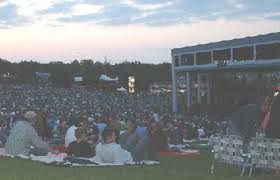
Last night, we went to a concert. That seems to be a theme for us since I am a concert addict. This one had three awesome act – The Devil Makes Three, Alison Krauss and Willie Nelson. Before the show, I had planned on a post about the show and the crowd. Instead, this post is about the venue.

It is called the Woods Amphitheater and has a semi-appropriate name. The woods part is accurate. Basically, they went into the middle of the woods and put up a stage. As far as I could see, that was the only major structure around.

While calling it an amphitheater is technically correct, it is a stretch of the definition. The reserved seats were folding chairs. There were a few concession stands. There were no permanent restroom facilities. My wife refused to drink anything in the fear that she might have to use the portable ones.

After spending too much time in a concession line, I said that I would not come back if Elvis rose from the dead for one last show. And, I am a huge Elvis fan.

In short, I was disappointed with the setup. A stage with folding chairs is advertised as a major concert venue. Look, the owners are not worried about what I think. The concert was sold out, and I am sure they are making plenty of money. However, the city of Nashville should be worried. It bills itself as Music City, but it does not have a real outdoor amphitheater where people can enjoy major acts in the outdoors. There is no excuse.

On top of that, we used to have a great once called Starwood.Starwood

Last night, I started thinking about Starwood and how cool it was. You could buy reserved seats under a cover. They were actually bolted to the floor. If you wanted to bring a blanket and sit on the grass hill behind the seats, then you could do that, too. The best place to sit depended on who was performing.

Starwood was the place where I got kicked out of a Metallica concert. Actually, my buddy got kicked out, and I had to go with him.

Starwood was the place where Robert and I walked into the middle of a knife fight at a Lynyrd Skynyrd concert.

Starwood was the place where I saw The Eagles on their first reunion tour. They opened up by playing the entire Hotel California album.

A lot of people have some great memories of what happened on the stage and in the crowd at Starwood.

As I sat in the wannabe amphitheater, I tried to think of the people I saw perform at the real amphitheater. This is not a complete list, but some of the concerts are hazy.

The aforementioned Metallica, Lynyrd Skynyrd and The Eagles in addition to:

KISS. Judas Priest. Hootie and the Blowfish. Edwin McCain. ZZ Top. Rod Stewart. Chicago. Elton John. Ted Nugent. Crosby, Stills and Nash. Motley Crue. John Fogerty. Rob Zombie. Velvet Revolver. Ozzie Osbourne. Alan Jackson. John Mellencamp. Jimmy Buffett. Def Leppard. Marshall Tucker Band. Meatloaf. Dave Matthews Band. Blues Traveler. Earth, Wind and Fire.

I have no idea how many more there are, but it is a bunch.

Starwood was not one of the all-time great concert locations, but it was better than what we have now. Nashville is a great place to listen to all kinds of live music. It has the Ryman Auditorium, which is legendary. It has an arena and a stadium for the huge shows. There are small places, like the Bluebird Cafe, scattered around town where great musicians perform every night. Heck, Dave Grohl did a surprise show there this week.

However, Nashville’s music scene will not be complete until it gets a real amphitheater.


A Long Night in Old Nashville

16 May

This week, I have been attending meetings in Nashville, and the route to the meetings takes me by a lounge called Dad’s Place. As I passed by this morning, it brought to mind the longest night I have ever spent.

My friend Mac was in town for the evening and wanted to hit the streets. Mac is an old road dog who can stay out late and get up early. Honestly, I have never known how he does it. The only person I know who can hang with him is my friend Pig. Their routines would kill mere mortals.

When Mac said to meet him at Dad’s, I knew it was going to be a long night. I just did not know how long.

Dad’s is an interesting place, and I have no idea how to describe it. I suppose it would be a cross between an AARP meeting and a nightclub. One time, I saw two men in their 60s get in a fight over a woman. You can let your imagination go from there.

After a few drinks, we went to The Stockyard Restaurant, a Nashville steakhouse that is too high and too full of tourists. We did not go to eat. We went to spend some time in the Bullpen Lounge. More drinks were in our future, but the real treat was Tommy Riggs, the house singer. Tommy was a large man, but that did not take away from his voice. He was a great singer and entertainer.Tommy Riggs

I distinctly remember him singing a song that he wrote called “Love’s Last Stand.” I could not find his version on the Internet, but I found Donna Meade’s version.

Of course, Mac and Tommy were on a first name basis.

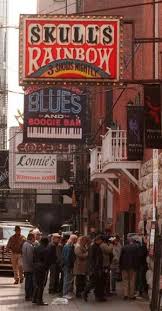
I have no idea how long we spent in the Bullpen, but I was worn to a frazzle. We had more places to go, though. Next stop, the historic Printer’s Alley. These days, it is a tourist area, but it has a seedy past of strip clubs and prostitution. Throughout its many transformations, one place remained a constant – Skull’s Rainbow Room. That was our next stop.Rainbow Room

It should be obvious that the Rainbow Room was owned by Skull, who always sat at the back bar wearing Hee Haw overalls and watching television. We walked in and Eddie, the house singer, was on stage. Guess what. Mac and Eddie were on a first name basis, too. We listened to Eddie sing and drank with him between sets. We were there forever, and lots of people came and went. One of them was the Undertaker. You know, the professional wrestler. We had a few drinks with him, too.

Like at the Bullpen, I have no idea how long we spent at the Rainbow Room, but I know that we closed it down. We helped them clean up. We helped them stack chairs on the tables. We turned off the lights. We shared a cab with Skull. He got in the front seat while Mac and I got in the back. Hold on, some girl got in the back with us. It is hazy, but I remember that she was goth and said something about how she could help me end the night in a great way. It would not cost that much money.

At some point, the girl faded into the darkness. I guess goth people can do that. We dropped Skull off at his apartment. It was not too many years later that Skull was robbed and killed at closing time. It is one of the more famous crimes in Nashville’s history.

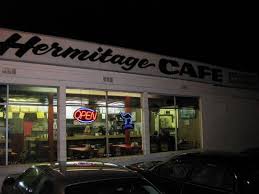
One would think that the night would be over. It was not. We made our last stop at the Hermitage Cafe.Hermitage Cafe

It is like Waffle House but better. Then, we finally made it to the hotel and to bed. A couple of hours later, Mac was up and ready to go. I was ready to forget how bad I felt.

The longest night I have ever spent was forever ago. As I said, Skull is no longer with us, and the Rainbow Room is boarded up. Tommy Riggs has also passed away. I have often wondered what happened to Eddie. Did he find another club or go back home? I have also wondered what happened to that girl. Did she find another customer that night, or did she meet her coven around the cauldron?

Yes, it was a long night, but it was also a fun night.


You Never Know What You are Going to Learn at the First Presbyterian Church

7 May

This past Saturday, I had the honor of speaking at the Men’s Breakfast at the First Presbyterian Church. We had a great meal, and I hope that I taught them some local history. As it turns out, I learned quite a bit of history from them.

After my presentation, I mentioned that this was my first time in the church. That meant that I got a tour from Dr. Bone, whose family has deep roots in our community.

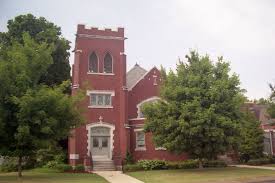
He said that the church was built in 1910 and was built in an architectural design that came out of Ohio. The stain glass windows chronicle different stories in the Bible and were donated by prominent citizens of the time. Their names are part of the design. And, who designed them? Tiffany. Yes, it was a church filled with the town’s wealthiest citizens.First Presbyterian

He told me about the prominent members who have attended through the years and showed off the pipe organ. It was all very cool, but it was not as cool as the last story that Dr. Bone told me.

After college, Dr. Bone took a trip around the world. He found himself walking through the streets of a city in India when he heard an explosion in the distance. He kept walking but heard another explosion. This time, he decided to investigate.

As the came upon the scene, Dr. Bone saw that they were filming a movie. He saw some people sitting in chairs and watching the action. Most were locals, but there was a lady in a huge hat sitting on the end.

Dr. Bone made his way over to the lady and asked what was going on. She explained the scene to him and admitted that she had written the screenplay. After a few minutes, she asked him where he was from. Of course, he replied that he was from Tennessee.

With this knowledge, she lit up and said that her brother taught English at a university in Tennessee. It was Cumberland University (where I work). This time, Dr. Bone lit up. That is where he went to school, and her brother was his English teacher.

That is when she finally introduced herself.

“My name is Pearl Sydenstricker, but you probably know me better as Pearl Buck.”

Now, this is a story with a lot of moving parts. Local boy travels around the world; happens upon a movie being filmed in India; meets the screenwriter; finds out that her brother is Dr. Sydenstricker; and then finds out that he is talking to Pearl Buck.

That is one of the coolest stories I have ever heard. However, this is what I really could not believe. Pearl Buck’s brother taught English at Cumberland University, and I do not think many people know that. At least, I have never heard it, and I have heard a bunch of stories about the history of our university.

It goes to show that you never know what you will learn at the First Presbyterian Church.


Narrows of the Harpeth

5 May

My wife came up with the idea to go hiking, and I thought it was an excellent suggestion. We have done a little hiking together before. The first time was the Alum’s Cave Bluff Trail in the Great Smokey Mountains. Another time was around a volcano in Costa Rica. Those were hikes while dating. This was our first hike as a married couple.

It was up to me to find a place close by, and I settled on the Narrows of the Harpeth Trail in Harpeth River State Park. It would be new territory for the both of us.

The park is just past Pegram, which is west of Nashville. That is opposite of us. I plugged in the GPS, who I fondly refer to as The Bitch, and headed west on Interstate 40. I have to give The Bitch credit. She took us to within a few hundred feet of the trailhead.

The Narrows is a rock outcropping that sits in a narrow bend of the Harpeth River. It is mostly used as a place for people to fish or begin a kayaking excursion. The bend is so narrow that the river almost comes back and runs into itself. Other people may fish or kayak. We were going to hike.

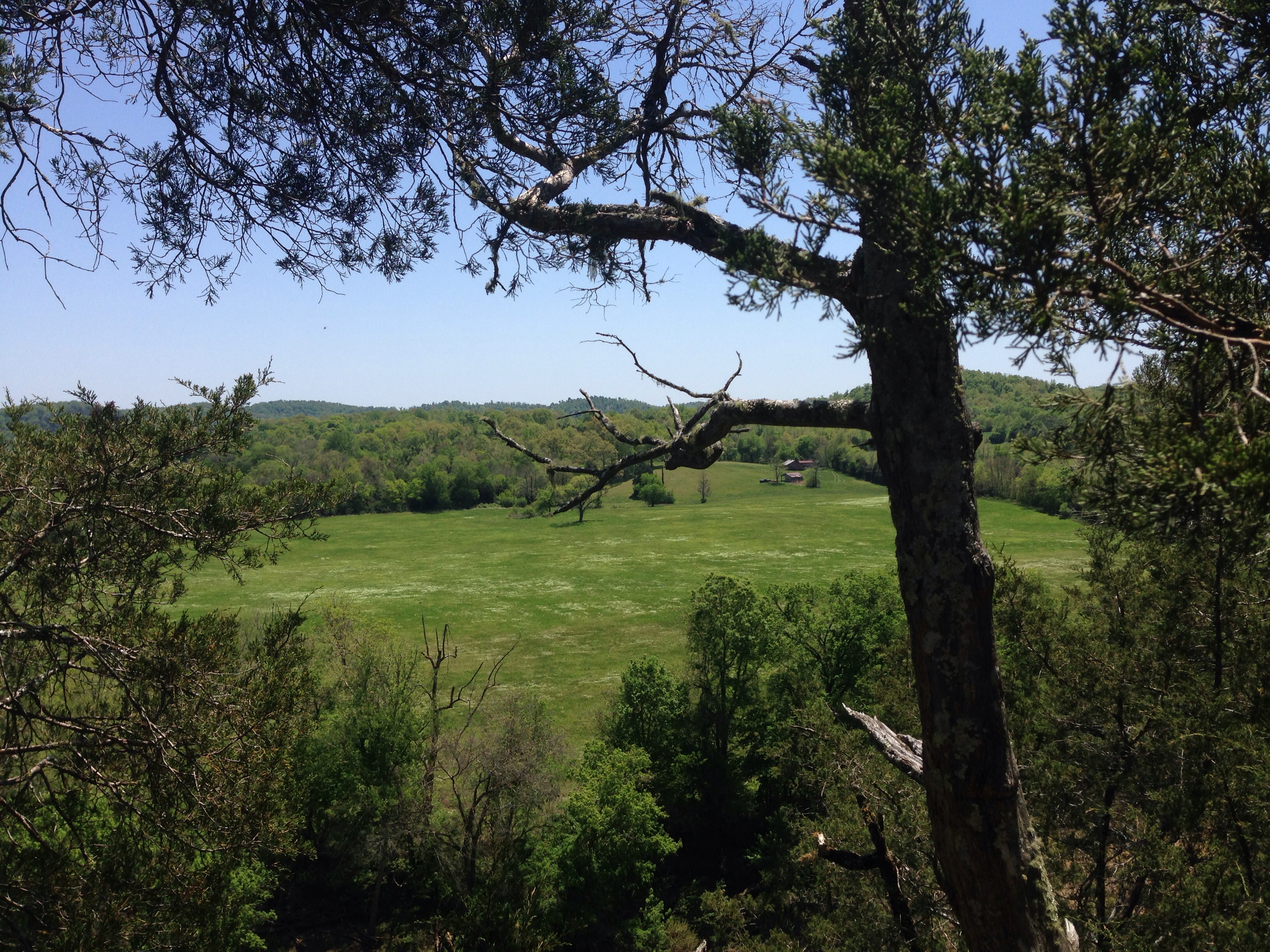
The first part of the trail is an incline that takes you to an overlook. From this perspective, you can see the surrounding landscape. Immediately in front of us was beautiful farmland.image-22

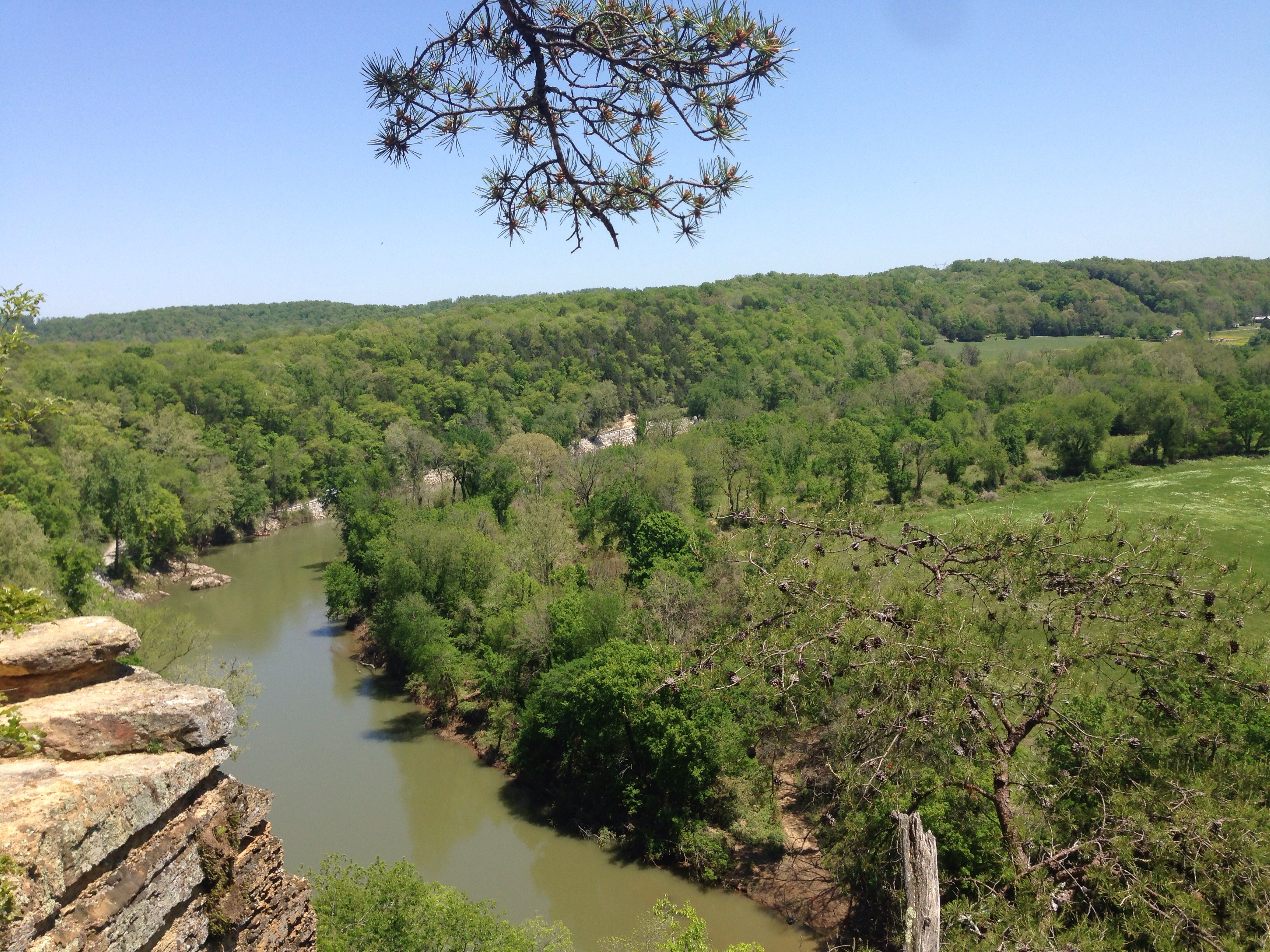
There was also a great view of the river below.image-23

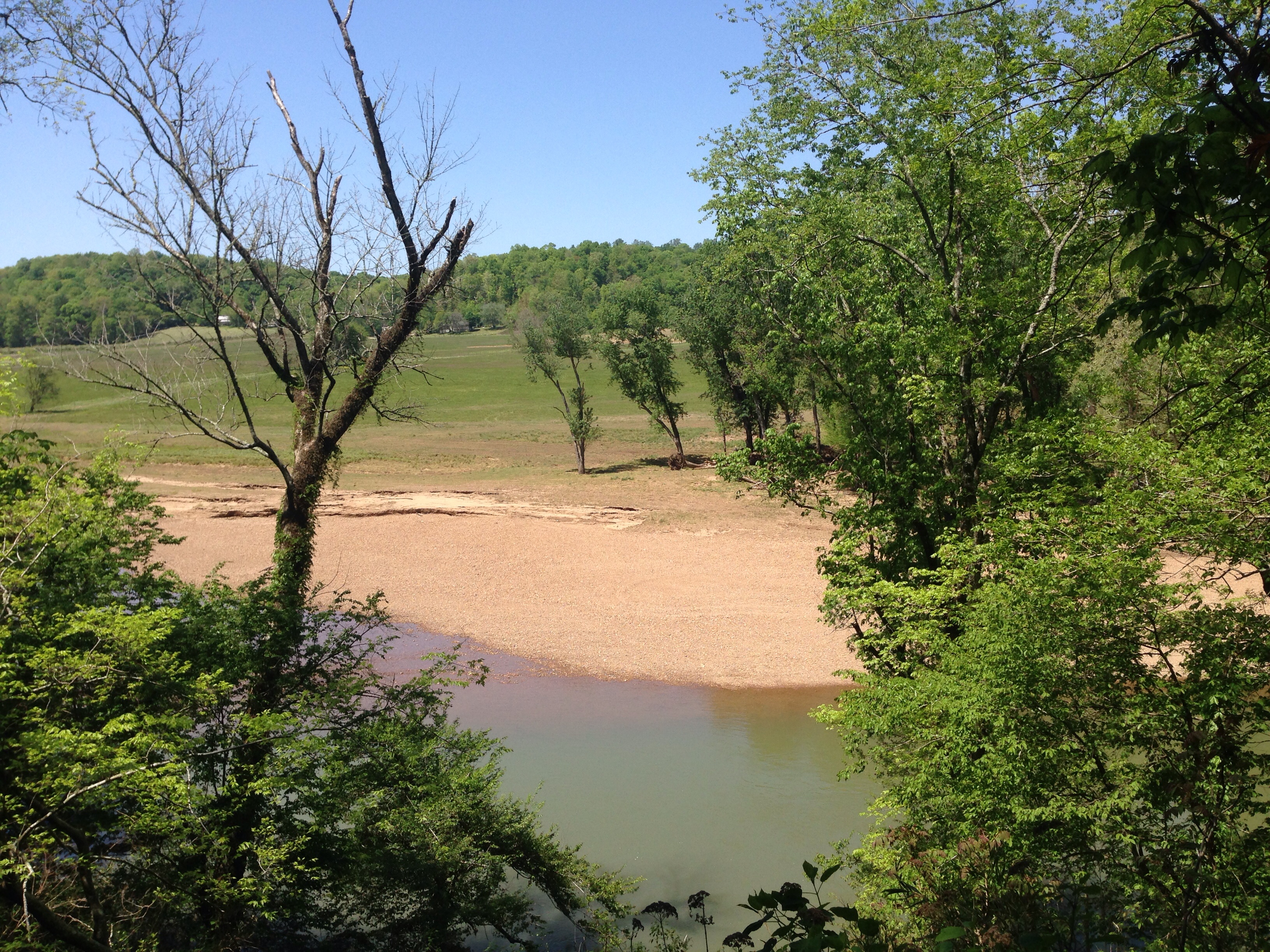
After making our way back down, we walked to the other side of the bend and walked along the river bank.

image-24

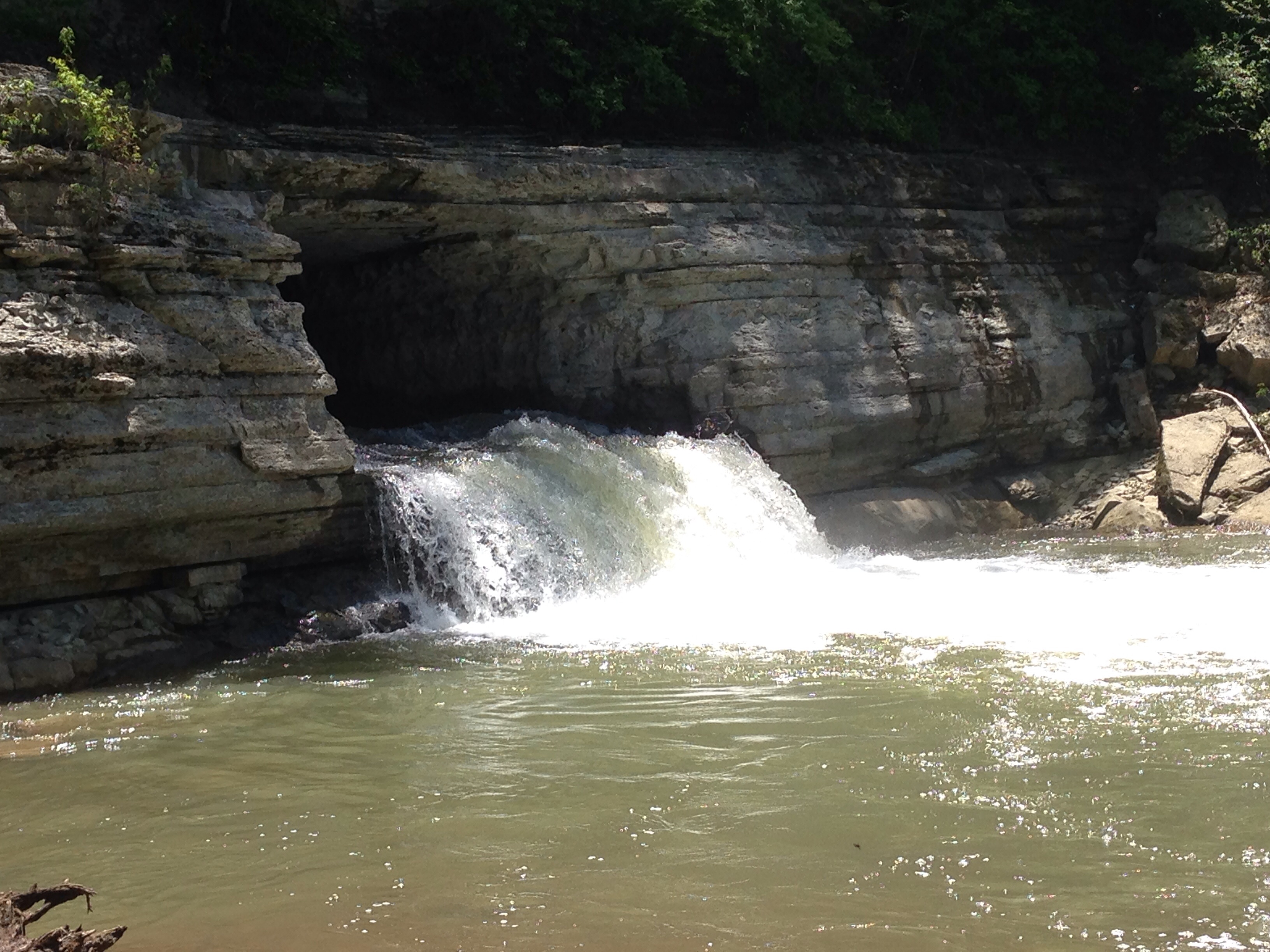
At the end of this trail, we found something historic, and everyone knows how I like to find something historic. To put simply, it was a tunnel with water shooting out of it.

image-21

However, this was not just any tunnel. It is one of the oldest manmade tunnels in the United States. Montgomery Bell, a wealthy industrialist, used slave labor to dig a diversion tunnel as a power source for his ironworks, Pattison Forge.

Watching the water surge from the tunnel, I thought of several things.

There was once an industrial complex at this site, and, now, it is a nature trail. I wonder what Bell would think of his investment being totally gone. This tunnel is all that is left.

Also, people have a misconception of the life of slaves in the antebellum South. They think of people working in a cotton or a tobacco field. However, slaves were forced to work in other economic areas, as well. I cannot imagine the hard work and suffering it took to dig a 290-foot tunnel through solid rock. These people were not forced to work in agriculture. This was big industry.

As we walked back, I thought about a story I once heard. Some former students were kayaking in an inebriated state and went into a forbidden tunnel. I heard the story of their terrifying ride through darkness without knowing where they were headed. Suddenly, the water fell away and only air was underneath them. Suddenly, it hit me that this was the tunnel.

We decided that on our return trip we would kayak instead of hike. However, I am not going to make my way into the tunnel. I believe the best view of the tunnel is from the outside. The slaves who built it and the students who ventured into it would probably agree with me.