Archive | Academics RSS feed for this section

Bound for New Mexico

8 May

Each May, myself and three other professors lead a field trip course to New Mexico. We use Santa Fe as a base and take daily excursions throughout the surrounding area and study different aspects of the area – history, anthropology, biology, economy, art…the list goes on and on. In the middle of the educational experience, we have a lot of fun as well.

In a few days, we will load up the vans and, as was famously written, “Go West, young man!” The problem is that a few of us aren’t that young. I will not be blogging during my time in the “Land of Enchantment”, but I will be Tweeting about our adventures. If you would like to follow along, then click the little bird in the column to the right. When we return, I will have plenty of stories to share. Hopefully, some interesting blog posts will be the result.

Tales of the Blue Chairs

7 May

My office sits at the end of a hallway and would be considered by many to be in an out-of-the-way corner where little activity takes place. I mean that’s what I thought when I first moved into it. That’s why I picked it. No one would be walking by. There wouldn’t be much noise. The only ones who would come back there would be doing it for business purposes only. However, the decorators decided to put three blue chairs a few feet away from my door.

Through the years, the blue chairs have become a popular spot for people waiting for class. More often than not, people work on their computer; study for a test; read a book; or sleep. In short, they are doing the things that college students do. But, there are times when things change and the atmosphere becomes conversational. Groups gather before class and talk about things that college students talk about. That’s not surprising.

The surprise is that the conversations go on like I am not even there. It’s like they think there is an invisible force field in the door frame that stops sound from entering my office. Or, they think I am deaf, but I am not the deaf teacher. Or, maybe they don’t care what I hear. No matter the case, I hear a lot.

From my office, I have heard relationships fall apart – either in person or by phone. Several years ago, one older student had a profanity-laced screaming match with her boyfriend. I have also heard people talk about how terrible their relationships are. The whole time I am thinking that if you don’t know how to get out of a bad relationship now, then you have a tough row to hoe.

I have also heard complaints about teachers, coaches and other figures of authority. Admittedly, this surprises me the most. After all, I am a member of the group that they are talking about. This teacher isn’t fair. That teachers sucks. My coach is an idiot, and the other coaches laugh at him. It goes on and on. And, guess what. They also talk about ME! Outside of my office! While I am sitting there!

That’s serious stuff. When people are caught in bad relationships and discuss the faults of their teachers, they are hitting topics that are important. However, a lot of times it gets comical. I have heard about the plans for huge parties and about parties that have already happened. I have heard students laugh, joke and reveal the fun aspects of college. They talk about movies, music and other topics that are important to them. Honestly, it helps me keep up to date and be able to talk to them about things they consider important.

When they put the blue chairs outside my office door, I was not very happy. I thought it was going to break down the walls of my fortress of solitude. I was right, but I am glad that it happened. I have access to information that tunes me into the psyche of our students and provides me with information on the happenings of campus. This is valuable information that I can use to relate better with the students and, hopefully, educate them better. It will also help me when I take over the world. Every good leader should know the hearts and souls of his people.

Things I Have Learned During Finals Week

4 May

Today, my colleague in the historian’s craft posted a great piece about the most memorable answer he has seen on a final exam. It is a very funny story, and you should check it out. (Yes, funny stuff happens in the world of academics. In fact, it happens all the time.) There is no way I can top that answer, but it made me think about some of the things I have seen through the countless final exams weeks of my life.

Final exams are the culmination of months of learning by the students. It is when they take the information they have absorbed and prove that some of it stuck. But, final exam week holds a deep secret in the dark corridors of the ivory towers. It is a time for the faculty to learn something as well. Through years of grading tests and seeing people operate in the stressful environment of the last week of school, I have learned quite a bit. This is a serious and not-so-serious list of the information that I have absorbed.

(Due to federal requirements, the events that I describe are HISTORY and not the PRESENT.)

Being within 3 points of an A means that a student should get an A. (After all, close counts in horseshoes and hand grenades.)

Al Capone ran for president of the United States in 1928. (I don’t know why. He was already richer and more powerful.)

Extra Credit should be given after the semester is over. (Especially if it provides the 3 points needed for an A.)

Even I, the great and powerful, can miscalculate sometimes. (I know. It’s hard for me to believe, too.)

On December 7, 1941, “a date that will live in infamy”, the empire of Japan attacked Alaska. (There wasn’t much happening in Hawaii.)

Mothers can get vicious about grades. (Even after their children have reached adulthood.)

The bookstore folks get really stressed out during finals week. (I really didn’t think they had much going with books being returned; people picking up graduation regalia; and everything else.)

Students realize they have scholarships. (And a bad grade may make that scholarship disappear.)

Franklin Roosevelt was blind when he was elected president. (I realize how someone would think this. Have you seen Eleanor?)

Retirement is bittersweet. (It’s tough to watch people leave something that they have been doing for decades.)

Speakeasies have never existed. (Maybe Al Capone wasn’t so rich and powerful after all.)

People worry about the length of the graduation ceremony. (Guys, be happy you made it and stop worrying.)

Almost everyone shows up to take their final exam. (It’s amazing really. People that you haven’t seen in months suddenly show up. It’s like the return of Gilligan or something.)

The student affairs folks already plan for next semester. (They do that. I promise. It’s like people are really on the ball.)

Napoleon Bonaparte was an American who traveled to France to help with the revolution. (I knew he was too ambitious to be French.)

Alexander Graham Bell is my ancestor. (Oh, how I wish that were true.)

Cheeseburgers, Clocks and Albert Einstein’s Wife

21 Mar

Sometimes we have to search for something to write about, and other times subjects just appear. Today, I was struggling with ideas for tonight’s installment until I realized that it was happening right in front of me.

In my morning class, I brought out an activity that I have been using through the years to break up the monotony of lectures – for both me and the students. I ask them to list five people from history that they would like to have dinner with. When they are finished with their lists, I go around the room and ask who they wrote down. Then, we discuss one from each list. The parameters of choices are pretty wide. They can pick someone dead or living (living people have affected history too). In short, they can pick anyone famous. I allow this to show that history is not made up only of political leaders and other people who deem themselves important. Everyone takes part in the story of history. I also allow this to see what they are interested in.

As we went around the room, the usual suspects popped up. Jesus and Adolph Hitler have always been popular choices. (I wonder how often those two names have been used in the same sentence.) George Washington, Thomas Jefferson and Abraham Lincoln came up as well. I also get a lot of celebrities and athletes, but I was surprised to have a girl who wanted to meet Megan Fox. Some new names emerged, like William Shakespeare, Charlie Chaplin and Super Tramp (you know, the band).

However, I was really surprised to hear someone say Albert Einstein’s wife. I know that there was a stunned look on my face as I asked, “Why Albert Einstein’s wife?” The following conversation took place.

“Because she is the one who did all of the work. No one would listen to her because she was a woman, so she put everything in his name. He was dumb. He didn’t even know how to tie his shoes.”

“I have never heard that. Where did you see this?”

“A friend told me. It’s like a conspiracy.”

“I’ll have to look into that. It is true that women did not have as many opportunities in those days, and I am sure she was an intelligent lady.”

I quickly moved on to someone else because I had nothing else to say. I did not want to quash a student’s interest in the subject, but I have never heard this theory before. Instead of making the student look bad, I said that was a very interesting idea that I wanted to investigate and would like them to investigate as well. Diplomatic, huh? I haven’t looked into this yet, but if you guys have ever heard about this please let me know. In the meantime, here is a picture of Albert Einstein’s wife along with Albert.

That was fun, but, as they say, the fun wasn’t over yet. I was starving when I left school. Rotary had corned beef and cabbage left over from a St. Patrick’s Day party. It was served with potatoes, and I wondered if the Irish started eating this beef and cabbage stuff when their potatoes went bad. If so, then serving them together is pretty ironic. Anyway, I was hungry and went into a drive-thru. The following happened.

“What can I get you today?”

“I would like a cheeseburger with ketchup, mustard, pickle and lettuce. I would also like fries and a medium Coke. (In the South, all soft drinks are called Coke.)”

“I have a cheeseburger with ketchup, mustard, pickle and lettuce. Fries and a medium Coke. Would you like cheese on your cheeseburger?”

Silence as I pondered that question and the origins of the universe which Albert Einstein’s wife theorized about.

“Sir?”

“I’m here.”

“Would you like cheese on your cheeseburger?”

“Yes. That would be good.”

“Drive to the first window please.”

After getting my cheeseburger with cheese, I headed home. At a red light, an old school station pulled ahead of me, and I noticed something strange in the rear window. There was a clock – a round clock that should be hanging on a wall. And it was keeping time. Next to the clock was a sticker that said, “I’m a Lover.” Perhaps, he was timing himself because he was, as The Dominoes would sing, a Sixty Minute Man.

I went home; ate my cheeseburger with cheese; thought about Mrs. Einstein and the Sixty Minute Man; and knew I had my blog post.

It’s a Conspiracy

4 Mar

This semester, one of my fellow history teachers is offering a cool class on conspiracies in American history. I wish I could sit in on the course because he covers conspiracies from different eras and explains why people have been attracted to the theories during those times. It is interesting to hear his students talk about the subjects they cover in class and the assignments that he gives them. I can tell that they are having a lot of fun and learning along the way.

A few days ago, a couple of students were in my office talking and explained that each of them have been given a specific conspiracy to research and write about. As one talked about their assignment, I said that I had been there. Then, the other one talked about their assignment, and I have been there as well. Finally, one of them said that I must be the one behind all of the secrets because my travels have made me a common denominator. We laughed, but I began to think, “Damn, I have been to a lot of these places.”

With that in mind, here is a list of the places I have been lucky enough to visit that are connected to some vast conspiracy.

Cape Canaveral – One of the coolest tours anywhere, you can get a upclose view of the launch pads used from the 50s to the present. It is amazing to take a journey through the technological changes. What makes this prime conspiracy territory? Ask any moon landing skeptic, and they will tell you that these launches didn’t go anywhere. The astronauts were walking around somewhere in the desert.

Mount Rushmore – Actually, I didn’t know a conspiracy surrounded this monument until I watched an episode of Brad Meltzer’s Decoded. I thought the only conspiracy involving this place was by the people who made that stupid National Treasure: Book of Secrets movie. However, Meltzer’s minions looked into the possibility of the mount paying homage to racial purity. I don’t know about that, but I know that the Black Hills were the sacred land of the Sioux. The fact that it is now a tourist trap is conspiracy enough.

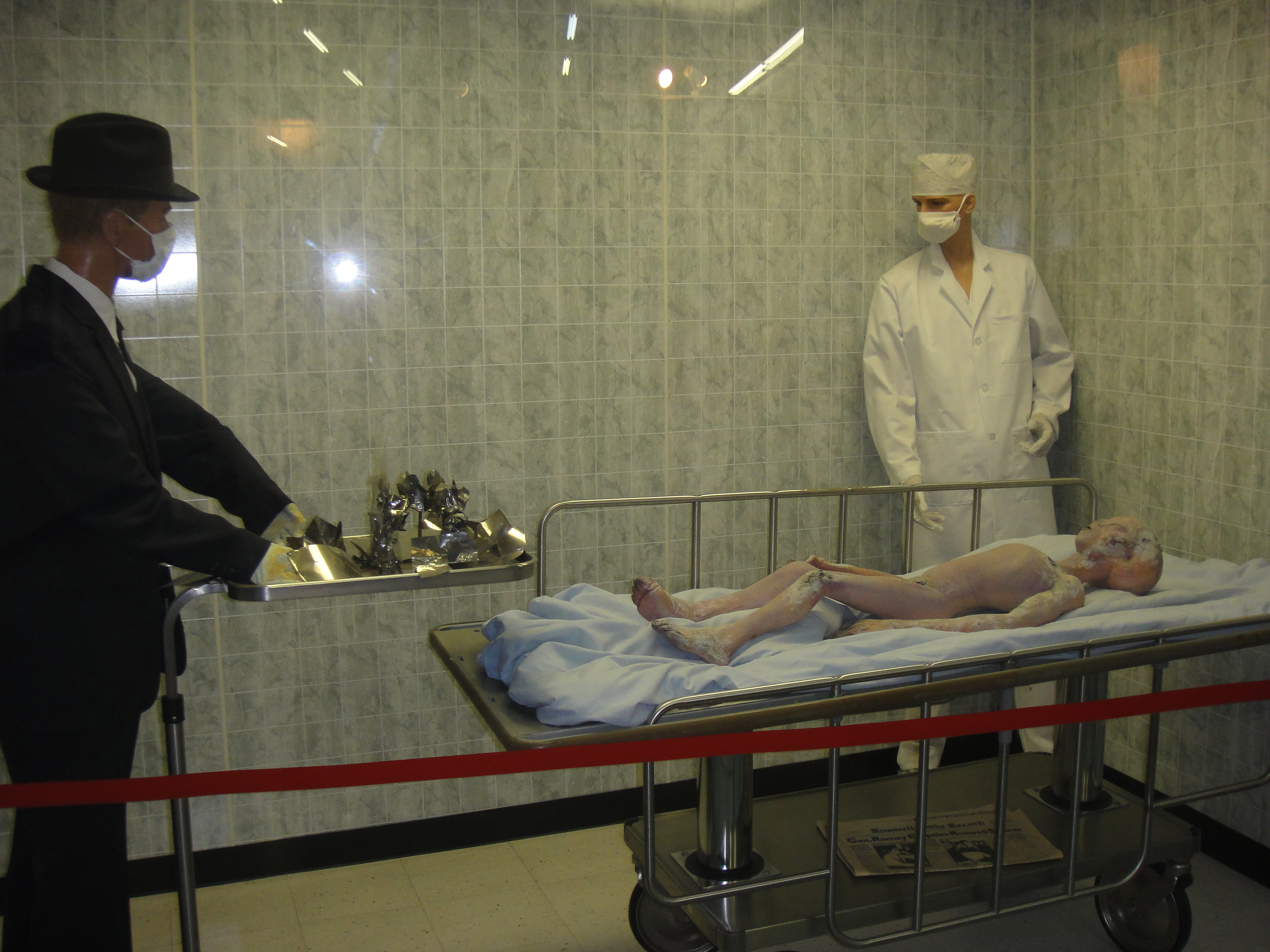
Roswell – In 1947, a UFO crashed near this New Mexico town, and the government has been covering up the incident ever since. It must be true because there is a museum dedicated to it with a lot of cool exhibits.

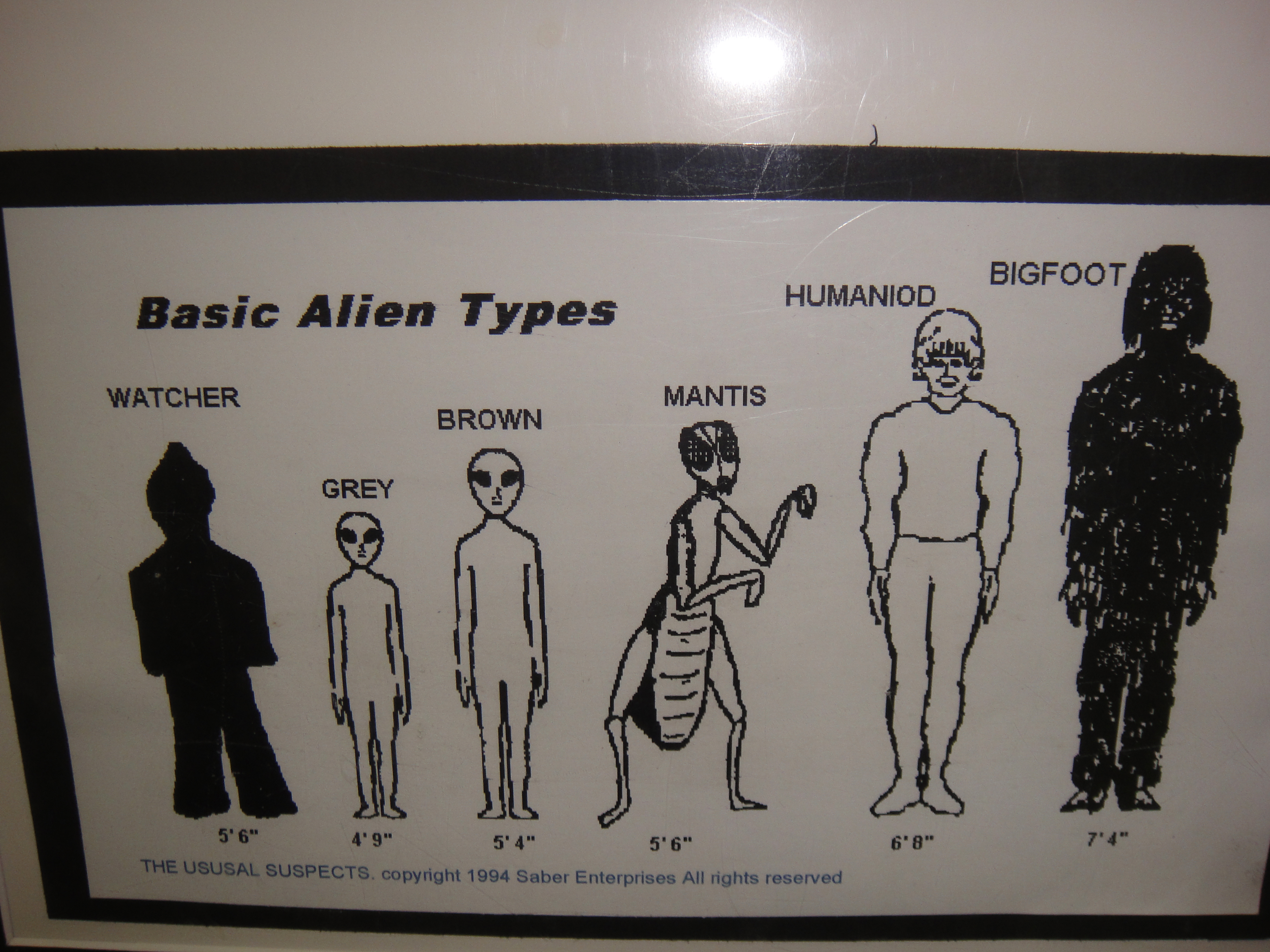
What? You didn’t know Bigfoot is an alien?

Then, you probably didn’t know that they have real recreations of alien autopsies.

Actually, the museum is interesting and has an extensive collection of UFO videos, research and writings.

Memphis – I wrote in a recent post about my visit to the National Civil Rights Museum, built on the site of Martin Luther King, Jr.’s assassination.

This conspiracy springs from the idea that a petty criminal like James Earl Ray could not have shot King and escaped to Europe without help. Ray fed this idea with his insistence that he was working with a man named Raoul. I have also wondered how Ray got away but had my questions answered after reading Hellhound on His Trail: The Stalking of Martin Luther King, Jr. and the International Hunt for His Assassin.

Dallas – The granddaddy of all conspiracy theories is based around the assassination of John F. Kennedy at Dealy Plaza. Most people probably believe that Lee Harvey Oswald did not act alone. Some say it was the mafia. Others say it was the Cubans, the Russians, or even the vice president. I don’t know about any of that, but I believe this conspiracy lingers for a couple of reasons.

First, a president, Abraham Lincoln, was actually the victim of a conspiracy.

Second, a visit to Dealy Plaza leads people to believe that something else must have happened. Walking around the grounds, it just makes sense that the gunman was on the grassy knoll and not in a window on an upper floor of a building. It is difficult to describe the area, but everyone should take a look for themselves. I must admit that of all the conspiracies this is the one I come closest to believing.

There you have it. The list of conspiratorial places that I have visited. I promise that this doesn’t make me the Cigarette-Smoking Man from The X-Files. Where’s my proof? If I was, then the following would happen.

Derek Dooley would resign as the head football coach at Tennessee, and the team would never lose another game.

I would win the lottery.

People would be breaking the law when they throw chewing gum on the ground.

I would win every hand of Blackjack.

All of us bloggers would be world-famous.

Picture This – Bobcat Bite

27 Feb

Each May, myself and a few other professors (Dave, Fred and Pete) take students on a field trip to Santa Fe, New Mexico. Over a span of two weeks, we explore the surrounding area and provide the students with information in our fields of study. Dave, a business professor, talks about the economy of the region and how it changed during the centuries. Fred, an anthropologist, specializes in Native American cultures and oversees the trip. Pete, a biologist, tells us about the land, plants and animals of the area. I, as the historian, attempt to bring all of this together and tell the story of the region and its people.

However, eating is the highlight of the trip for all of us. We hit some of the best restaurants in Santa Fe and Albuquerque in an attempt to introduce the students to fine New Mexican cuisine. They think good Mexican food can be found at Taco Bell and the millions of locally owned Mexican restaurants in our area. I am convinced they are all owned by the same person because they all have the Speedy Gonzales special. At any rate, when they get back to Tennessee their taste buds have been spoiled with real peppers, sauces, tamales, burritos…the list goes on and on.

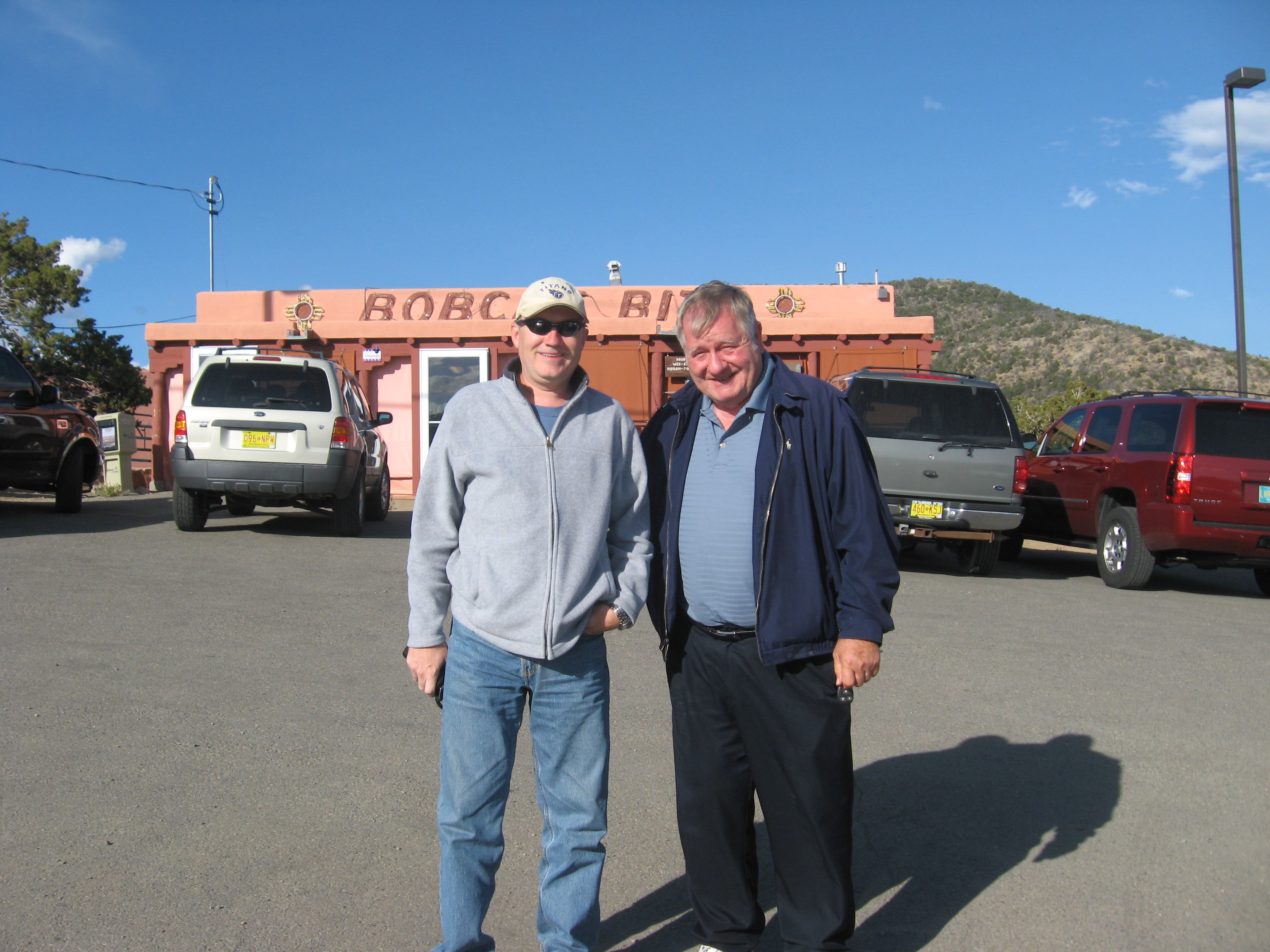
With that being said, one of our favorite places doesn’t serve Mexican food, from New or Old Mexico. In business since the 1950s, Bobcat Bite is a small, pink building on the outskirts of Santa Fe that hides heaven within its walls. In the picture, that’s me and Dave salivating before we go in. And, what’s waiting for us inside? Green chile cheeseburgers. These are 10 ounces of ground beef covered with cheese and drowned in green chile sauce. I don’t even have the words to describe how delicious it is. All I know is that it is so good that we go more than once on our trips.

The restaurant has been featured in GQ, Bon Appetit, and Travel and Leisure. But, I don’t have to read those articles to know what to do after I write my name on the chalkboard (being small there is usually a wait). With a little luck, I will get a seat at the lunch counter with a view at the surrounding mountains. From here, there is also a view of the kitchen and the wonderful things happening back there. Then, I order the cheeseburger that I described and an order of fries. They also have steaks, but that really isn’t the point. When the goodness is placed in front of me, I dig in and enter hamburger, cheese, green chile and grease paradise.

If you ever find yourself in Santa Fe, then do yourself a favor and head to Bobcat Bite. Get a cool t-shirt while you are there.

Your Assignment…Should You Choose to Accept

27 Jan

This semester I have the good fortune of teaching my favorite class, a history of the American West. This is my major area of study, and I get a kick out of talking about all of the things I have researched and written about. However, it needs to be fun for the students as well. I believe that many historians do a wonderful job of making an interesting topic as boring as possible, and I attempt the opposite. History is fun for me, and I want the students to have the same experience.

Several years ago, I developed something that the students call the “Movie Assignment”. They watch a movie based within the time period we are discussing and compare it to actual events. The scenery and action of the films provide them with a visual clue of what may have been like, and the story often gives them an idea of life itself. Obviously, not all movies are appropriate for this type of activity. Pearl Harbor may have been the dumbest plot ever written. Therefore, World War II class did not get the option to watch it. They got movies with deeper meanings and more of a foundation in reality.

In the American West, students have the pleasure of watching films from my favorite genre. Except, there is a different aspect to the assignment. Western settings have long been used to offer more contemporary lessons. Think of it as the Mt. Olympus of the United States. It is the place with myths are made, and flawed heroes face decisions with no correct answers. To get the students on the right path, I recently assigned each of them a movie to watch. We haven’t discussed what they should look for because I want them to watch the movies for enjoyment first. This post lists the movies and why I chose them. If you get the chance to watch them, then perhaps these are things you can look for.

1. Rango– I know, it’s a cartoon. However, it pays homage to westerns throughout the decades. Watching closely, you can pick up small details that bring to mind the great western movies and western actors. Besides, how can a movie be bad when “The Man With No Name” shows up as the Spirit of the West. I only that the original “Man With No Name” could have been used to voice the character.

2. The Man Who Shot Liberty Valance – “This is the West, sir. When legend becomes fact, print the legend.” One of the great lines in western history and an statement that describes how difficult it is for historians to dig through the legend to get to the fact. This film is filled with symbolism, as each character represents an aspect of the “taming of the frontier” experience.

3. Fort Apache – The second John Ford/John Wayne movie on the list (TMWSLV was the first), this is one of the first movies to show Native Americans in a positive light. It takes real battles of the Indian Wars and combines them into a fictional one. In the process, it shows the misguided policies of the United States toward native peoples. This could be relavent for a lot of times in history – Indian Wars, Vietnam War, Gulf War.

4. The Searchers – The third John Ford/ John Wayne installment (I promise that they don’t make up the entire list) is an epic about a man searching for his niece, who was kidnapped by Indians. It shows his maniacal racism toward these people and how it increases throughout the film. Most of the underlying currents were missed by the audiences of the time, but they come to light as the years pass.

5. The Magnificent Seven – A remake of the Japanese film, The Seven Samurai, this movie was had a compliation cast of stars in an action packed adventure. However, many don’t realize that the original Japanese film was a western placed in a different time and place. So, a western copied a foreign film that copied a western storyline. This shows that the themes of the western genre are actually universal.

6. Dances With Wolves – The Kevin Costner movie won the Academy Award for Best Picture. did you know it’s more popular “remake” lost the same award? Avatar has made more money than any movie in history, but it should be renamed to Dances With Aliens. It’s the same storyline. Watch them back to back and see what I mean. This shows that the western never disappeared. It simply got better graphics and tuend into Sci-Fi. For example, Gene Roddenberry was a writer for Wagon Train when he pitched Star Trek as “Wagon Train to the stars”. And , can’t you picture the black-hatted darth vader as a cattle baron building his empire on the backs of settlers (before the later movies became some convuluted political statement)? Also, when Luke returns to find his uncle’s homestead burning, it reflects Ethan Edwards returning to find his brother’s homestead burning in The Searchers.

7. Pat Garrett and Billy the Kid – Sam Peckipah uses this movie to depict his idea of the destruction of the American west. Look at all of the western character actors that are killed or shown in stages of degeneration. Peckinpah’s version of western history is inaccurate, but his portrayal of the disappearing frontier is poignant. Plus, Slim Pickens dies with Bob Dylan singing “Knockin’ on Heaven’s Door”. The best dying scene ever.

8. The Outlaw Josey Wales – There should be a law that says everyone has to watch this movie once a year. Josey sees his life ripped apart by the ravages of war. In response, he becomes a gunfighter to reap revenge on those who killed his family. Along the way, he picks up a surrogate family of people who have seen their lives destroyed by violence and hardship. It turns out that the “loner” isn’t alone after all. Filmed in the mid-1970s, the Civil War and its aftermath can easily be seen as the Vietnam War.

9. Bury My Heart at Wounded Knee – An attempt to depict the plight of Native Americans as they saw their lifestyle and land taken away. It is a noble attempt. Unfortunately, there are a lot of inaccuracies. The Native American story needs to be told and can be told in an accurate and informative way. This movie, in an attempt to tell the other side of the story, goes to far the other direction. As in all conflicts and clashes of cultures, there are good and bad people on both sides. Portraying that inaccurately takes the meaning away from all of them. On top of that, the portrayal of the Battle of Little Big Horn is shameful.

10. High Noon – This movie is not exciting at all. And, I cringed each time I see the sheriff ask for help. However, there is a reason he does. This movie places real life events in another setting as the sheriff represents those victimized by the House on Un-American Activities Committee that was led by Joseph McCarthy. Audiences of the time would never watcha movie about a supposed communist, but they would watch a movie about a sheriff in trouble.

11. Jeremiah Johnson – Based on an actual mountain man, Robert Redford shows the harshness of life as a Rocky Mountains trapper. There are accuracies and inaccuracies, but the overall story is true to the experience. The scenery is fantastic and the dialogue is witty and appropriate. Under the current, you find the story of a man who tries to run away from civilization only to find that it is never far away.

12. The Good, the Bad and the Ugly – A western about the Civil War in New Mexico that was filmed in Europe. What else can I say? When it came out, many movie critics panned it because everyone knows that the Civil War took place in the east. Wrong. It is based on a reall mission to capture what is now New Mexico. This movie shows how westerns influenced film makers in other countries and how they, in turn, influenced the genre and the view on the region’s history. Also, the musical score is the best of any western ever. And, an American didn’t compose it. Weird for those people who believe the west is all about independence and the American ideal. It wasn’t about that at all.

So, there is the list for my students. Can you think of any other movies I should have used instead? Do you think my students will stumble upon this in their research. If they ever get away from Wikipedia that is.

Syllabus, Syllabus

9 Jan

“From a little after two oclock until almost sundown of the long still hot weary dead September afternoon they sat in what Miss Coldfield still called the office because her father had called it that – a dim hot airless room….” Wait, that is the beginning of that other boring document by William Faulkner called “Absalom, Absalom”. The boring document I am blogging about is called “Syllabus, Syllabus”, in my opinion the worst chore for a member of a university faculty. And, it gets worse every semester.

When I began teaching a decade ago, I had no idea how to put together a syllabus. I had received a few in my student days but never realized what was in them. I paid attention to the assignments and the days they were due. Simple, right? Well, it is not as simple from the other end. My first syllabi were straight copies from another teacher. They had worked well for him through the years, and he figured they would work for me as well. And, they did. I looked at one a few hours ago and was stunned by its simplicity.

Contact information at the top.

A sentence about the course content.

An attendance statement (He didn’t count off for missing classes, and I have followed his example. However, he NEVER wanted anyone to show up late. At class time, he locked the door. Unfortunately, I can’t do that.)

A detailed description of the assignments and when they were due.

A grade scale.

That’s it. The syllabus took up 1 1/2 pages and provided everyone with the information they needed. Now, it isn’t that simple because the university has several items that they force us to put in. Most of it is federally regulated. Another example of the federal government getting out of control. I know the day will never come when the government decides to stay out of our daily lives, but one can hope.

That’s problem enough. However, the biggest problem is that federal guidelines and the university response to them changes all the time. In our meetings last week, we were told to put certain items in our syllabi that were completely different from what they told us last semester. Personally, I blame Franklin Roosevelt because he started these government shenanigans. At any rate, I just finished a couple of syllabi and thought some of you might get some blog-reading entertainment out of it.

The first part is simple and straightforward. At least, I think it is. To make sure that it is, I go over it with the class.

Name of the course. (It’s hard to believe how many people walk out during this part when they realize they are in the wrong place. A few more just stay to the end, so they won’t look stupid. That would probably be my choice. Even worse, last semester I had a kid come to class on the wrong day after we had been going for a month.. He sat through the whole thing and even asked a question.)

My office location. (It’s across the hall. I tell them that, and they still can’t find it. Hell, just ask someone where the office with the whores on the walls is.)

Course description. (By now, one person has gone to sleep)

Book for the course. (In one of my classes I use “Devil in the White City”. A few years ago the bookstore lady told me that a couple of African-American students said they were not reading a racist book. They thought “white city” meant white-ruled society, and they were being called “the devil”. It’s actually about the Columbian Exposition of 1893 and the serial killer that stalks its visitors.)

Attendance. (There is a four-paragraph official statement that we have to include. Simply, it says you have to go to class. After that, I put my own mark on it in all capital letters. DO NOT ENTER THIS CLASS LATE!!! It doesn’t work.

My tardiness. (If I am fifteen minutes late, then class is cancelled. I’ve never done it, but I had a teacher do it once. At fifteen minutes we stormed out of the room, and one of the kids ran over him on the stairs. The teacher was pissed off. But, you know what they say. It’s better to be pissed off than pissed on. Unless, you are into that kind of thing.)

Cell phone policy. (Teachers hate cell phones more than anything. Students always stick it between their legs and text. They think we can’t see. I always say that I don’t know what they are doing with their hand moving in their lap, but they probably shouldn’t be doing it in class.)

Conversing. (That’s a fancy word for talking and bothering me in class.)

Computer/iPad policy. (Last year, the university started giving iPads to incoming Freshmen. We also brag about being Tennessee’s first wireless campus. iPad + wireless campus = Angry Birds and Facebook in my class. I don’t allow them to be out.)

Learning disabilities statement. (This is one of the federal mandates, and I know that it is important. We have a paragraph informing students that if they have a disability, then they need to talk to our services coordinator. If I needed to talk to her, then I would. However, many people don’t and wait until the end of the semester to say something. That causes some real issues.)

Cheating policy. (This is a huge problem in higher education that all universities are trying to combat. We have developed a tracking system to find habitual offenders. Cheating comes in several forms. Plagiarism is easy to spot. The difficulty is discovering cheating on tests. There are some imaginative ways out there. If people put as much effort into studying as they do cheating techniques, then they might not need to cheat. We also have an honor code, and students have to sign a book in symbolism. It looks like the Hogwarts Book of Magic. I don’t think it works.)

Grade scale. (This is where I would really pay attention if I was a student. These are the numbers that measure your success. However, I am shocked at the end of the semester when students ask why they got a B or something. They have seen their grades and can average them as well as I can. But, they never understand what happened.)

Assignments. (Now, this is where my ears would perk up. I lay out everything in detail. What to do. How to type. Font. Double-spaced. Margins. Everything. I always have people use bigger font to take up more pages. There is always one person that single-spaces. Then, someone else will quadruple-space. I spend all my time grading those kinds of issues. On the first day of class, I say that if you follow my instructions you will pass. Many are snoring by this time.)

Chain of command. (Another statement forced on us by the school. We have to write the chain of command for student complaints. From me, to my dean, to the VP of academic affairs, and all the way to the president. I have one going up the chain now because he thinks he is supposed to get an A for being him.)

Due dates. (Another instance where I would listen. They are given the dates that tests will take place and assignments are due. I take no assignments late. This is 2012, but I know the Mayan prophecies are wrong. The end of the world will not be December 21 because it always happens on assignment day. Computers crash. Printers run out of ink. Grandmothers die. People go to the hospital. Traffic jams are everywhere. Pestilence has spread across the land. Barbarians are at the gates. It is the end of the world.)

And, that is the end of this blog. I hope “Syllabus, Syllabus” was more exciting than “Absalom, Absalom”.

A Historian’s Office

6 Jan

Two days of constant meetings have melted my mind, and the only sounds I can hear over the drone of voices are my brain cells screaming as they leap to their deaths. As I sit in my office in an attempt to recover, I  can’t think of anything clever or interesting to write about. Therefore, I am going to take the easy way out and describe what I see – my office.

My office has turned into a popular hangout on campus, and I sometimes describe it as the El Paso train station. People are always coming and going. Students and teachers drop by to visit on a regular basis, and they often comment on the things I have scattered about. Of course, that is once they get past the darkness of it all. I keep all lights off except for one desk lamp. I have been accused of being a vampire; of trying to be mysterious; and of being a cave-dweller. I usually reply that I do my best work in the dark, but the truth is that the bigger lights hurt my eyes. Whatever the complaints and smart comments, people must like my office because someone is always in it.

With that in mind, I am going to attempt this blog experiment to test my descriptive skills. I am going to sit at my desk and describe the things I can see. We will do this in categories.

Category 1 – Wall Hangings

As I look to my left, there are four things hanging on the wall.

1. An old print of a cattle drive that I stole out of one of the classrooms. The teacher in that room is a Native American, so I figured he didn’t want cowboys in there anyway. Two cowboys are riding hard to stop a stampede that began with a lightning storm.

2. A photograph of Ulysses S. Grant. It is an iconic photo of the general as he leans against a tree. The best part is his original signature that is matted underneath.

3. A collection of Confederate money. There are six Confederate bills – One, Two, Five, Ten, Twenty, Fifty – matted and framed. There are a lot of Sons of Confederate Veterans members around here who wish the money was still good.

4. A photograph of Adolph Hitler and a Nazi arm band. It is a typical picture of the tyrant in civilian clothes. Like the photo of Grant, the most interesting part of this item is the document included with his original signature. I explain to everyone that I am not a Nazi. I simply think it is a remarkable piece of history.

Now, I move to the wall in front of me.

1. Above the door, there hangs a panoramic of the Tennessee Maneuvers. When the U.S. entered World War II, the military believed that troops needed to be seasoned with war games before going to Europe. Tennessee is geographically similar to where they were going, and the area was selected for that purpose. My university was chosen as the headquarters, as troops fought battles; liberated cities; and built bridges across rivers.

2. A plaque given to me after serving as honorary coach for our men’s basketball team. It was a resounding victory.

3. A plaque given to me in recognition for serving on the community council of a local bank.

4. A plaque given to me as the “Most Outstanding Faculty Member” for last year. I was proud of this because I beat my mentor before he retired. He had won the award a million years in a row.

5. A certificate honoring me as a Colonel Aide de Camp for the governor of Tennessee. They pass these things out like candy. It is the same certificate given to Harlan Sanders in Kentucky. He wasn’t a real colonel. He was  a fake one like me.

6. A drawing of the old county courthouse. It was consistently voted the ugliest courthouse in Tennessee and was demolished before I was born.

I hope this is not getting monotonous. On to the wall on my right.

1. My favorite plaque. It reads, “On This Site In 1897 Nothing Happened”. I got it at the Longwood Plantation in Natchez, Mississippi. Some of you may know it better as the home of the king of Mississippi in “True Blood”.

2. A license of prostitution given to Rosita del Oro in 1876. This probably attracts the males to my office because it is included with a photograph of a nude woman playing a harp.

3. The next item covers a lot of the wall. I took a lot of pictures of the Dumas Brothel when I researched it in Butte, Montana. Upon my return, I had a local artist paint a few of the photographs. This one depicts the interior of a crib, a one room shack that prostitutes would work out of. A woman is sitting by the window in an attempt to draw customers. I will blog more later about the women of the cribs.

Finally, the wall behind me.

1. Another painting of the Dumas depicts the outside of the building. It is a two-story brick building that the artist placed in a Victorian setting. I am not real happy about the woman in the window. She looks a lot like Morticia Addams.

Category 2 – Filing Cabinet Decor

1. A magnetic fish with legs and Darwin written inside of it. I picked it up in Santa Fe and have to hide it when my parents come around.

2. A sticker of George Washington with a dialogue bubble that says, “I grew hemp.” I believe he was the largest producer in the colonies.

3. A magnetic voodoo doll that I bought in New Orleans. I haven’t tried it out yet, but people better watch out.

4. A bumper sticker with an alien on it that says, “You Don’t Scare Me. I’m A Teacher!” It came from the UFO Museum in Roswell, New Mexico, one of the greatest museums ever.

5. On top of the cabinet sits an original World War I German helmet – the kind with the spike on top. They would jab it into the ground and use it as a cooking pot. They used it as another got of pot as well. You can use your imagination.

Category 3 – Bookshelf Without Books

Top shelf first.

1. A miniature of the Roman Coliseum. I got it in Rome.

2. A candle from the San Xavier del Bac in Tucson, Arizona. An ex-girlfriend got it for me, and I finally visited the site last year.

3. A model of the Mayflower, the boat filled with pilgrims searching for religious freedom. Ugh. The real story of the Mayflower is a lot more interesting.

4. Two bobbleheads. One is a sheik wearing sunglasses. The other is a Muslim woman wearing an abaya. This is not an attempt at a political or religious statement. They were given to me by an ex-girlfriend who moved to the UAE. They sold them. She bought them. I displayed them.

Next shelf.

1. A textbook on Western Civilization. This is very outdated.

2. A book called, “Pauline’s: Memories of the Madam on Clay Street”. It was given to me by the university president and chronicles the life of a madam in Bowling Green, Kentucky.

3. Another book titled, “Life of Tom Horn”. He was a prominent figure in the cattle wars of Wyoming. Bad ending, they hung him.

4. And another book called, “Intimate Papers of Colonel House”. I have not read this. It is an old book gifted to me by a professor who passed away.

5. A little set of nuns and priests playing poker. This is from the same ex-girlfriend who gave the candle to me. These little guys came from Italy. I wouldn’t want to sit across the table from any one of them.

5. Along side those things is my Masters thesis about prostitution in mining camps of the American West. I don’t have much to say about this, except that I finished it.

The bottom shelf (I know. Thank God!)

1. A replica of a statue on campus. It was built to honor the laborers who built my building during the Great Depression. It is meant to symbolize the New Deal and other aspects of the era. Unfortunately, it is out of proportion and looks like a midget.

2. A brick from this building that was dislodged during renovation. It was originally laid in 1936 and looks like it.

3. A beer stein decorated with John Wayne pictures. I can’t help it. John Wayne is my all time favorite actor. Inside the stein, I placed glass sunflowers that a weird female student once gave me. Don’t ask.

I suppose this should end, but I can’t describe a historian’s office without listing a few books. We all have to have books. So, I will name the first book I see on each shelf.

Category 4 – Books

1. “Soiled Doves: Prostitution in the Early West” by Anne Seagraves

2. “The Pueblo Revolt of 1680: Conquest and Resistance in Seventeenth-Century New Mexico” by Andrew L. Knaut

3. “Parlor Politics: In Which the Ladies of Washington Help Build a City and a Government” by Catherine Allgor

4. “Authenticated History of the Bell Witch, and Other Stories of the World’s Greatest Unexplained Phenomenon” by M.V. Ingram

5. “Awash in a Sea of Faith: Christianizing the American People” by Jon Butler

6. “Mining Town: The Photographic Record of T.N. Barnard and Nellie Stockbridge from the Couer d’Alenes” by Patricia Hart and Ivar Nelson

Thankfully, that’s it. Oh, you may be wondering about my desk. Classes haven’t started yet, so there is nothing on it except sunglasses and a lamp.

Victorian Brothelese

23 Dec

That’s a strange title isn’t it? I heard that term while taking a tour of a brothel museum and, through my travels and research, have not seen or heard that term since. The owner of the museum threw it out there and, I assume, made it up. However, it is a good way to describe the experience of many in the Red Light Districts of the American West. When people hear the word Victorian, they think of a historical era of proper manners, speech, fashion and writing; a time of economic prosperity and technological advancement. Of course, brothelese brings to mind houses of prostitution. Put those two words together, and you have a good start at understanding the brothels that I have studied.

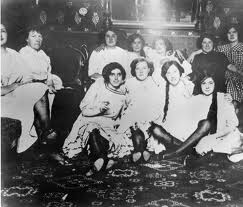
Prostitutes of the West worked in a hierarchical class structure, or a “whorearchy” (my term), in which the brothel was the highest rung. Also called parlor houses, they provided elaborate surroundings, luxuries, amenities, and the protection of a male bouncer if the clients became too rough. At the dawn of the twentieth century, one house in Colorado used electric lights, running water and a telephone. A staff of seven, including a bartender, a maid, and a musician, provided services other than sex. Of course, there were always five or six prostitutes. The Dumas Brothel in Butte, Montana was a three-story brick building that contained forty-three rooms and used pocket doors to create large rooms for parties.

Brothels differed in size and location, but the business structure for each remained basically the same. Respected businessmen owned most of the parlor houses but did not want their financial involvement to become commonly known. To accomplish this, they placed deeds under false names or in the names of their wives.

Madams were hired to oversee the day-to-day operations. These women usually emerged from the ranks of older prostitutes with experience in the profession and the knowledge and skills to recruit employees and customers. In fact, a few madams owned their own businesses.

Madams oversaw the business aspect of the brothels while the prostitutes did the work. A work shift began with the woman put on display. Therefore, when a man entered an establishment he found the women lounging in a parlor room. Here, he could choose someone in which to spend some time. When a customer chose a prostitute, he gave the money to the madam or someone else charged with the task. The amount paid depended on several factors, including house rate, the amount of time, and the beauty and skill of the woman.

Brothels built their business on pampering and catering to men who could afford the services. On average, a quick “date” cost five dollars, and an entire night cost between fifteen and thirty dollars. Owners depended on volume for profit by running twenty-four hours a day. With a shift of twenty-four hours, a women could conceivably have sex with twenty-five men and produce a tremendous amount of money. The house collected most of the fee, while the girls kept tips, sold photos and drinks, and stole from their customers. From this amount, the prostitutes paid their expenses, including clothes from local merchants at inflated prices, taxes to the local government, and bribes to the police.