Archive | History RSS feed for this section

Forever Young

8 Jan

The date in the circle to the left is an important date in music history. On January 8, 1935, Elvis Presley was born in a shotgun house in Tupelo, Mississippi. I have written about Elvis before, so I won’t repeat myself. However, it struck me that he would be 77 years old if he had made it through the perils of fame and fortune. His health declined in the last few years, but, in the eyes of many, Elvis will be forever young. He is an icon frozen is time.

Other famous people hold the same position in culture and history. They died young and remain their youthful selves in the minds of the people who remember them. Thinking about Elvis, I began to wonder how old some of those people would be today.

Elvis Presley died at the age of 42. He would be 78 if he was still alive.

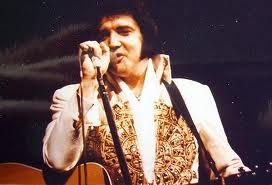
Elvis Presley's last concert.

Elvis Presley’s last concert.

Marilyn Monroe died at the age of 36. She would be 86 if she was still alive.

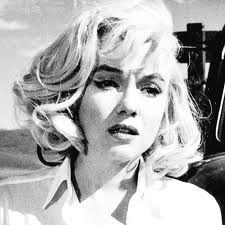
Marilyn Monroe's last movie.

Marilyn Monroe’s last movie.

James Dean died at the age of 24. He would be 81 if he was still alive.

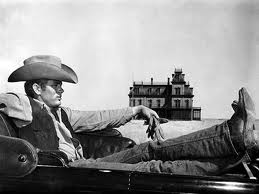
James Dean's last movie.

James Dean’s last movie.

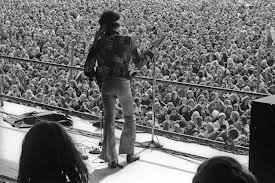
Jimi Hendrix died at the age of 27. He would be 70 if he was still alive.

Jimi Hendrix's last concert.

Jimi Hendrix’s last concert.

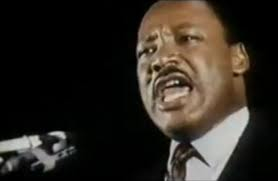
Martin Luther King, Jr. died at the age of 39. He would be 83 if he was still alive.

Martin Luther King, Jr.'s last speech.

Martin Luther King, Jr.’s last speech.

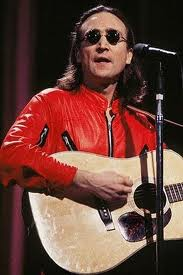
John Lennon died at the age of 40. He would be 72 if he was still alive.

John Lennon's last performance.

John Lennon’s last performance.

I wonder how the world would have been different if they had made it to old age. We will never know. Instead, they will remain forever young.

History from the Past

17 Dec

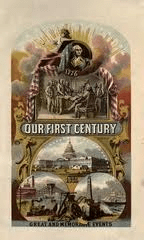
As a historian, it is imperative that I stay up to date on the latest scholarship. However, I also find it interesting to read what earlier historians wrote. Several years ago, I was in a bookstore that specializes in older publications and found Our First Century: Being a Popular Descriptive Portraiture of the One Hundred Great and Memorable Events of Perpetual Interest in the History of Our Country, Political, Military, Mechanical, Social, Scientific and Commercial: Embracing also Delineations of All the Great Historic Characters Celebrated in the Annals of the Republic; Men of Heroism, Statesmanship, Genius, Oratory, Adventure and Philanthropy by R. M. Devens.

Our First Century

Man, they really knew how to title a book in those days. In short, the book, published in 1879, chronicles the first hundred years of United States history. My favorite part of the title is “the One Hundred Great and Memorable Events” in our nation’s history. What did historians in 1879 think was important? I have read different passages of the book and have been surprised by some of the choices. These are some of the more interesting chapter titles.

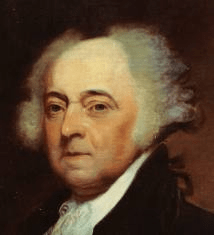
“Appointment of the First Minister Plenipotentiary, from the New Republic to the English Court” – an entire chapter about John Adams meeting King George. Interestingly, there is just as much about this as the Articles of Confederation, our first government.

Did he cut his hair before meeting the king?

Did he cut his hair before meeting the king?

“Greatest Defeat and Victory of American Arms in the Indian Wars” – one section of this chapter is called “Death Knell of the Savages”.

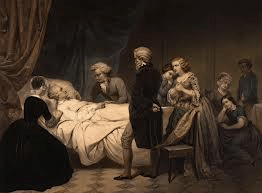
“Death of George Washington” – an important event but one that is not covered much today. I believe that the life of a person is more important than their death, unless their death affects history directly.

I have always heard that he was bled to death.

I have always heard that he was bled to death.

“Total Solar Eclipse at Mid-Day” – which I am sure was important on that day, but I am not sure why it would be included in a book about the history of an entire nation.

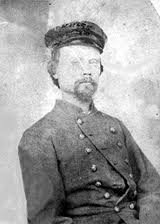
“Career, Capture, and Execution of Gibbs, the Most Noted Pirate of the Century” – a pirate that I have never heard of, but he most have been a bad ass.

No parrot? No patch? He was a pirate?

No parrot? No patch? He was a pirate?

“Sublime Meteoric Shower All Over the United States” – is something else that past historians found important but may be fading into history now.

“Expected Destruction of the World” – is something I cover in class. William Miller predicted the end of the world in the 1840s. It didn’t happen. Here’s some advice. If you start your own religion and want to predict the end of the world, then predict it to happen a long time in the future. When it doesn’t happen, you won’t be around to take the heat.

He miscalcelated slightly.

He miscalculated slightly.

“Invention of that Wondrous Piece of Mechanism, the Sewing Machine” – a lot of fingers were happy about this.

“Expedition to the River Jordan and the Dead Sea, by Lieut. W. F. Lynch” – was it important? I don’t know.

“Murder of Dr. George Parkman, a Noted Millionaire of Boston, by Prof. John W. Webster, of Harvard College” – Dead Certainties: Unwarranted Speculations is a great book about this event and the profession of history.

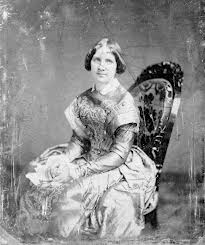
“Brilliant Musical Tour of Jenny Lind, the “Swedish Nightingale” – Who was Jenny Lind, and did she sound like a nightingale?

Later, Little Richard would sing a song about her.

Later, Little Richard would sing a song about her.

“Appearance of the Marine Monster Known as the Sea-Serpent, Along the Atlantic Coast” – already looking for monsters in 1851. Bigfoot would be proud.

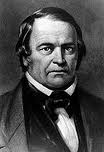
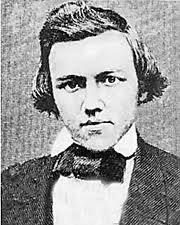
“Unrivaled Performance by Paul Morphy, the American Chess Champion” – eat your heart out, Bobby Fischer.

His home is now Brennan's, a great New Orleans restaurant. Now, that's important.

His home is now Brennan’s, a great New Orleans restaurant. Now, that’s important.

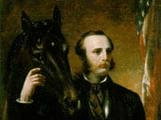
“Astonishing Feats of Horse-Taming Performed by Mr. John S. Rarey” – sometime between the firing on Fort Sumter and the Battle at Bull Run, the horse whisperer showed up.

He's no Robert Redford.

He’s no Robert Redford.

Are these important? I reckon everything that has happened in the past is important.

Picture This – Boot Hill

28 Nov

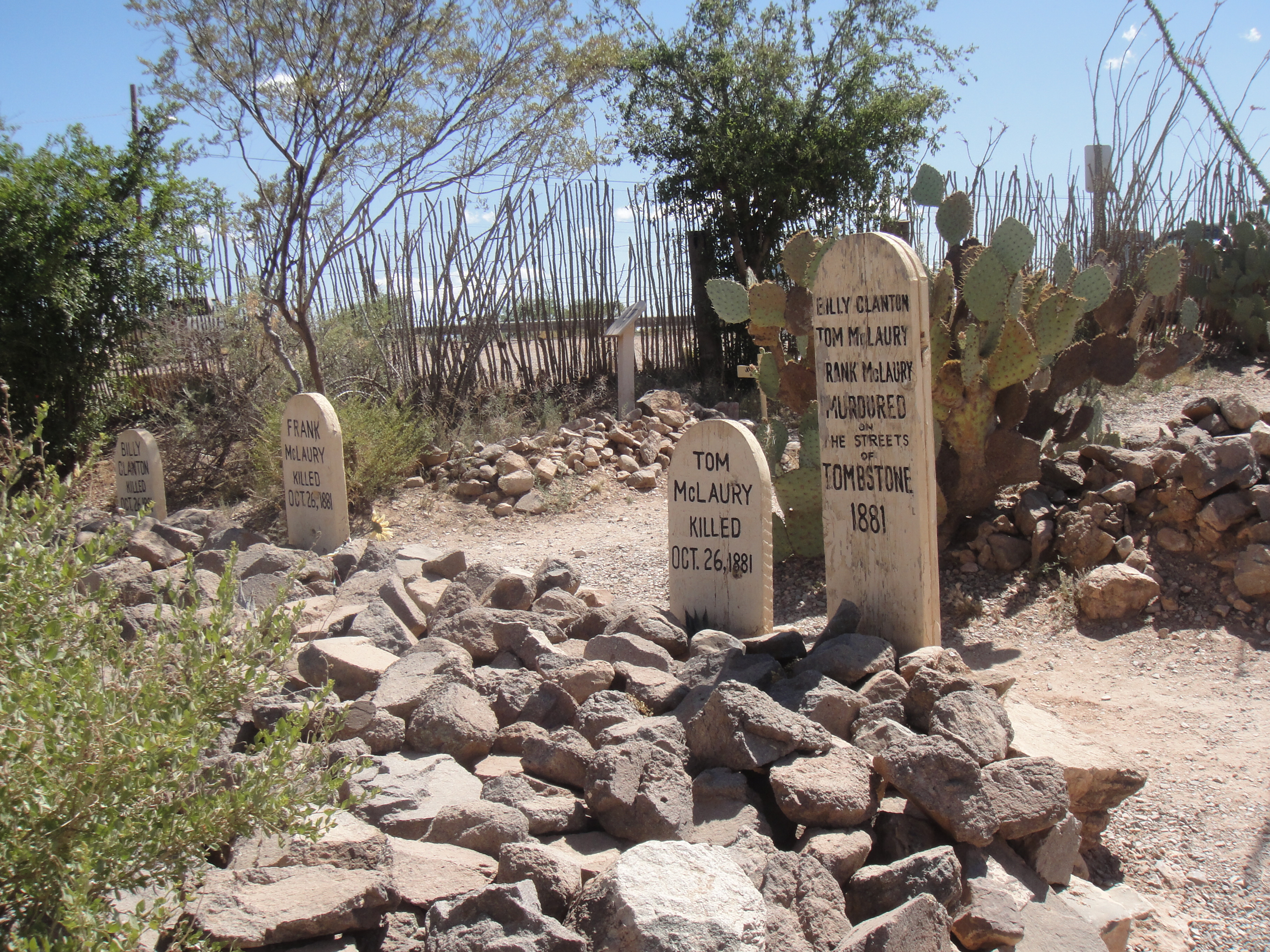
Tombstone is on television at the moment, and it brings to mind a trip I made to the real Tombstone a few years ago. For anyone interested in the American West, this small town in southern Arizona is a place that must be visited. Not only is it the location of the Gunfight at the OK Corral, but it is also the perfect example of the boom and bust economy of the 1800s American West.

There are places in Tombstone that everyone has to see. The OK Corral is the most famous and the most popular. The Birdcage Theater was one of the most famous houses of sin and ill repute and is currently advertised as one of the most haunted places in the United States. People should also stop by and chat with an important resident. Ben Traywick is the local historian and is a native of my Tennessee county. When I visited with Mr. Traywick, we spent an hour talking about people that we both knew before branching into the history of Tombstone.

Those are great ways to learn, but the essence of the West comes through at Boot Hill Cemetery. This is the place where you can focus on the hardships faced by the people who lived in this environment. The myth portrayed at the other sites fades away to show the reality of life in the West. The cemetery is filled with people who died through violence, disease and other dangers faced on a daily basis.

The above photograph shows the graves of the men killed at the OK Corral. Movies show them as bad guys who tempted fate by facing down the heroic Earp family and their friend Doc Holliday. Movies can be simplified into those wearing the black hats and those wearing the white hats. However, history is not that simple. Maybe, they were bad. Maybe, they were good. The fact is that they ended up in Boot Hill alongside many others.

Listeria – Gunslingers Edition

12 Nov

The folks at Wild West Magazine put out a special edition called 10 Greatest Gunfighters, and, as a historian of the American West, I had to pick the thing up. It lists the famous gunmen and includes a biography of each one. I didn’t read them in great detail because I already know the stories and the articles seemed to rehash the same old mixture of myth and reality.

Because it is difficult to separate myth from reality, I will not recount the lives of these men here. Instead, here is the list of who they consider to be the ten greatest gunslingers with a few facts about them included. I hope that you will use this as a base to explore the depth of their lives.

Wild Bill Hickok
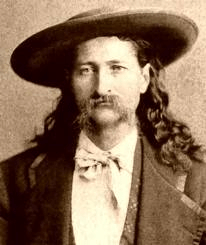
Real Name: James Butler Hickok

Birth: May 27, 1837 in Homer, Illinois

Death: August 2, 1876 Deadwood, Dakota Territory

Death Fact: Hickok was shot while playing poker and, according to legend, was holding Ace’s and 8’s. Those cards are now known as Dead Man’s Hand.

Bat Masterson
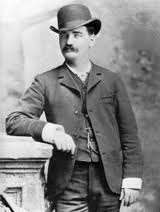
Real Name: William Barclay Masterson

Birth: November 26, 1853 in Henryville, Canada East

Death: October 25, 1921 in New York City

Death Fact: Masterson became a sports writer and died after writing a column.

Billy the Kid
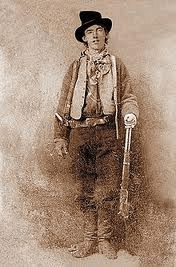
Real Name: William Henry McCarty, Jr.

Birth: Unknown – many believe he was born in New York City in 1859.

Death: July 14, 1881 in Fort Sumner, New Mexico

Death Fact: The Kid was shot by Pat Garrett, sheriff of Lincoln County, but many people believe that it really didn’t happen.

Johnny Ringo
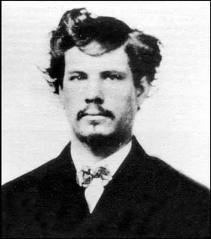
Real Name: John Peters Ringo

Birth: May 3, 1850 in Greensfork, Indiana

Death: July 14, 1882 in Turkey Creek Canyon, Arizona

Death Fact: Ringo was found under a tree with a bullet hole in his temple.

Bill Longley
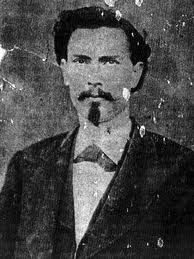
Real Name: William Preston Longley

Birth: October 6, 1851 in Mill Creek, Texas

Death: October 11, 1878 in Giddings, Texas

Death Facts: Longley claimed to have killed 32 people and was executed by hanging.

Jesse James
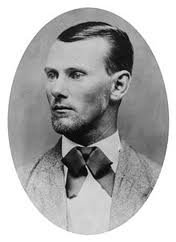
Real Name: Jesse Woodson James

Birth: September 5, 1847 in Clay County, Missouri

Death: April 3, 1882 in Saint Joseph, Missouri

Death Fact: James was shot by Bob Ford while dusting a picture hanging on the wall.

Pat Garrett
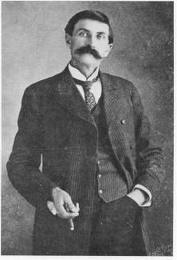
Real Name: Patrick Floyd Garrett

Birth: June 5, 1850 in Cusseta, Alabama

Death: February 29, 1908 near Las Cruces, New Mexico

Death Fact: Garrett was killed over an argument about goats.

Clay Allison
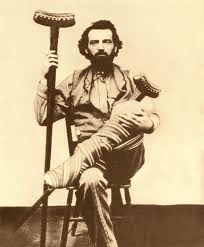
Real Name: Robert Clay Allison

Birth: September 2, 1840 in Clifton, Tennessee

Death: July 3, 1887 on his ranch near Pecos, Texas

Death Fact: Allison fell off a wagon and suffered a broken neck when a wheel rolled over him.

Doc Holliday
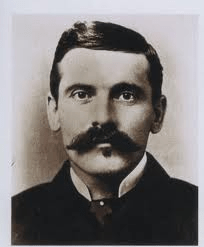
Real Name: John Henry Holliday

Birth: August 14, 1851 in Griffin, Georgia

Death: November 8, 1887 in Glenwood Springs, Colorado

Death Facts: Holliday died of tuberculosis at the Hotel Glenwood.

Kid Curry
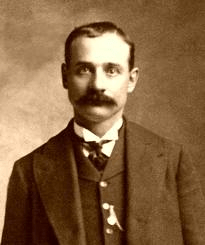
Real Name: Harvey Alexander Logan

Birth: 1867 in Richland Township, Iowa

Death: June 1904 near Parachute, Colorado
Death Fact: Logan shot himself rather than being captured by a posse.

The Lives and Times of a History Lecturer
16 Oct

When I embarked on a journey into graduate school, a wise member of academia provided a simple definition of what I was about to do. He said that getting a graduate degree in History was “learning more and more about less and less.” I thought it was weird at the time, but it is true. As students move up through the ranks, their research becomes more focused until they are experts on a certain subject. Then, that subject is added to the great story of history that is being worked on by others.

My research has been focused on prostitution in mining camps in the American West. I have written a few posts about that subject, and I will talk about it anytime that I am asked. However, it’s not a subject that comes up often in class. The university where I work is small, and there are only three members of the history department. That means that we teach a wide range of subjects. Off the top of my head, I have taught:

United States History Survey

World Civilization Survey

Jacksonian Democracy

The Old South

Expansion of the United States

Emergence of Modern America

World War II

United States History, 1914-1941

United States History, 1941-Present

Emergence of Modern Europe

Latin American History

African History

History of China and Japan

History of the Middle East

I may have missed a few, but I believe that is about it. I didn’t list those to brag or to complain. I listed them because teaching them has helped me have a broad base of historical knowledge. That base has made me a better teacher in my professional life, and it has made me a better trivia player in my personal life. It also helps me answer a question that I am often asked:

If you could live at any point in history,then  when would it be?

My real answer is that it would be a nice place to visit, but I wouldn’t want to live there. However, I have been giving that question more thought. If I could live at any point in history, then this is who and where I would want to be.

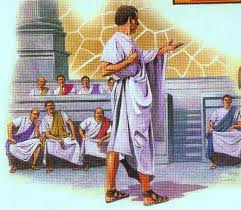
A Senator in Ancient Rome – These guys had it made. They had wealth, power and everything that does with that. The lower classes of Rome had it rough, but the Senators were riding high.

Toga! Toga! Toga!

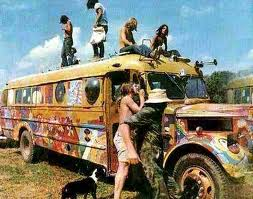
A Hippie in the late 1960s – This was a lifestyle of freedom in almost all facets of life. The clothes and the music were cool. I would just have a hard time choosing between going to Monterey or Woodstock.

Peace, Love and a Magic Bus

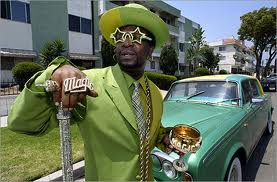
A Pimp in the 1970s– Talk about cool clothes. Man, these guys had it. Shoes. Hats. Suits. Jewelry. Only pimps could get away with dressing like that. The music was awesome, too. Oh yeah, there was also a bunch of women around.

A pimp is only as good as his product.

A Gambler in the Old West– A lot of people would choose gunfighter of cowboy. Those are hard professions. Gunfighters invariably run into someone better than them. Cowboys have to push cattle all of the time. I would rather hang around the fancy gambling houses and play games of chance.

Bucking the Tiger

That is the short list of the lives and times I would pick from history. What you choose?

The Cullman Comet

15 Oct

This weekend, my friends and I drove to Starkville, Mississippi to watch the University of Tennessee play Mississippi State University in football. The best way to get there from here is to go through Alabama. Yes, Mississippi borders Tennessee but going through another bordering state is the fastest route. Weird, I know.

It is also the best route because it allows us to stop in Cullman, Alabama and eat at the All Steak Restaurant, home of the world-famous orange marmalade rolls.

Passion on a Plate

We got a lot of looks as we walked in because we were wearing the colors of our team, and that’s not something seen very often in Alabama. An elderly man wearing a crimson University of Alabama shirt took special notice and walked to our table when he was finished eating. He was a nice man who asked us where we were from and what we thought about our team. After a few minutes, we offered him a seat.

He introduced himself as Tom Drake, and we spent the lunch hearing the story of his life – one of the most interesting stories I have ever heard.

Mr. Drake was born in Cullman County and found his way from there to Chattanooga, where he played football and wrestled in college. After college, he was drafted by the Pittsburgh Steelers, but the army drafted him, as well. In those days, the federal government was more powerful that the NFL, so off to the army he went.

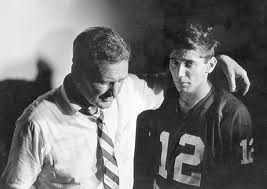
After being honorably discharged, Mr. Drake was hired by Bear Bryant to coach wrestling and football for the Crimson Tide. When we asked who was the best player he ever coached, he did not hesitate to say Joe Willie Namath. However, coaching was not his calling, and Mr. Drake went to law school.

Bear Bryant and Joe Willie Namath

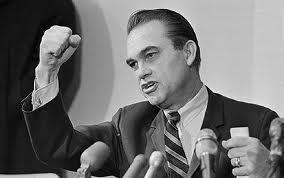
While still enrolled in school, he won a seat in the state legislature and continued to be elected for 32 years.  During that time, Mr. Drake served as Speaker of the House and worked closely with infamous governor, George Wallace.

In Birmingham, they love the governor.

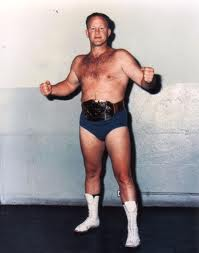
Now, that is an event filled life, but there was more. Mr. Drake spent his spare time as a professional wrestler. Fighting under the name “The Cullman Comet”, Mr. Drake fought against some of the most famous wrestlers of the era. He was later inducted into the International Wrestlers Hall of Fame.

The Cullman Comet

With such a wide array of talents and experiences, Mr. Drake made a perfect contestant for What’s My Line?, and he appeared on that show in the 1970s.

We barely had time to ask questions as he told story after story. However, his most important story was about his wife. They did everything together, but she died a year ago from brain cancer. He said that he still hasn’t recovered from the loss, and I got the feeling that he just needed someone to talk to. He needed to talk about his life and his memories, and I felt honored that he picked three strangers who were wearing the wrong colors.

Mr. Drake said that he is writing a book, and I hope that he finishes it. The book would chronicle a man’s life but also a piece of our history. I was reminded during lunch that history can be found anywhere. It can be found in old documents, but it can also be found in a conversation at the All Steak Restaurant in Cullman, Alabama.

National Geographic Revisited

1 Oct

A few years ago, I received a copy of National Geographic for my birthday. Not a subscription, which I have since received, but one copy of a National Geographic. Specifically, it is the edition from November 1968, the month I was born.

No, it does not record the birth of a very important person.

I think that I am supposed to preserve it, but it is too interesting to place in a plastic covering. Reading old copies of National Geographic, and other publications, is like taking a ride in Mr. Peabody’s WABAC Machine. The articles are interesting because they provide a view from the past that can be compared to the view of the present.

One article is about Queensland, “Young Titan of Australia’s Tropic North”. I wonder if Queensland became what they thought it would become.

Another article follows the Natchez Trace, a protected parkway from Nashville to Natchez, Mississippi. I have driven it several times and can report that the speed limit has not increased in the past 40-something years. It also contains some cool pictures of Nashville from that time. The Municipal Auditorium, once the city’s premiere concert venue, is shown in all of its glory. Now, it can be rented by almost anyone for any event. It is a shell of its former self.

There is also a picture from the stage of the Grand Ole Opry, the radio show that turned Nashville into Music City. At the time, the show aired from the Ryman Auditorium. The importance of the Opry has faded, but the Ryman has been refurbished and holds some awesome concerts.

The world of Queen Elizabeth I is explored in the next article. I can’t figure out if it is about her or her surroundings.

The last article is called “Our Friend From the Sea” and is about a family in New Jersey that semi-adopts a seal. It’s a different version of Jersey Shore.

All of those things are interesting but in no way compare to the advertisements. I find it interesting to look at products of the past because they are remnants of my childhood. However, many of them are also extinct.

The back cover urges us to “Fly the Friendly Skies of United”.

There is an automatic Polaroid that costs $160. Wait, $160 in 1968? The thing should take the photographs itself.

The Zenith 9-Band Trans-Oceanic Radio is one of my favorites. It is “powered to tune in the world, and FM, too.”

Oldsmobile advertises itself as Youngmobile.

There is a Toshiba transistor radio. I find this interesting because Toshiba made televisions in my town for years. Like most industry in my town, it is gone.

And, my family had a Honeywell movie projector to show “home movies in a new light”.

Another ad tells us to keep Kodak film around the house. Does Kodak still exist?

Magnavox televisions were like pieces of furniture with small screens.

The Dodge Polara was a popular car. It had standard foam-padded seats, carpeting and concealed windshield wipers. Dodge also sponsored the American Football League.

The best advertisement celebrates the 200th anniversary of Encyclopedia Britannica. Remember when we actually looked through encyclopedias to find out stuff?

Now, we blog about encyclopedias and other things that used to be.

Conversations of the Blue Chairs

21 Sep

Yesterday, I realized why getting the blue chairs back was a vital mission. A bunch of the history students used them as a gathering place to study, converse and laugh. It may sound crazy to some, but I believe that times like these are just as important to the college experience as sitting in class. The blue chairs, and places like them, are where bonds are formed and knowledge is exchanged. The fact that I can eavesdrop makes it even better.

All kinds of things could be heard as more and more students came around. There were complaints about professors. There were complaints about other students. There were also stories of fun and frivolity that has been taking place around campus and around town.

Then, it happened. The students became embroiled in a historical debate. Voices became louder as each student took a side, and I began to wonder what they could be talking about. They were studying for a test in my class on the Middle East. Could it be something about the beginnings of Judaism, Christianity or Islam? Could it be about whether or not aliens built the pyramids?

Uh, ok.

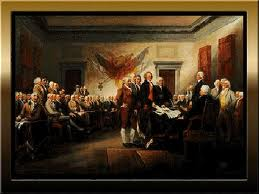
It wasn’t any of those. When they finally needed an expert opinion, I was asked, “What year was the Declaration of Independence signed?” At that moment, I knew that I had failed in my mission to educate the young adults of our great nation. When I regained my composure, I gave them the answer – 1776.

Guys, it’s 1773, but let’s say it’s 1776 just to mess with everybody.

The Senator in the Coonskin Hat

17 Sep

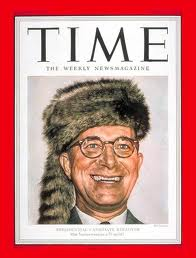
Did you know that a Tennessean tried to end gambling in Las Vegas? Estes Kefauver was born in Madisonville, Tennessee and practiced law in Chattanooga. Interested in politics, he won a seat in the House of Representatives in 1939 and became a Senator in 1949. Kefauver’s trademark was wearing a coonskin hat.

During his time in the Senate, Kefauver became chairman of the Special Committee on Organized Crime and used this seat as a platform to gain national exposure. He attacked the influence of organized crime in the casinos of Las Vegas and urged the federal government to put a stop to legalized gambling in Nevada.

In 1952, Kefauver attempted to take advantage of his nationwide fame by running for president. His campaign failed, as did a run for the vice presidency in 1956. If Estes Kefauver had succeeded in his fight against legalized gambling, then what happens in Vegas would…not be all that much.

Memories of a Day in September

11 Sep

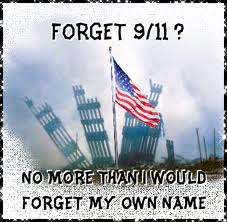
Early in this foray into blogging, I wrote a post about collective memory – those moments in time when most people remember where they were and what they were doing when events happened. The attack on Pearl Harbor. The assassination of John F. Kennedy. The explosion of the Challenger. All of these are examples of moments of collective memory in American history. Obviously, today marks the anniversary of another time most people remember – the attacks on 9/11.

We all have memories, but it is difficult to hold on to them. Over time, we hear other people talk about their memories. We watch television reports over and over. Before we know it, that information gets combined with information we already have. For historians, memory is a tricky aspect of research. Obviously, it is important to hear the stories of people who took part in an event. However, those stories should be told as soon as possible because none of us are immune to hindsight.

I know where I was when the attacks on the World Trade Center took place. I was in my first semester of teaching, and, as the new kid on the block, I was volunteered to teach an off campus class. This meant getting up super early and driving to a police station in Nashville. There I would teach government employees who were working on their degrees.

On September 11, 2001, I was showing a video about Hernan Cortez conquering the Aztec. At some point during the movie, there was activity in the hallway, and one of the students, an employee of the FBI, kept checking his pager. Other than that, I sensed nothing going on.

When class was over, I walked through the hallway and passed an office with a television. It showed one of the towers with smoke coming out of it. I watched for a while before getting in my car and driving to school. I turned on the radio and called my girlfriend to see if she had heard. But, the call really wasn’t about what was happening in New York. She had broken up with me, and I was looking for any excuse to call her. I don’t remember much about the conversation, but I know it was one of the last conversations we had.

This is where my memory begins to fade. On that day, I knew that I would not forget anything that was going on, but that didn’t happen. As time passes some details begin to alter themselves. Did I call my parents to see if they were watching? I’m not sure. What did I do when I got to campus? I’m not sure about that, either.

I know that classes were cancelled not long after I arrived, and most people were watching television in the student lounge. Was I watching television in the lounge when the second plane hit, or did that happen while I was in the car? Did I watch as the towers fell? I honestly can’t tell you. I have seen those images so many times that it all gets jumbled up in my mind.

I am a historian, and this was a historic event. As it was all happening, I made a mental note to keep these moments clearly in my brain, but that hasn’t happened. I remember how I felt, but the details are slowly escaping me.

As a historian, I know that memoirs and interviews need to be studied carefully. As a person who experienced 9/11, it is difficult for me to explain to people that their memories may not be as accurate as they think. I’m not saying that memories are invalid. I’m saying that memories evolve through the years.

All of that was rambling, and I am not sure where I was headed when this post began. Posts about 9/11 will be all over the internet, and this is just one by a person who was in the middle of Tennessee when it happened. My memories aren’t important in the scope of that huge event. They are one part of a huge collection of memories – a collection that is changing all of the time.