Archive | History RSS feed for this section

I Want My Tay Made With Really Old Water

9 Aug

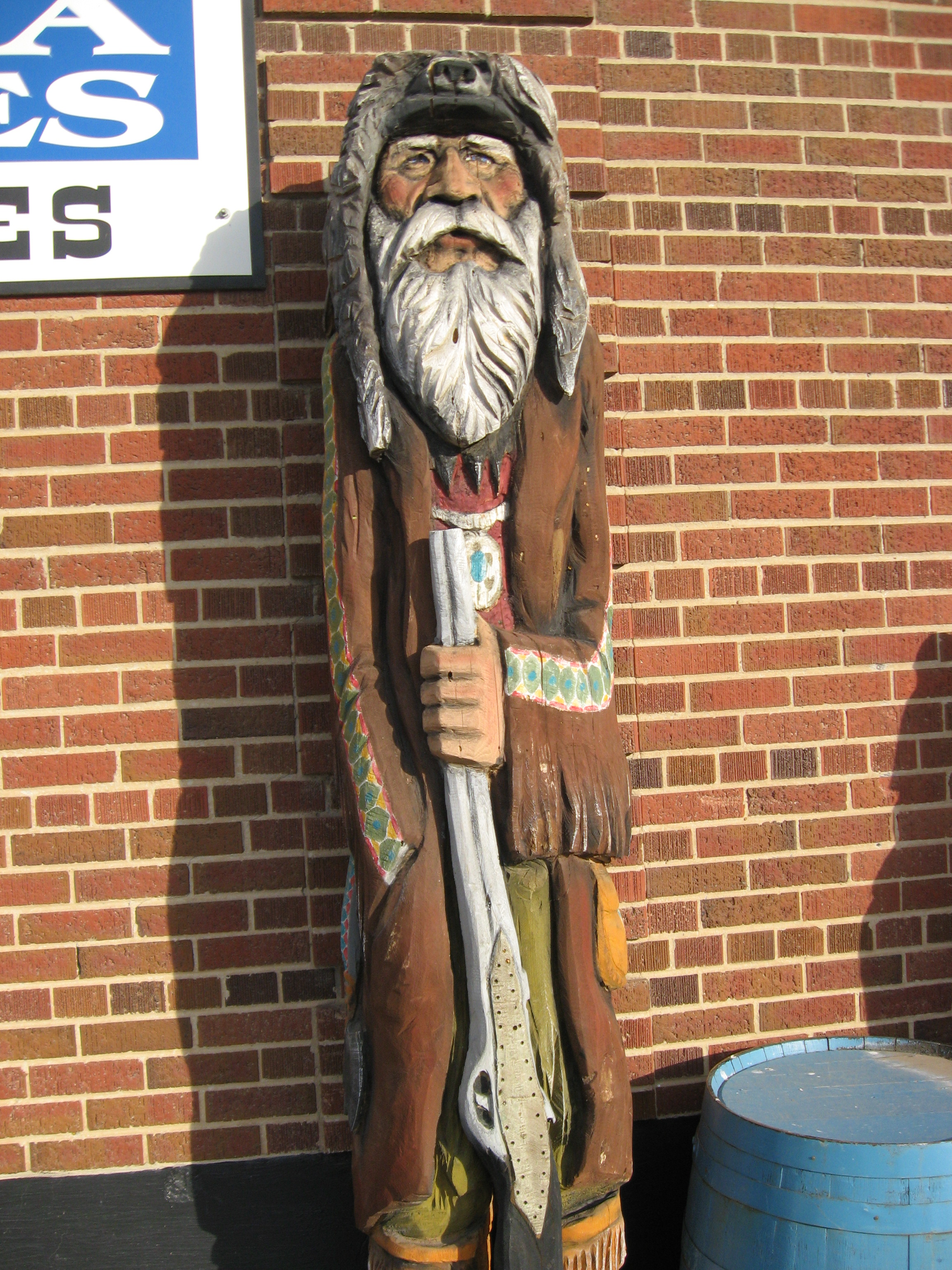
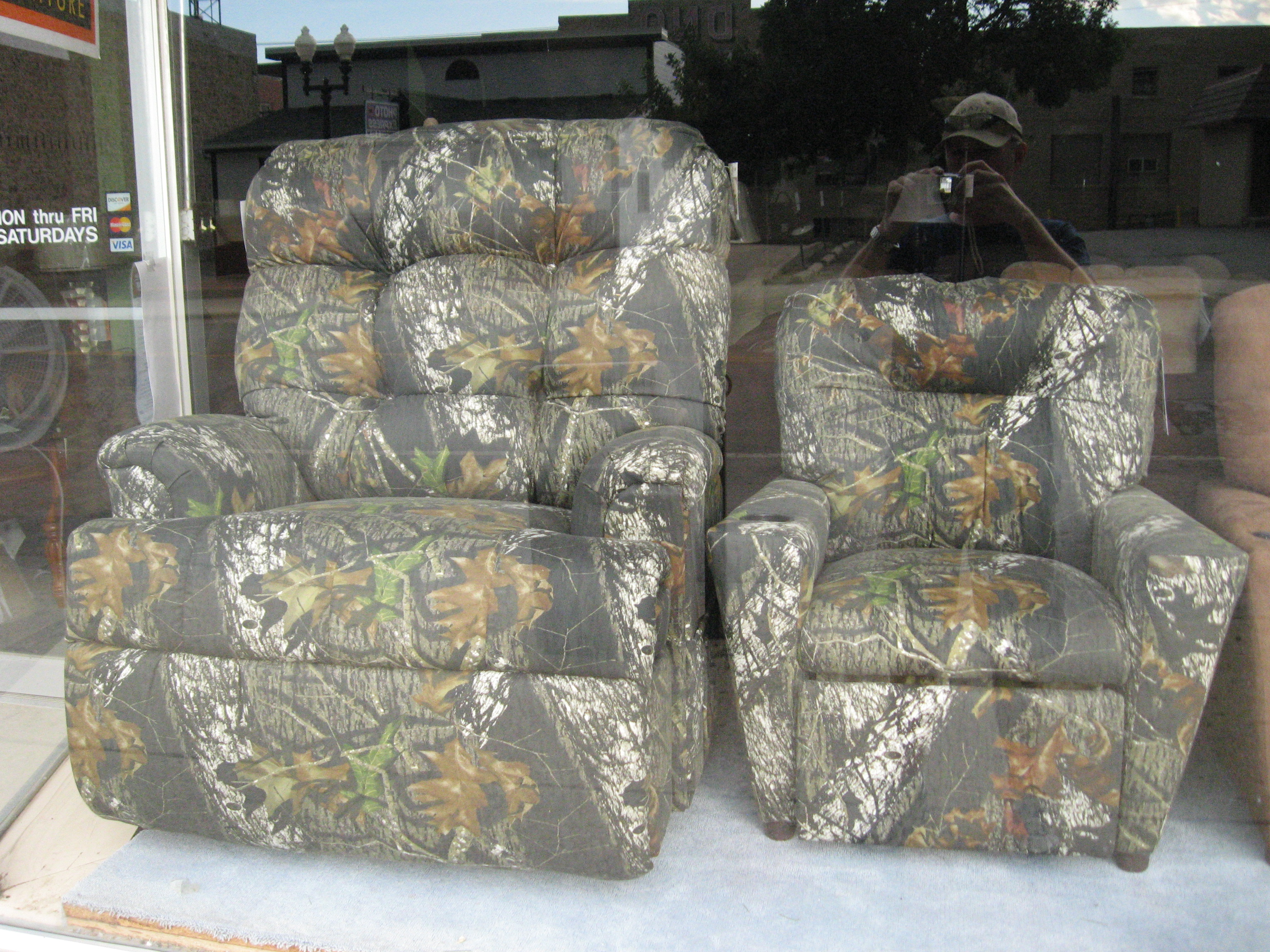
We left the wheat fields and returned to Lewistown to get our tire fixed. In my town, it takes forever to get that done, but in Lewistown the job went lickity split. My nephews wanted to cross the street to check out a cool-looking store. Alas, it was closed, but there were some interesting objects outside.

Nice guy. He’s just a little stiff.

We followed Highway 87 westward through towns such as Moccasin and Geyser before reaching Great Falls. I’m not sure what we thought we would find in Great Falls, but it is a thriving city with all of the franchised amenities of other cities. We all assumed that this was because it serves as home to Mainstrom Air Force Base.

We checked into the biggest hotel room I have ever stayed in; my youngest nephew swam; then, we went out for dinner. This brought us to a problem that faced the expedition several times. No one cared where we ate. You must understand that this is coming from a group of individuals who like for things to go their way. Yet, we rode around while the SUV filled with indecisions.

Finally, we decided to try Jaker’s, a restaurant chain in that part of the country. My dad and oldest nephew had been to one before, so we figured it would be good. We got seated next to the slot machine room (most Montana establishments have slot machines), and the waitress came by to take our drink orders.

Brother: I would like iced tea, and my dad would like iced tea, as well.

Me: I would like tea.

Waitress: (confused look) What?

Me: I would like tea.

Waitress: I don’t understand. You want tay?

Me: (getting frustrated) I WOULD LIKE ICED TEA!

My brother said something to ease the tension, but she walked off. I understand that I have a southern accent, but I also know that my brother has the same one. She understood him just fine. On top of that, there are probably some southern people serving at the base. Anyway, I was tired and wanted food and drink. I probably overreacted because she never came back. Some other waitress worked with us after that. Oh yeah, the food and tay sucked.

We went back to the hotel, and I made the same mistake that my youngest nephew made earlier in the day. I used a toilet that didn’t work and ended up going to the front desk to get a plunger.

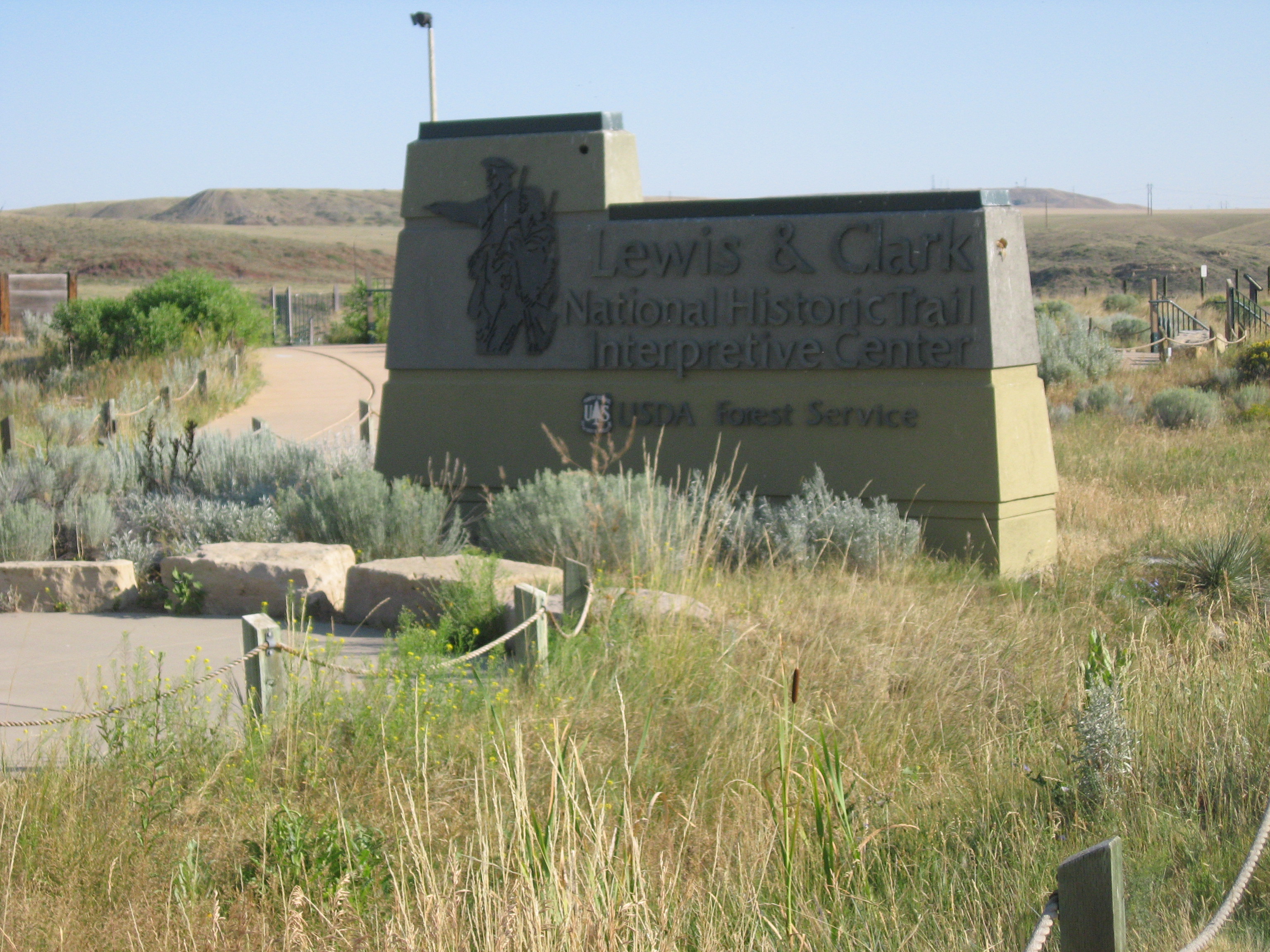
The next morning was spent visiting the tourist sites of Great Falls. First, we went to the Lewis and Clark National Trail Interpretive Center.

For some reason, I like to take pictures of signs.

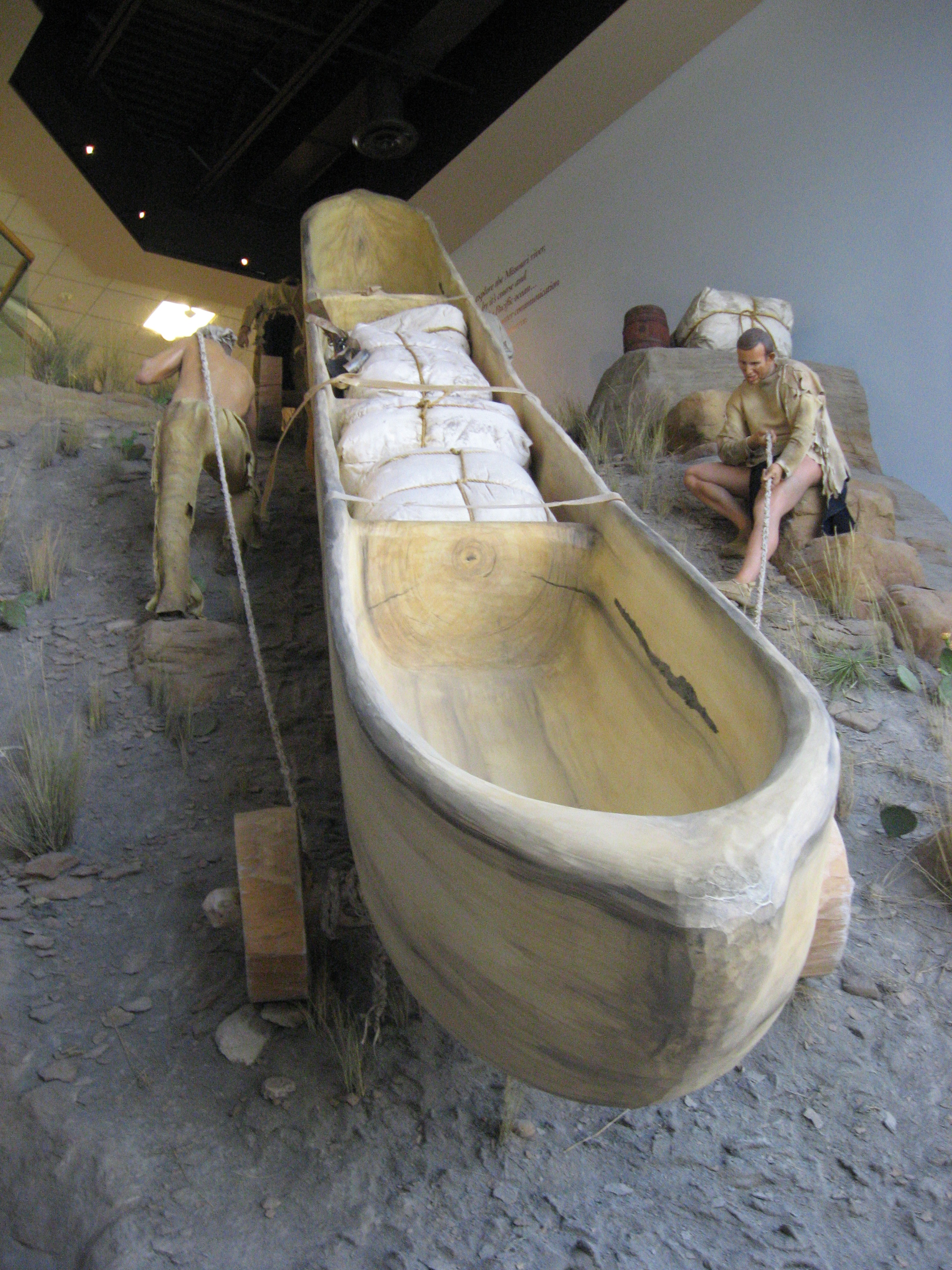
The center was pretty cool, with a couple of good films and a decent museum. Most of it focused on the Corps of Discovery making its way over the waterfalls of the Missouri River, from which Great Falls gets its name. The group had to tote their boats around the falls, and they covered many miles.

Fake people taking a fake boat over fake land and around a fake waterfall.

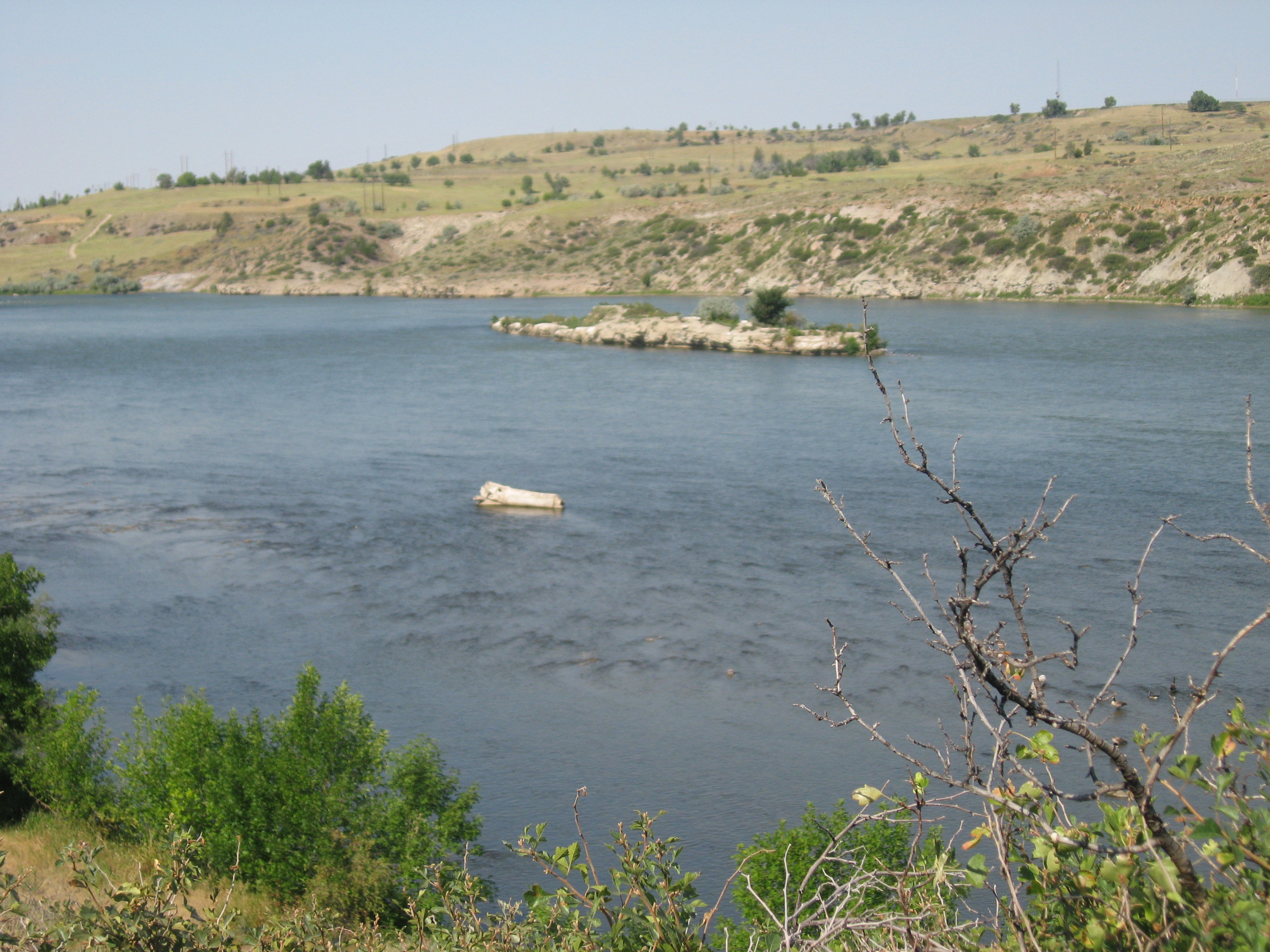
Honestly, I had more fun looking over the real Missouri River behind the center.

Lewis and Clark passed by here. Of course, they passed by a lot of places.

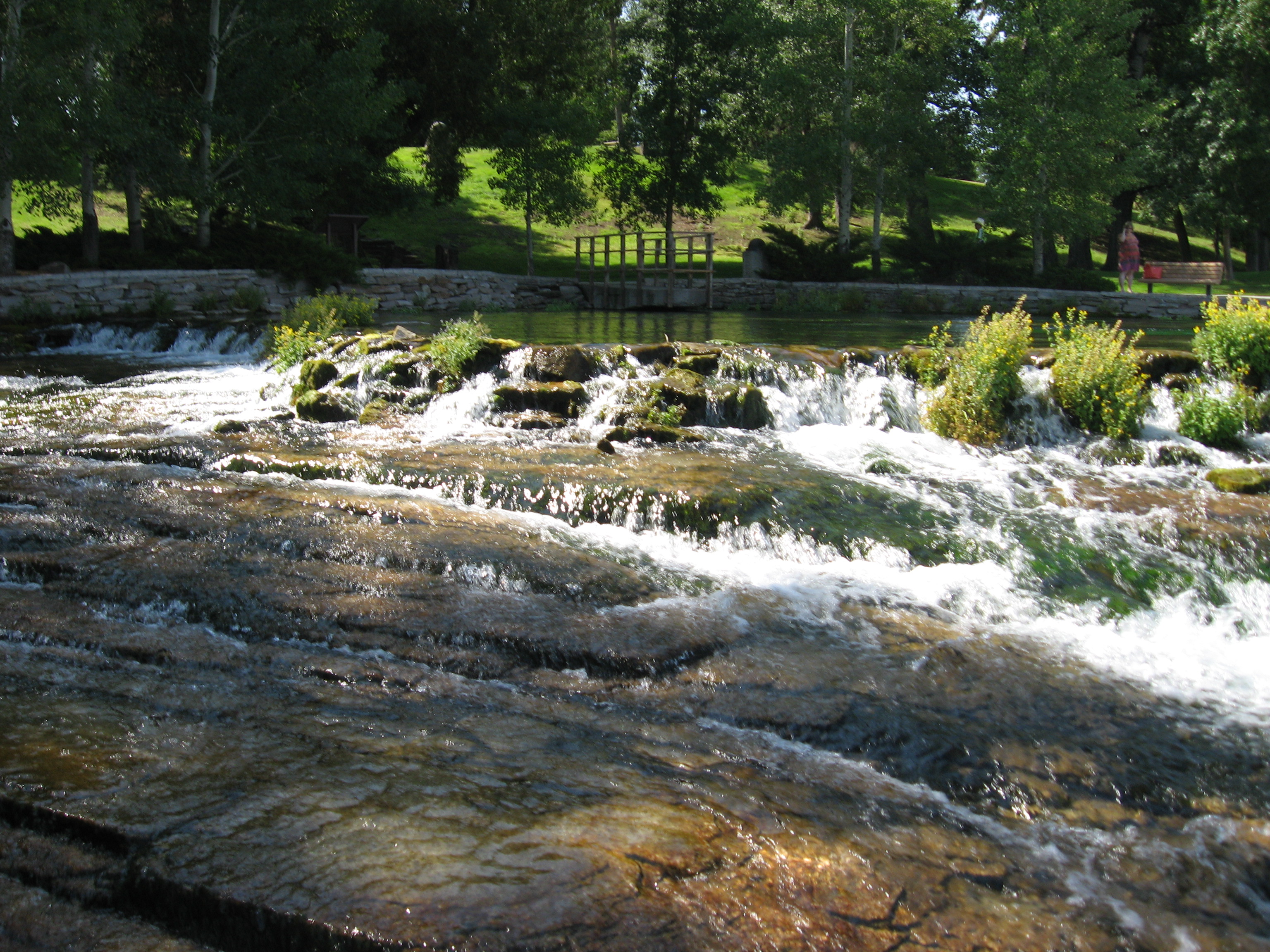
Next door was a place that our wheat-growing friends told us to visit, and it turned out to be very interesting. This thing flows at over 330 million gallons of water per day and forms the Roe River, the shortest river in the world. It has been determined that the water travels for 3,000 years from its source before reaching this point.

This water has been around since they were counting years backwards.

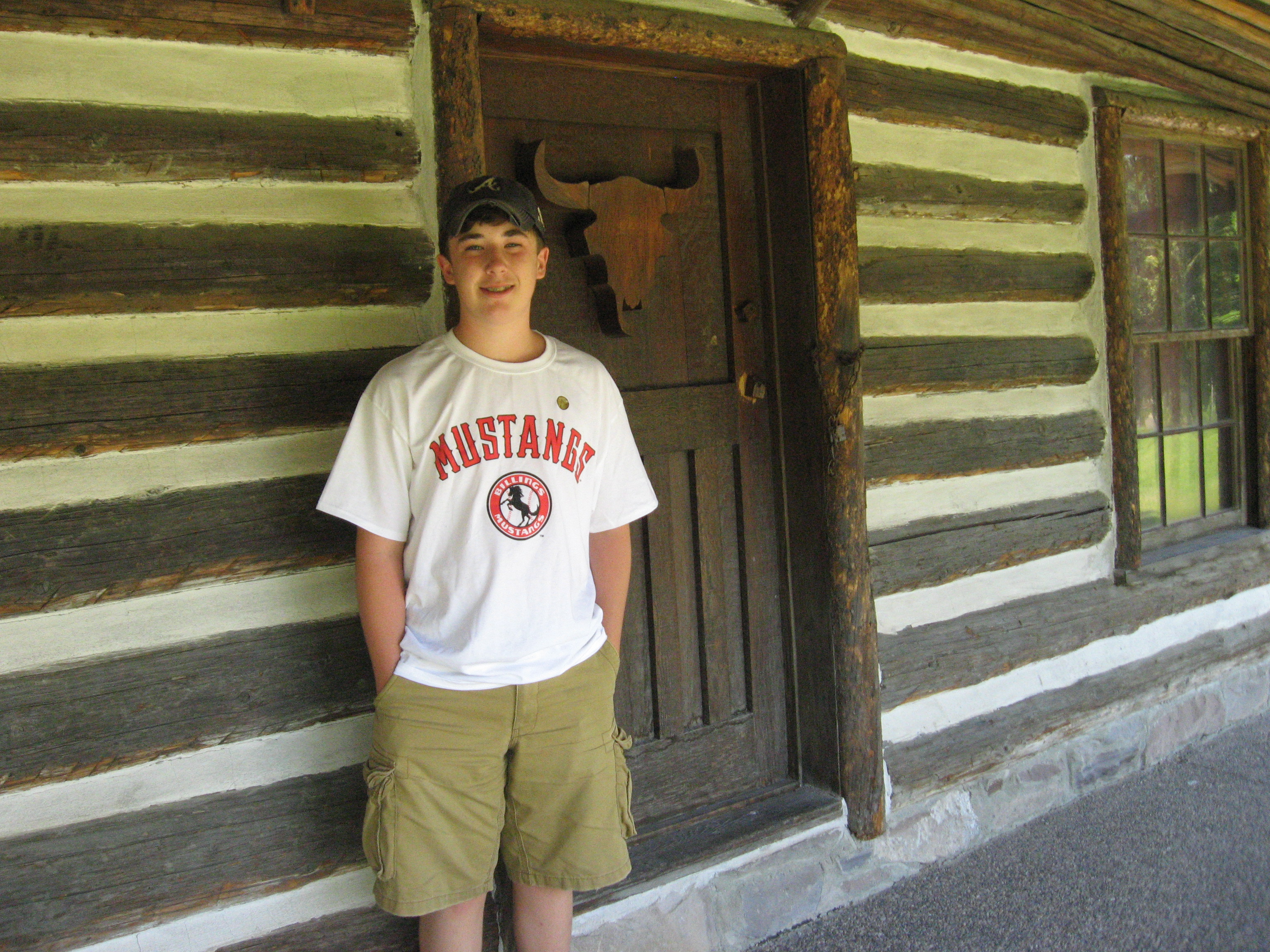
Then, we made our way to the C.M. Russell Museum, which displayed the works of Charlie Russell – cowboy turned artist. It was a huge museum that showed works by many artists and had an excellent exhibit on the story of bison, a symbolic animal of the West. It was also the location of Russell’s home and workshop. My youngest nephew is an aspiring artist, and I took a picture of him in front of the shop.

One day, people will be taking pictures in front of his workshop.

In the next post, we will journey north.

Amber Waves of Grain

8 Aug

After climbing Pompeys Pillar, Lewistown was the next destination of our Montana adventure. Along Highway 87, we passed through communities like Roundup and Grass Range. We also passed through lands scarred by fire. A lady at the baseball game told us that the area had been ravaged by wildfires, and dozens of homes had been destroyed. Also, livestock had to be euthanized due to excessive burns. We had heard nothing about this on the news, and she wasn’t surprised. I believe her quote was, “The only time Montana makes the news is when someone shoots a coyote, and PETA gets upset.”

We made it to Lewistown, and I took a stroll down the main street with my oldest nephew. I felt like we had jumped into Mr. Peabody’s WABAC Machine. Kids were riding bicycles past storefronts filled with toys, appliances and furniture.

I know you can’t see the chairs because they are camouflaged.

There was also a movie house that was 90 years old. I know that because we went into the lobby and asked. It was strange to see a modern superhero movie like The Dark Knight Rises playing in a theater such as this.

I assume it wasn’t the silent version.

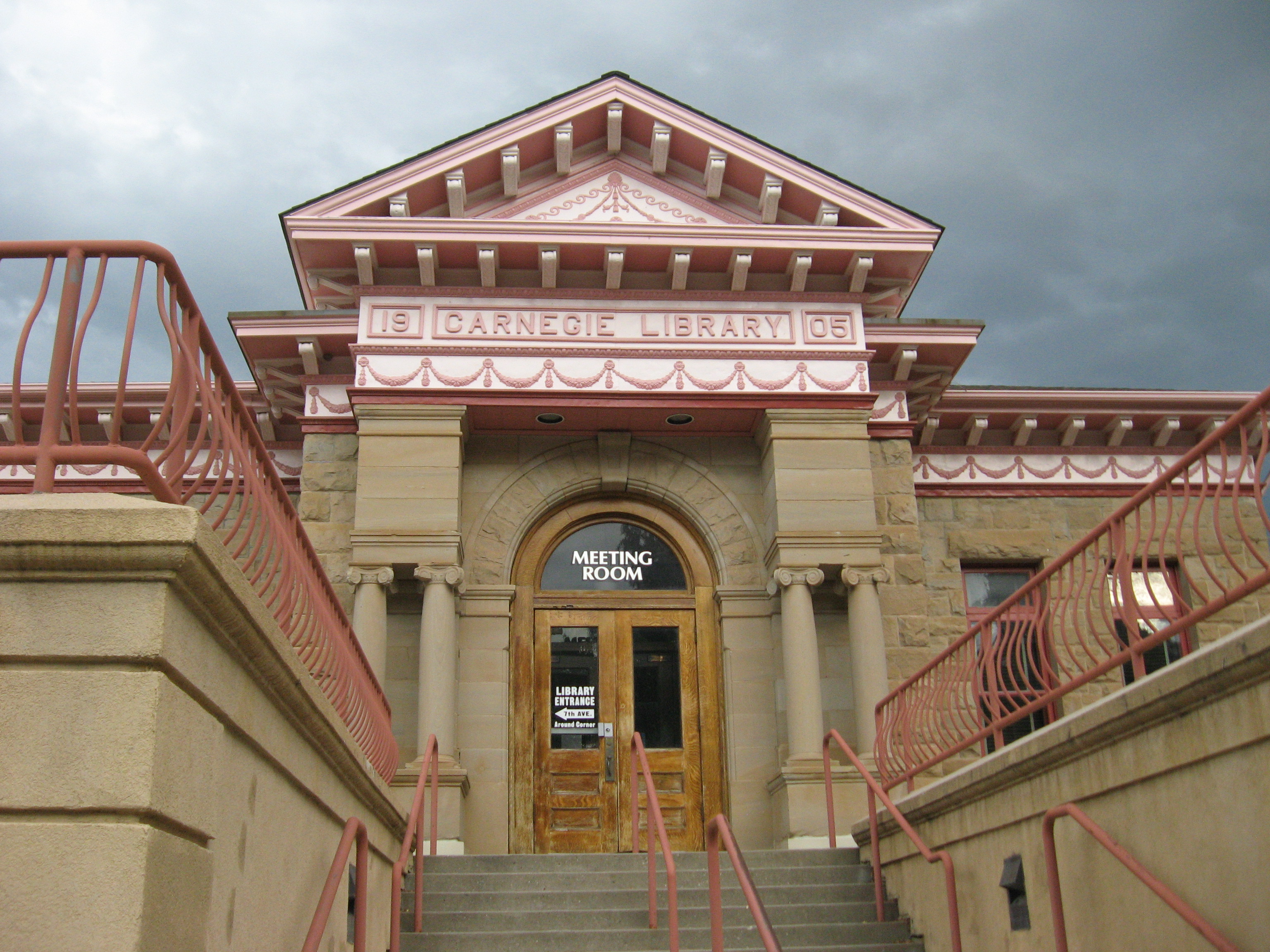
As we walked, I began to notice that most of the downtown buildings were adorned with the dates which they were built. Almost all of them were built between 1900 and 1920, and no other commercial buildings, except for McDonald’s, had been built. This was a clue that the town hit its peak in the first decades of the 20th Century and has not grown since. It must have been a thriving community because it was home to a Carnegie Library.

Carnegie was one of the richest people who ever lived, but people still mispronounce his name.

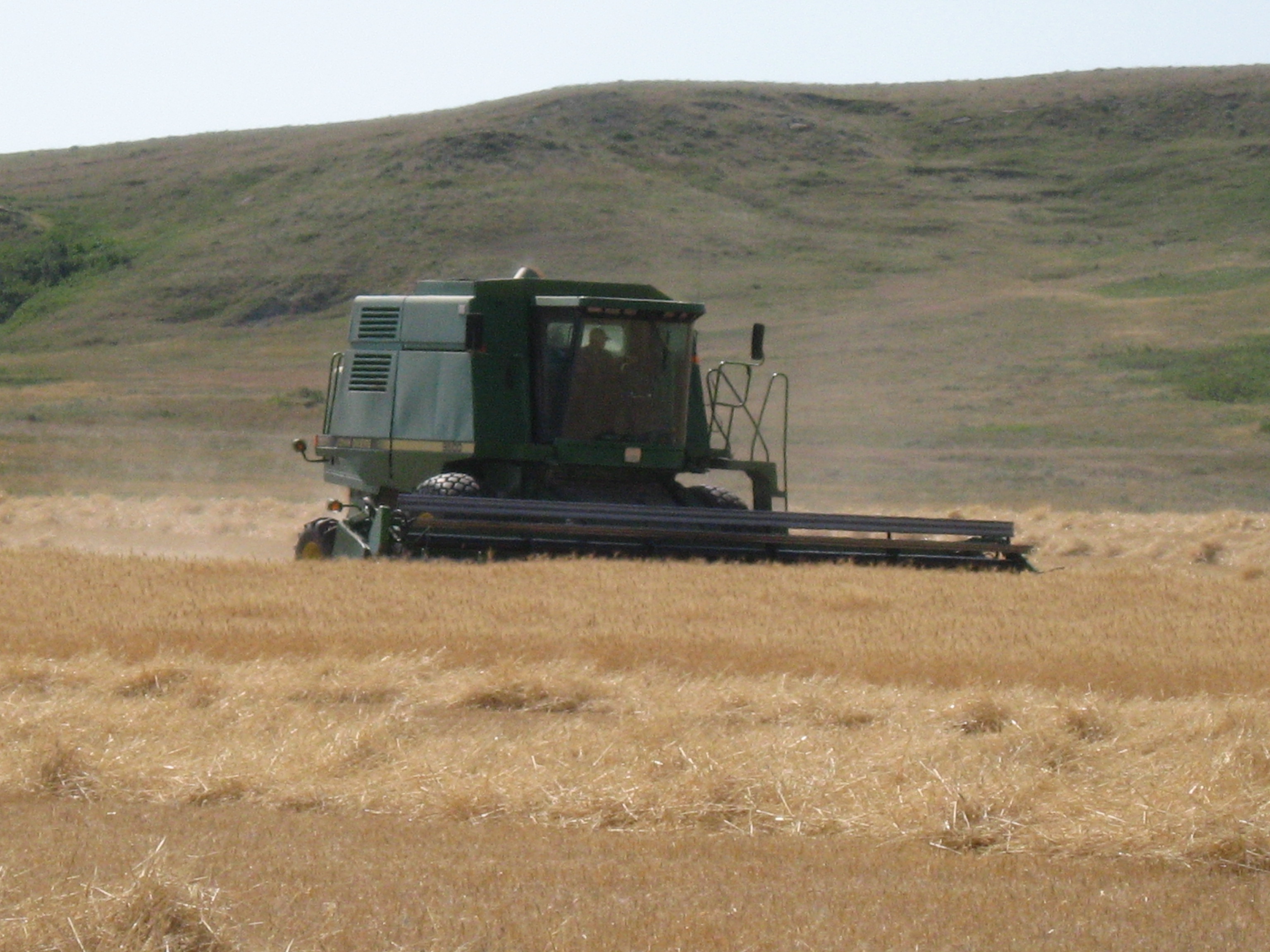
After spending an evening at the Yogo Inn, which sits on the geographic center of Montana, we visited friends who grow wheat and raise cattle near Winifred. The first ranch was only 20,000 acres. I say that because the second ranch was 35,000 acres. They were in the midst of harvesting their crop, so we drove into the wheat field to check it out.

Now this is real farming.

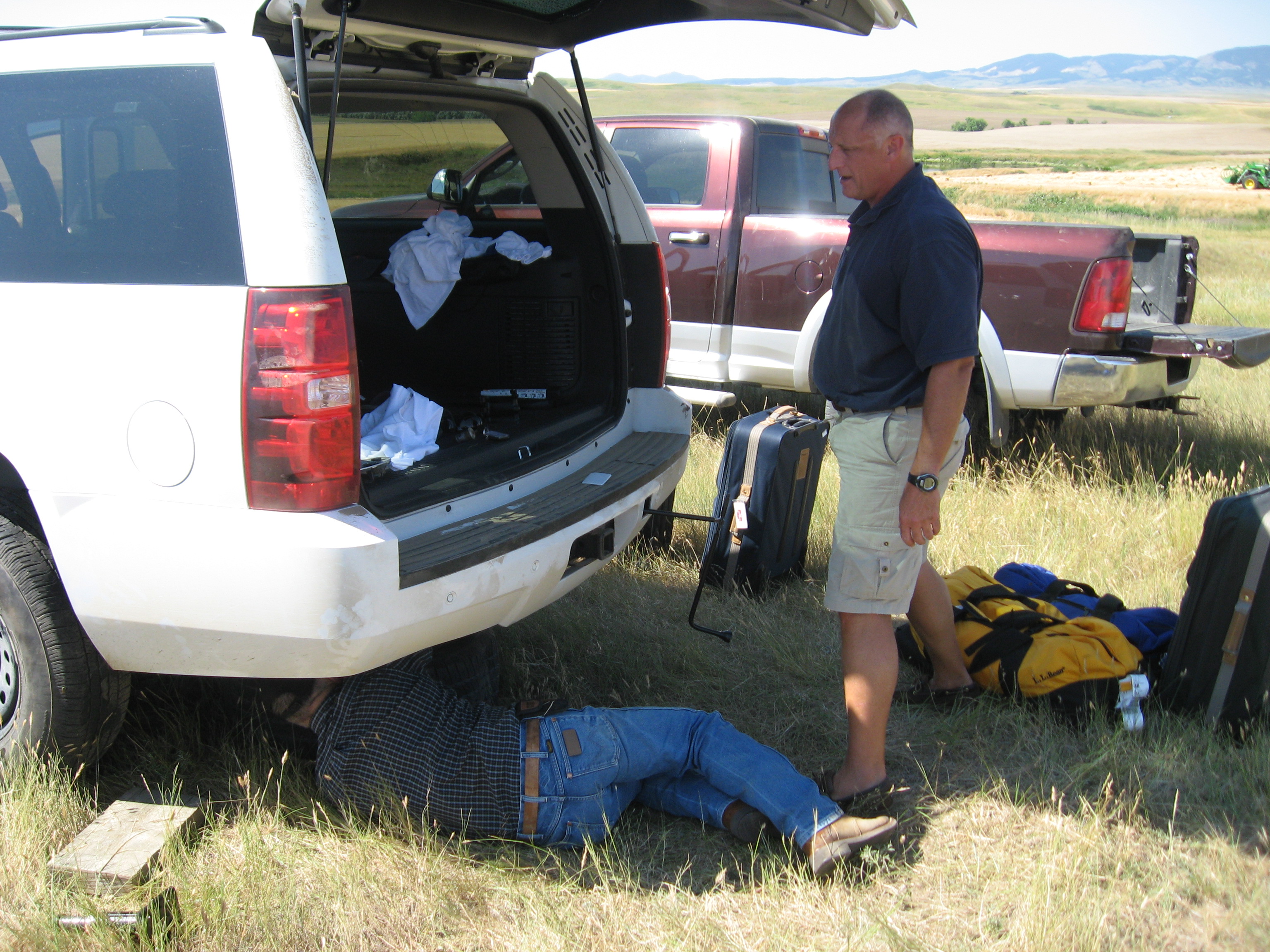
Unfortunately, our SUV did not make it through the field as well as the farming machinery. We got a flat tire.

National Lampoon’s Montana Vacation

We escaped the wheat field and drove to the second ranch, where we were treated to a home-cooked meal. At least, most of us were treated. My youngest nephew wasn’t feeling well and didn’t want to eat. He went to the bathroom and threw up before experiencing a Dumb and Dumber moment. The toilet wouldn’t flush, and he went into panic mode. Finally, he was able to get the thing to work.

My oldest nephew rode the harvester until we forced him to leave.

This is not tiddly-winks farming.

What did I learn on the stage of the trip?

1. Farming in central Montana is a tough and isolated way of life.

2. Don’t drive into a wheat field.

3. Be sure a toilet works before using it.

Baseball, Crazy Horse and a Great Big Rock

7 Aug

I have returned from my ventures in Montana and can report that a great time was had by all. The best part was spending time with my dad, my brother and my nephews. We picked on each other, laughed and learned a few things along the way.

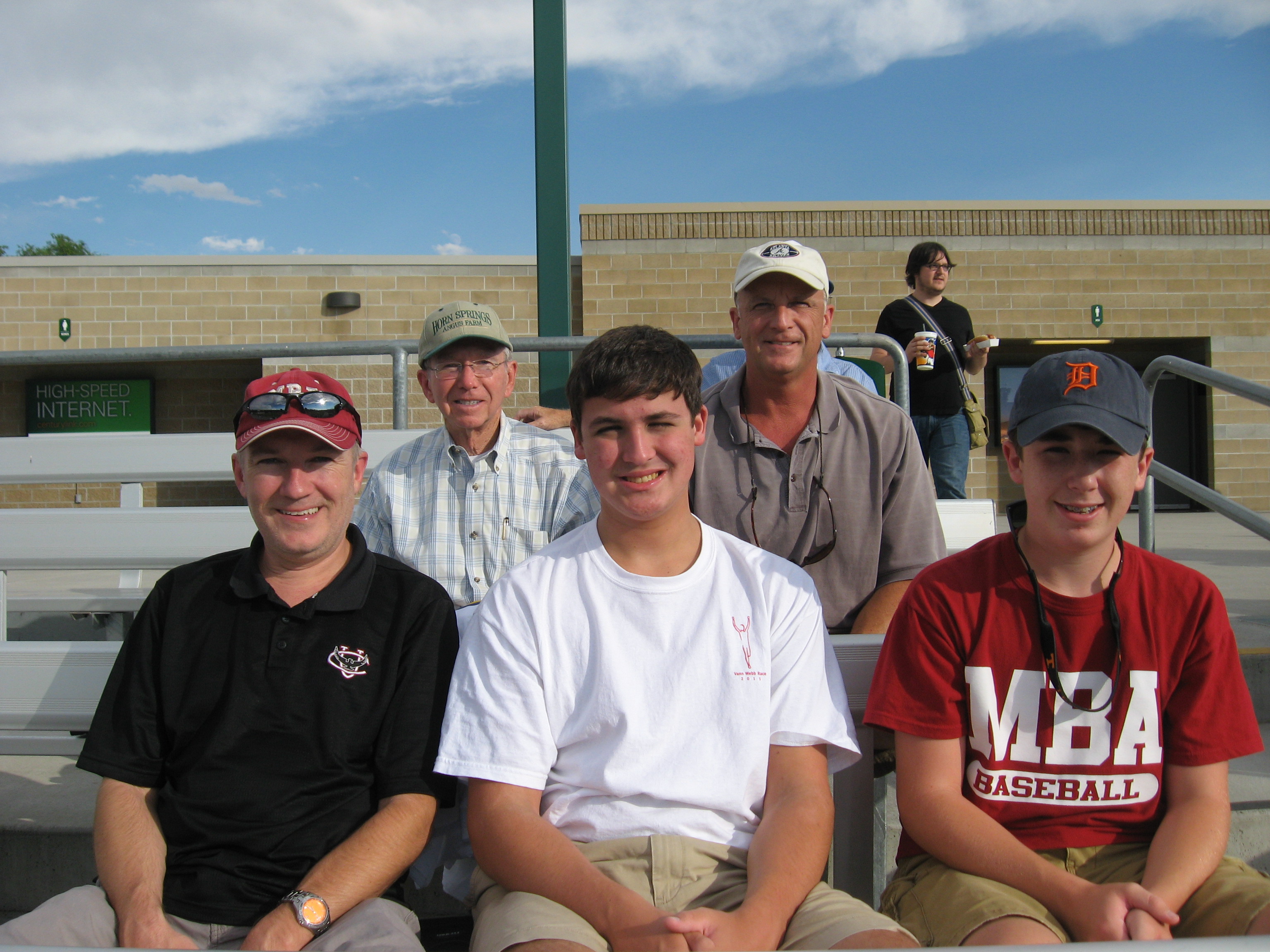
The trip began as we landed in Billings and found our way to the hotel. It was immediately apparent that my oldest nephew would be the navigator of the trip as we felt our way through the town. We had planned a journey through history, agriculture and different landscapes, but first we needed to do something for my youngest nephew. That meant going to a baseball game.

Good looking bunch, isn’t it?

We saw a Rookie League game between the Billings Mustangs and the Helena Brewers, and you could tell from the quality of play that this was about as low in professional baseball as someone could get. There were dropped balls, balks and wild pitches. However, the action is not what caught my attention. These guys were living the dream of playing pro ball and trying to move up through the ranks. Then, I realized that the Brewers are part of the same organization as Nashville’s AAA team. Those guys were working hard to get to Tennessee on their way to Milwaukee.

While living their dream, the players were offering entertainment for the community. The stands were filled with people of all ages, from the very old to the very young. The outfield fence was lined with people in lawn chairs. We found ourselves in a real community event, and that is one of the things I like about these kinds of trips. At times, you can avoid the typical tourist destinations and immerse yourself in another lifestyle.

We talked to the people around us and learned about life in and around Billings. We got free t-shirts for being among the first 500 fans. We paid reasonable prices for food and paid a dollar to enter the pitching cage. For one night, we were honorary citizens of Billings.

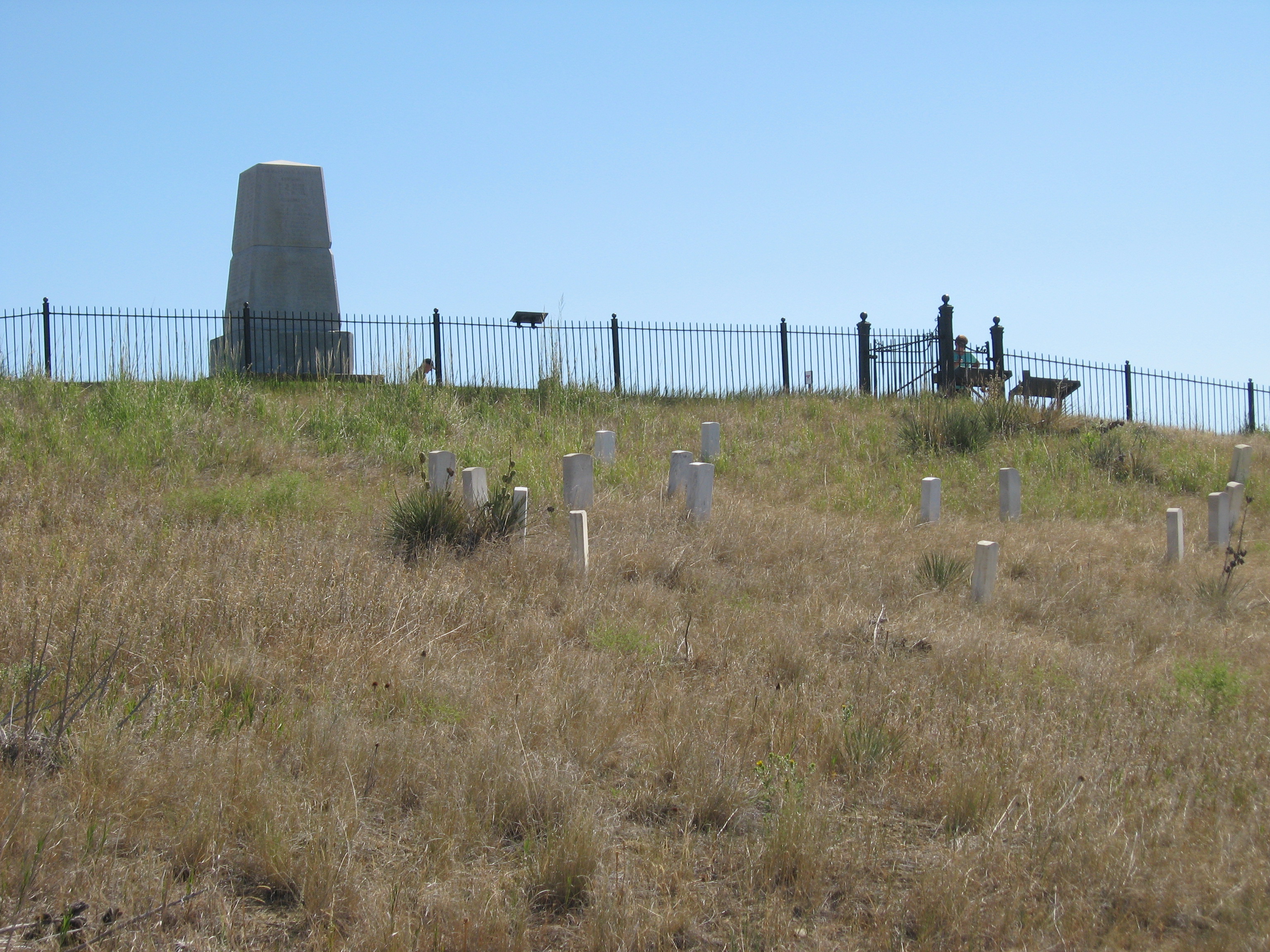
The next morning, our driving journey began as we headed down Interstate 90 toward the Little Bighorn Battlefield National Monument. This is where George Custer and the 7th Cavalry was defeated by Sioux warriors led by Sitting Bull and Crazy Horse. It is my favorite historic site and an event that I have read many volumes about. We drove to Last Stand Hill, where my nephew wanted to film me giving my lecture on the battle. I talked about the events that led to the fight. I talked about the battle as I looked over the land and pointed out where different stages took place. When I finished, I turned and discovered that about 20 people had gathered around to listen. Then, I spent time answering questions.

As a historian and a teacher, there is nothing better than being able to talk about an event where it took place. I wish I could beam my classes to different places as we cover them.

The site of two big events – Custer’s Last Stand and my lecture.

After a drive through the battlefield, we went across the street to KFC. Yes, the Sioux won the battle but the Colonel won the war. Unfortunately for the Kentuckians, the KFC didn’t open when the sign said it would, so we went to the Custer Battlefield Trading Post instead. I had fry bread stuffed with meat, cheese and beans. After that, I had fry bread covered with honey. It wasn’t as good as the sopapillas of New Mexico, but beggars can’t be choosy.

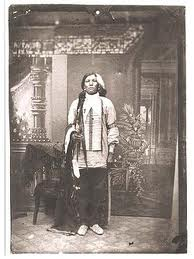
As we dined, a photograph of an imposing Native American looked down on us.

This is a Native American warrior – not a founder of a chain of strip clubs.

I didn’t pay much attention to the photo because images like this can be found in books and places throughout the West. Then, the owner of the trading post came by the table to see how we were. My brother told him that I was a historian of the West, and the guy asked:

“Do you know who that is?”

“I don’t think I do.”

“That’s Crazy Horse.”

Here’s the thing. Every book I have read and every teacher I have heard tell the same story. Crazy Horse refused to have his picture taken. Now, the owner of a tourist trap is telling me that I am looking at the image of Crazy Horse. After the meal, he took us to another room; pointed out the smaller original; said that the descendants told him privately that it is a photo of the warrior; and, gave me a free copy to put in my classroom. Is it really Crazy Horse? I don’t know, but I hope it is.

We left the trading post and got into the SUV. Unfortunately, our door hit a red truck parked next to us. The woman in the truck jumped on us pretty good, and we got out of there as fast as possible. George Custer could only wish that he had our instincts.

We drive north and hit a back road (interstates suck on these kinds of trips) toward Pompeys Pillar.

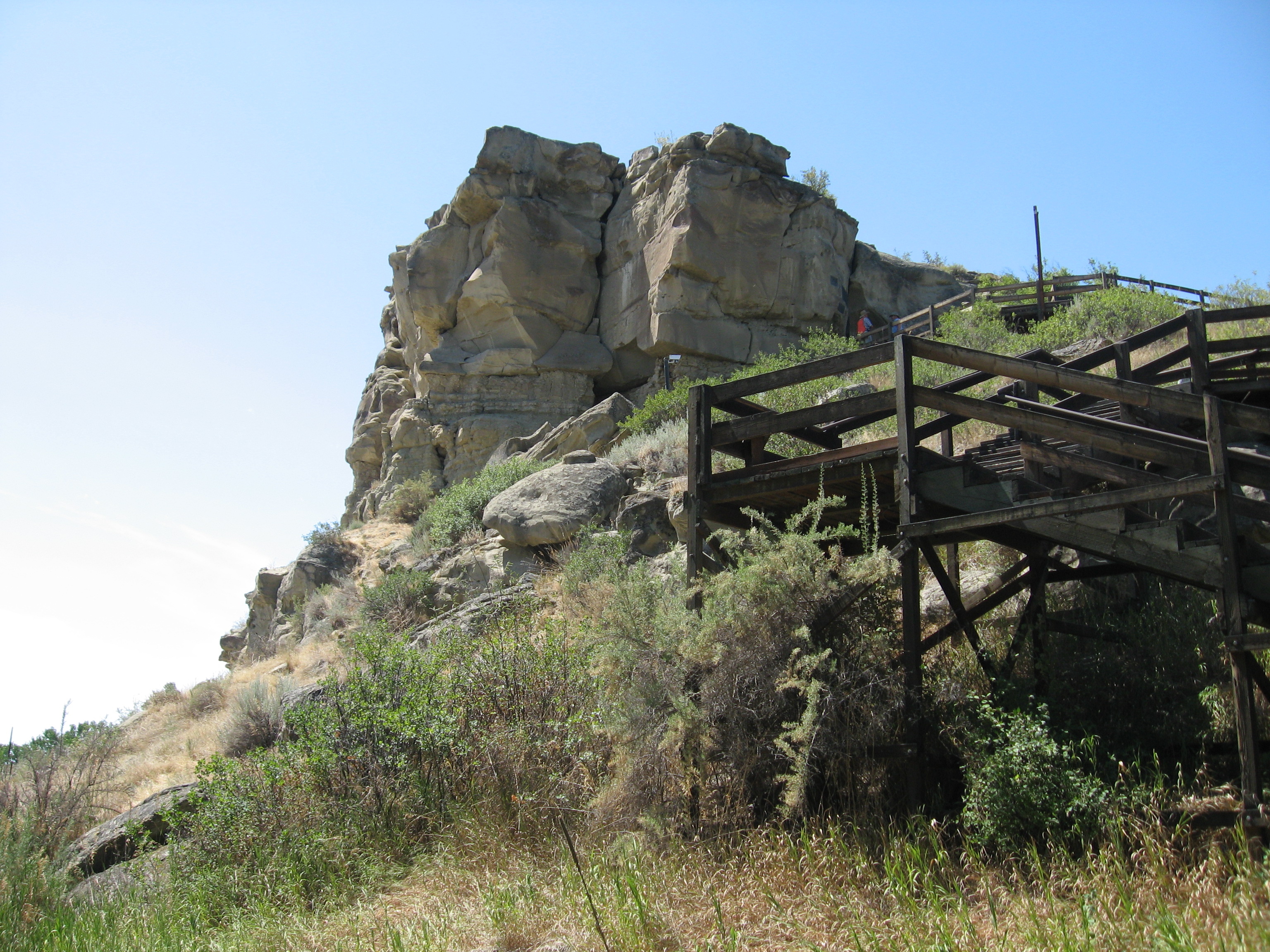
Did Sean Connery and Nicholas Cage make a movie about this place?

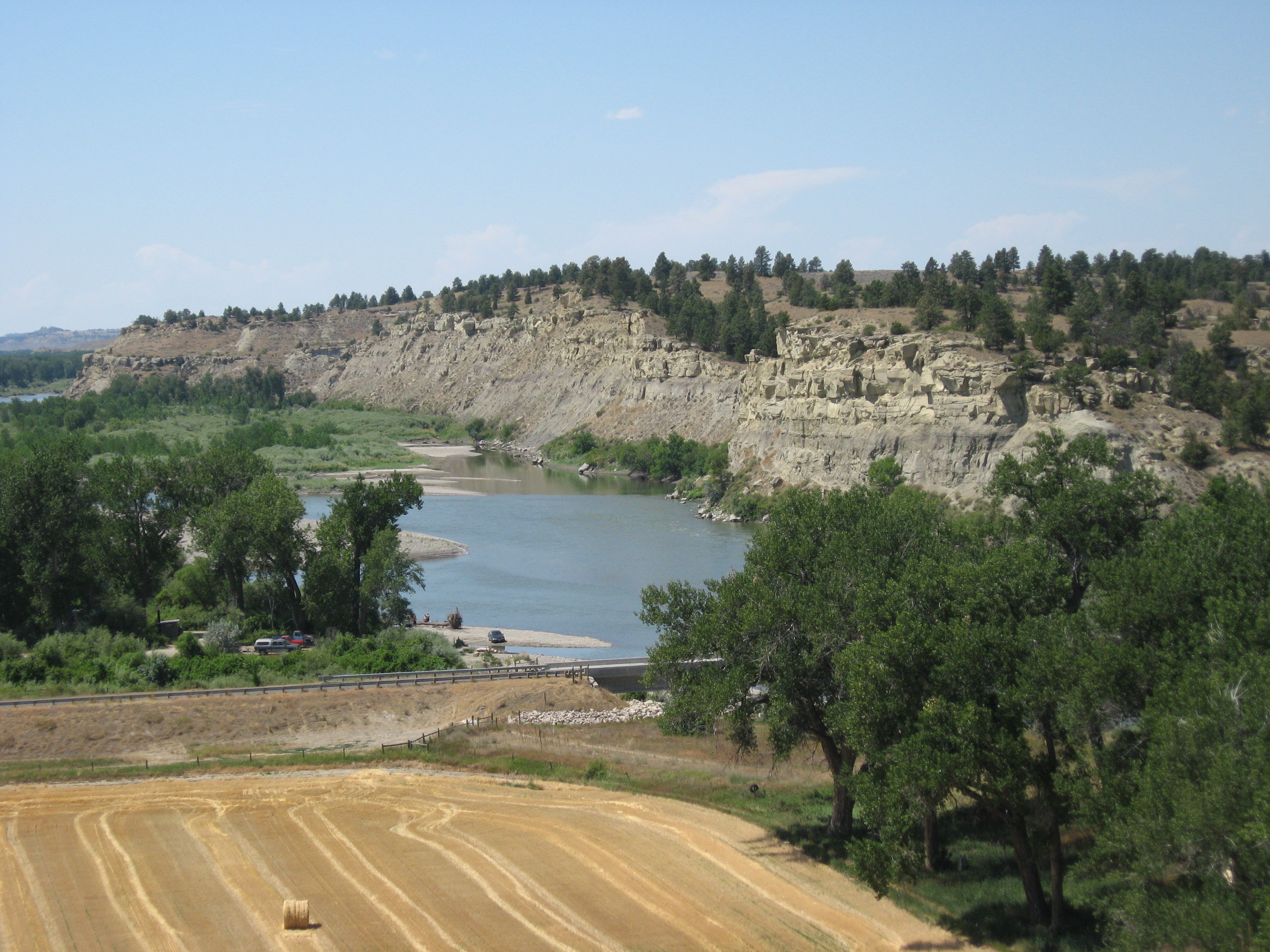
This rock was seen by William Clark on his return voyage with the Corps of Discovery. As Meriwether Lewis traveled on the Missouri River, Clark went down the Yellowstone River.

The Yellowstone River

Clark climbed the rock; named it Pompeys Tower in honor of Sacagawea’s son; and, carved his name on it. People say that it is the only permanent mark the Corps of Discovery made on the land they explored.

William Clark was here.

I’m not sure about that. They told the Native Americans that the land they lived on was owned by the United States. Over 70 years later and only a few miles away, the Battle of Little Bighorn would be one of the results of that statement.

Listeria – New Mexico Edition

17 Jul

New Mexico is one of my favorite states. How’s that for a short and to-the-point sentence? It is a place that I have visited numerous times, both for my job and for pleasure. Each time I go, I discover something new about the state and about myself. That’s the kind of place that New Mexico is.

Last night, I was grocery shopping and made my way over to the magazine aisle. There, I picked up a copy of Cowboys & Indians (a very non-politically correct title) and flipped through the pages – mostly looking at the pictures. That’s when I noticed some recognizable scenes. Turns out, they were part of an article called “100 Reasons We Love New Mexico”.

Another list after recently writing about lists! And, this list is about New Mexico! So, the magazine people did their job and sold a copy. I took it home; read through the list; and realized that I knew a bunch of things on the list. After counting, I had experienced 41 items on the list. Not bad for a history professor in Tennessee.

In homage of a great state, this is the list of the 41 things I have experienced on the Cowboys & Indians list of 100. First, a few disclaimers. The number is where the magazine has each item listed. Second, the quoted comments in bold come from the magazine, and the comments without quotes come from me. Third, the photographs come from me, so I don’t have pictures of everything.

1. “First impressions: clean air, blue skies, clear light; soft colors.” New Mexico definitely has plenty of each.

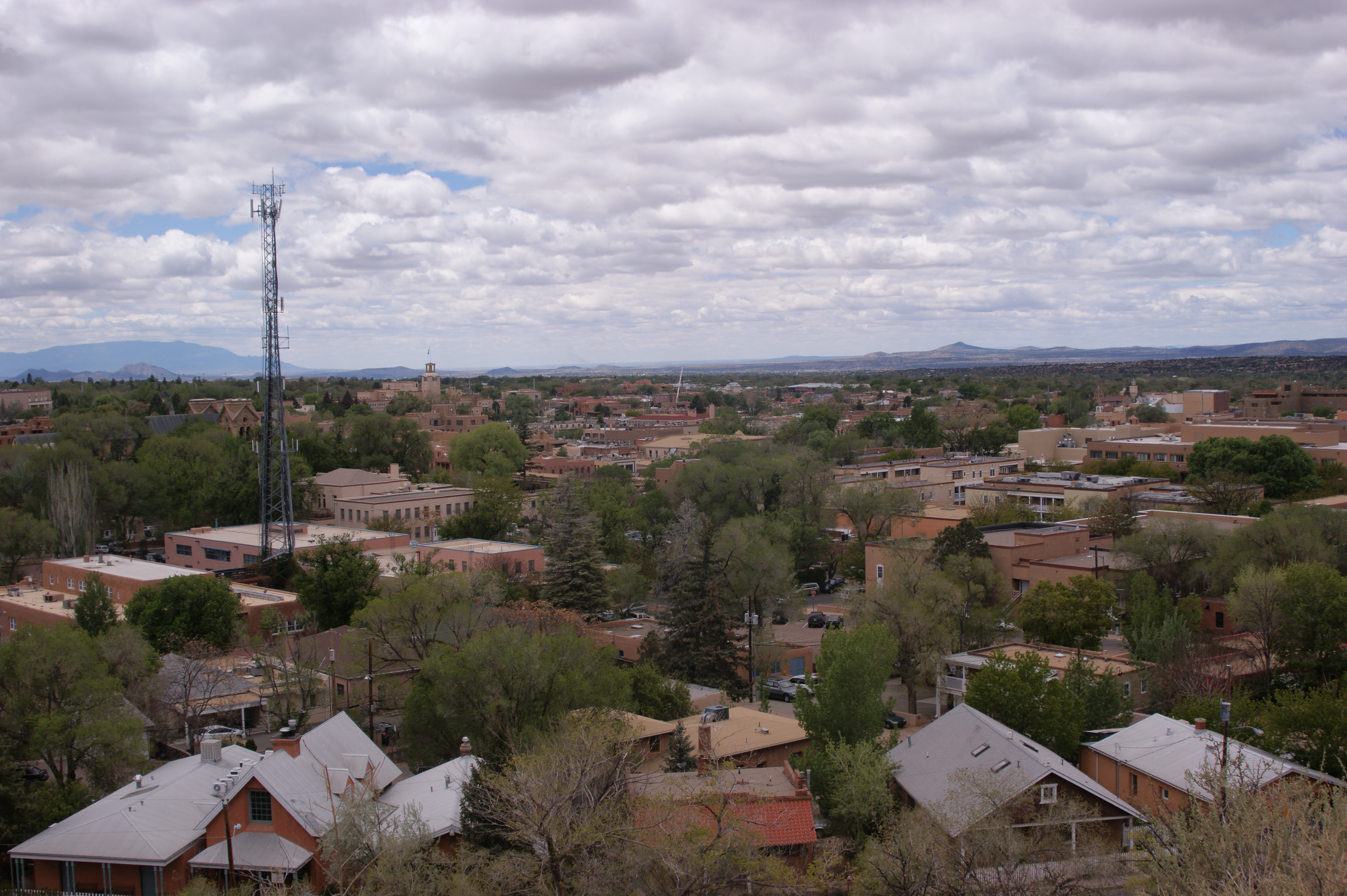
2. “The Sangre de Cristos Mountains.” They look over Santa Fe.

4. “The high road to Taos!” I’ve driven on the road but not all the way to Taos.

6. “Sunset at La Fonda’s rooftop Bell Tower bar in Santa Fe.” This place is on top of one of Santa Fe’s premiere hotels and provides a great view of the Santa Fe Plaza.

7. “The view of the Santa Fe and Jemez Mountains from the Cross of the Martyrs. Dedicated in 1920 to commemorate the 21 friars and numerous Spanish colonists killed in the 1680 Pueblo Revolt, the site is accessible by stairs from Paseo de la Loma.” This site has a few issues. First, parking is a problem. Second, it doesn’t say anything about the Native Americans killed by the Spanish.
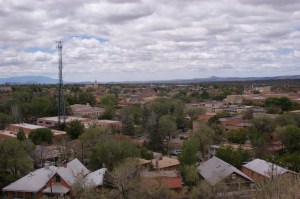
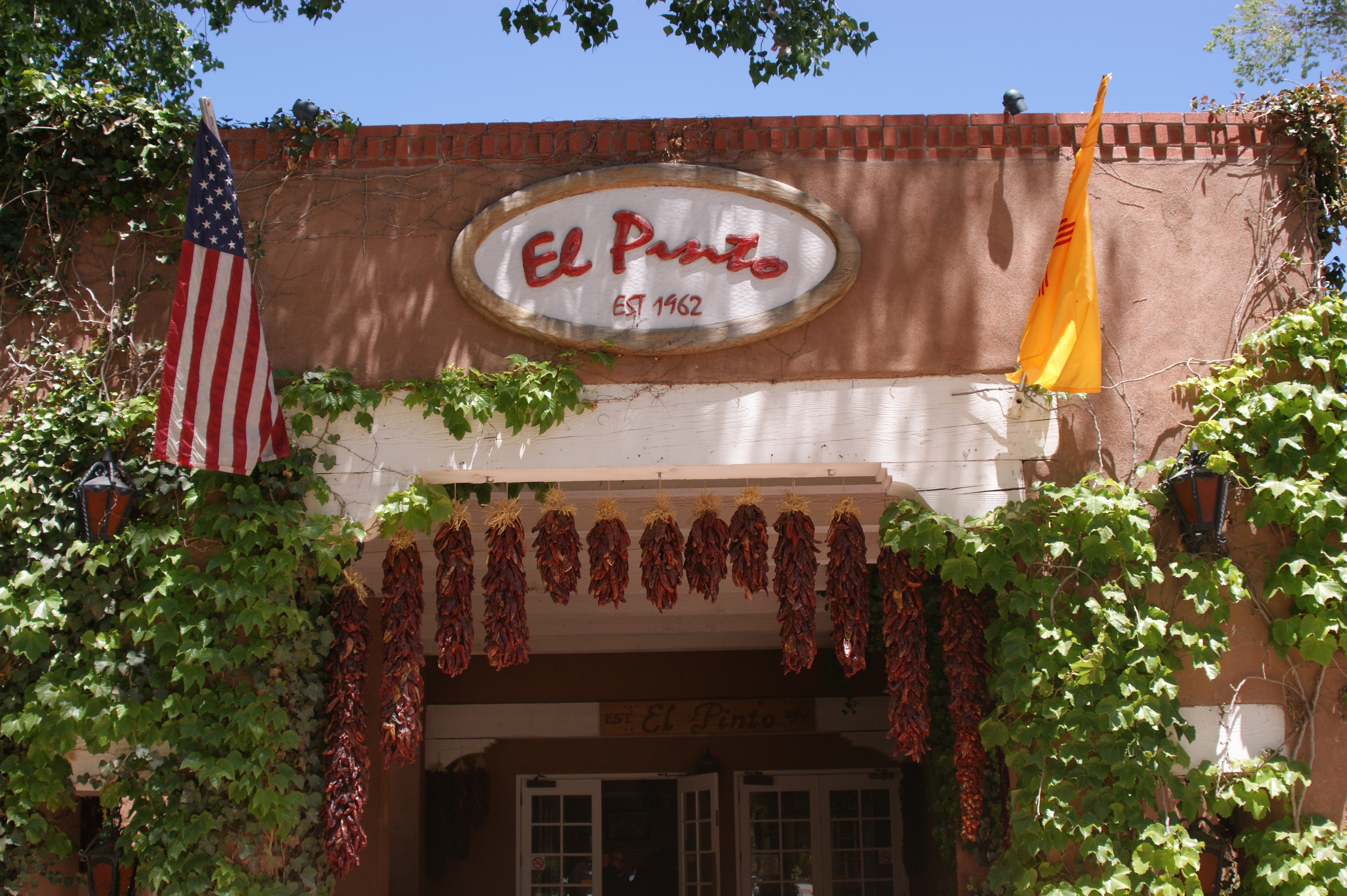
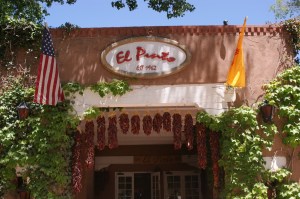
11. “Ristra hanging everywhere.” El Pinto in Albuquerque is my favorite place to see these.
12. “The pinyon, the cherished state tree names by Spanish explorer Alvar Nunez Cabeza de Vaca in the 1530s.” These plants are everywhere and are an important part of the state’s landscape.

15. “The Sandia Mountains at sunset.” This is truly a beautiful sight.

16. “The Zia symbol for the sun (from the ancient Zia Pueblo people) flying on the red and gold (for Spain) state flag.” The state capitol, which I walked around and through this year, is also built in this shape.

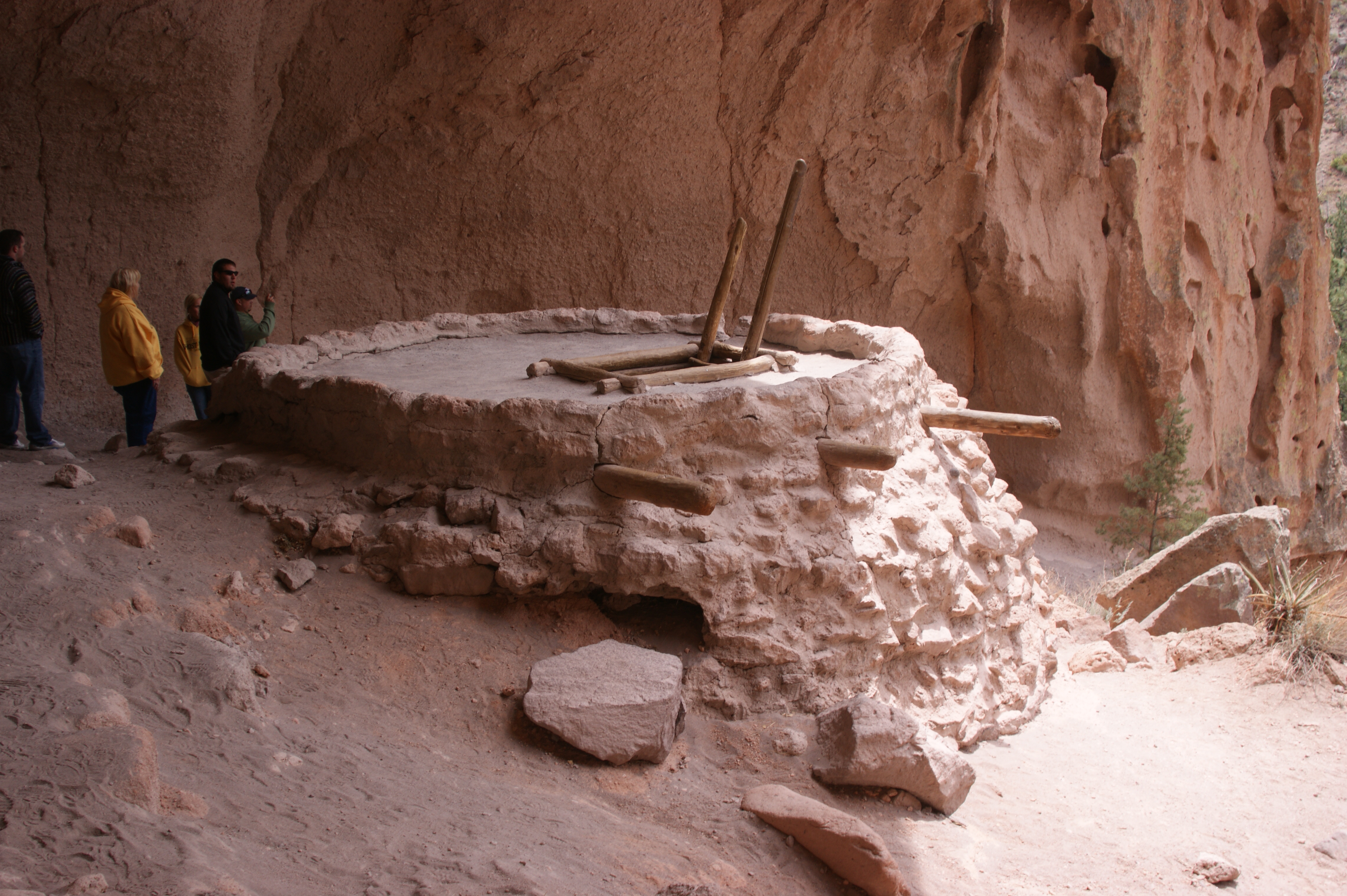
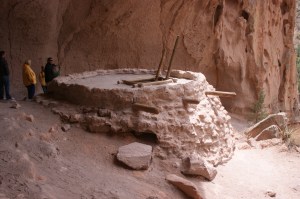
17. “Pueblo cliff dwellings and Kokopelli’s image among the ruins at Bandelier National Monument.” This is a great hike, and there is also a great visitor center with a grill and gift shop.
19. “Frito pie – served in the bag – at the Five & Dime on Santa Fe Plaza.” It’s also a great place to buy t-shirts.

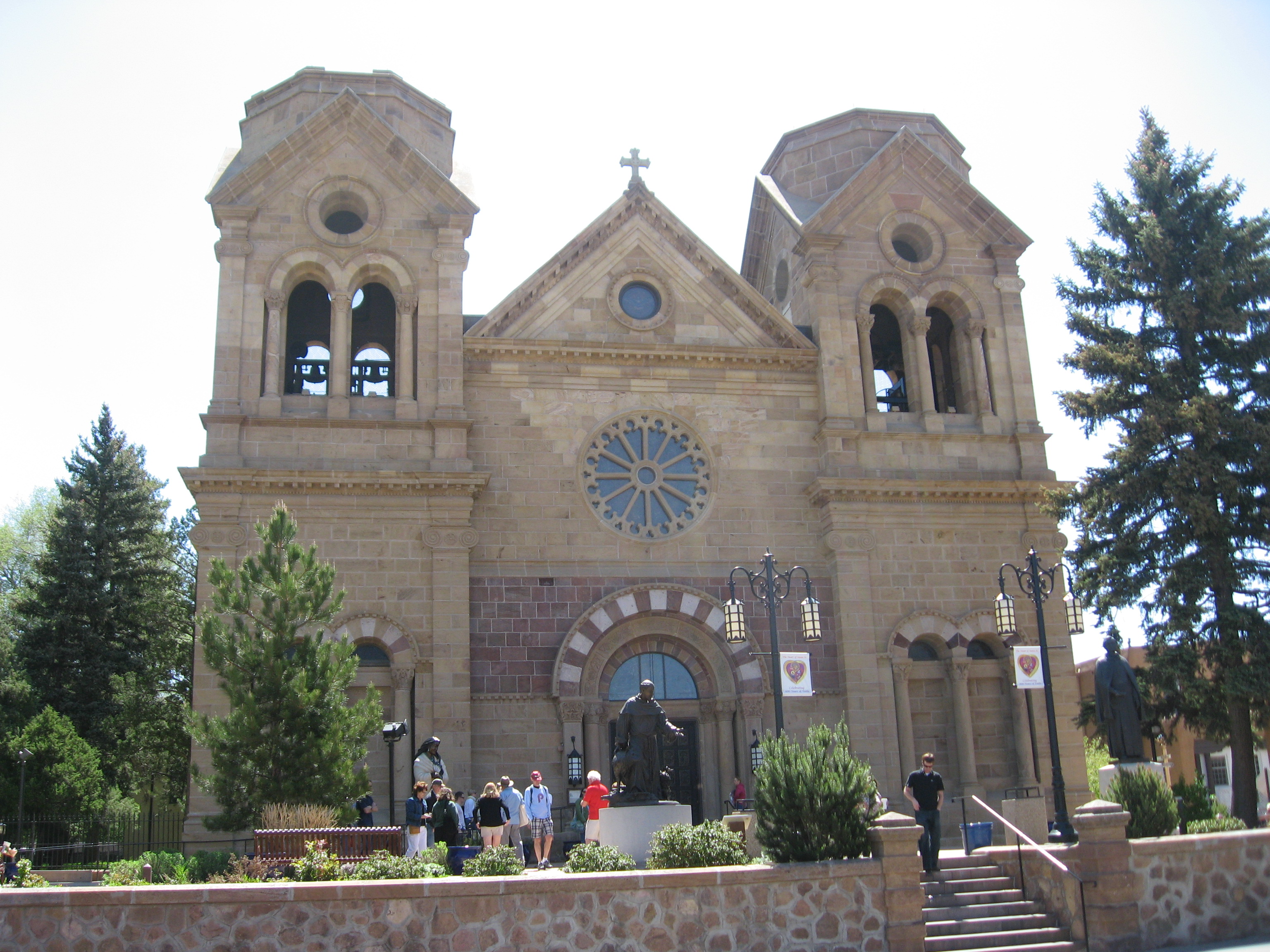
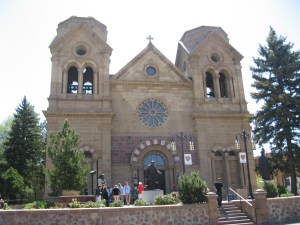
22. “The oldest Madonna in the country, Our Lady La Conquistadora statue (she arrived in 1625 with the Franciscans), in the chapel at Santa Fe’s cathedral Basilica of Saint Francis of Assisi; and in the cathedral’s outside portico, the Blessed Kateri statue of Kateri Tekakwitha (1656-80, Mohawk-Algonquin), the first North American Indian to be beatified.” No building in the downtown district can be taller than the towers of the cathedral.
24. “A museum pass and a shuttle ride up for a day on Santa Fe’s Museum Hill.” I must admit that I have never taken a shuttle to the hill, but I have walked through the maze several times.

25. “Friday night gallery walks along Canyon Road.” I have never been there at night, but I have walked through the galleries. I have even witnessed a few friends make purchases.

26. “Herds of elk.” This is one of the items that field trips students are supposed to mark off on their list. Sometimes we see them, sometimes we don’t.

29. “Scoring a find at the Pueblo of Tesuque Flea Market.” I have bought a few things at the flea market, but the best was a tall cup of prickly pear lemonade.

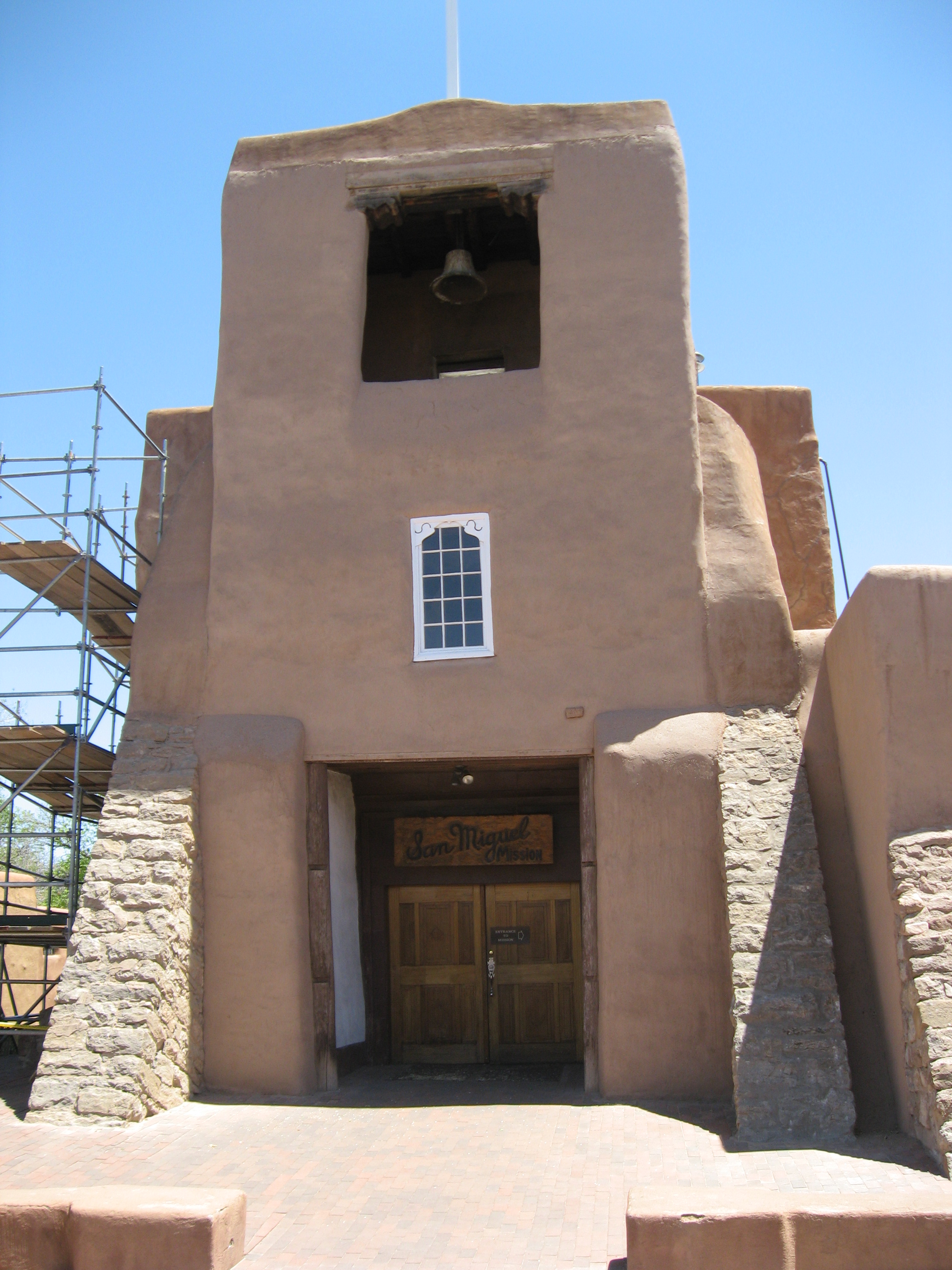
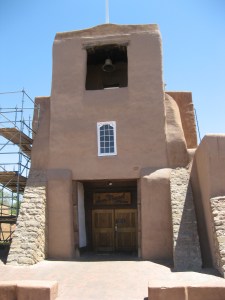
30. “Meditative moments inside the thick, old adobe walls of the lovely San Miguel Mission Church, perhaps the oldest church in the country (1610-26).” On this year’s field trip, some of our students helped make new adobe bricks for the church.
36. “Hiking slot canyons at Kasha-Katuwe Tent Rocks National Monument on the Cochiti Pueblo through formations that look like giant rock soft ice cream cones or petrified sand castles.” We hiked Tent Rocks for the first time this year, and it was a fantastic experience.

43. “Albuquerque’s Indian Pueblo Cultural Center, the gate way to New Mexico’s 19 pueblos.” I went here several years ago, and, admittedly, don’t remember much about it.

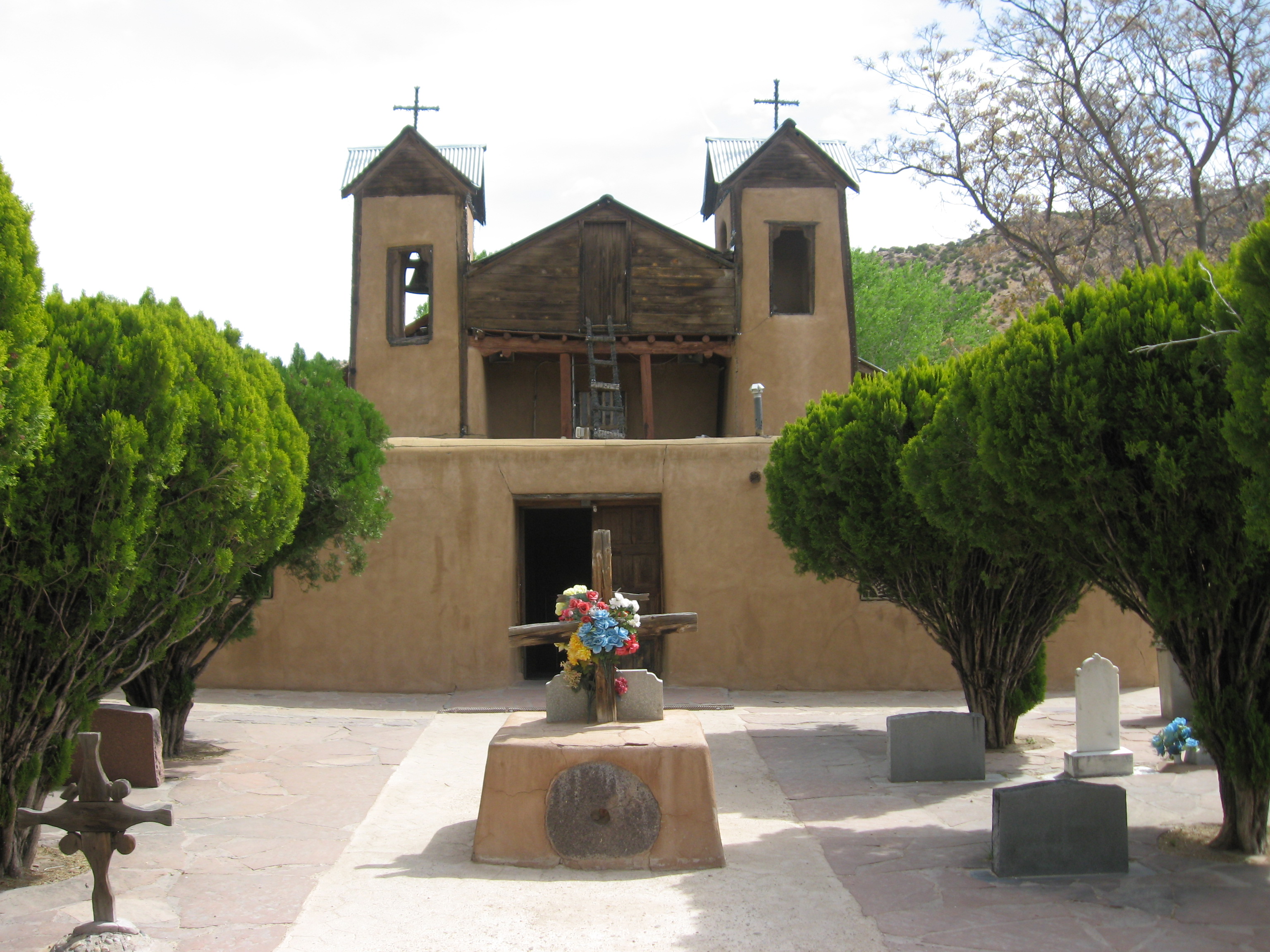
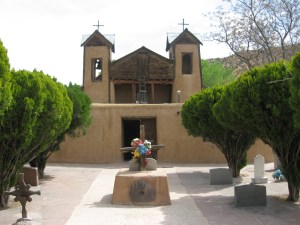
47. “The healing shrine of Santurio de Chimayo.” This church is a pilgrimage for those suffering from various ailments and maladies. The dirt in the side chapel supposedly has healing properties. Whether you believe that or not, it is a beautiful church.
50. “Shopping for turquoise and silver from the licensed American Indian vendors under the historic portal of the Palace of the Governors on the Santa Fe Plaza.” The Palace of the Governors is the oldest government building in the United States. If you walk its exterior to buy something from the vendors, then you need to remember to negotiate the prices with them.

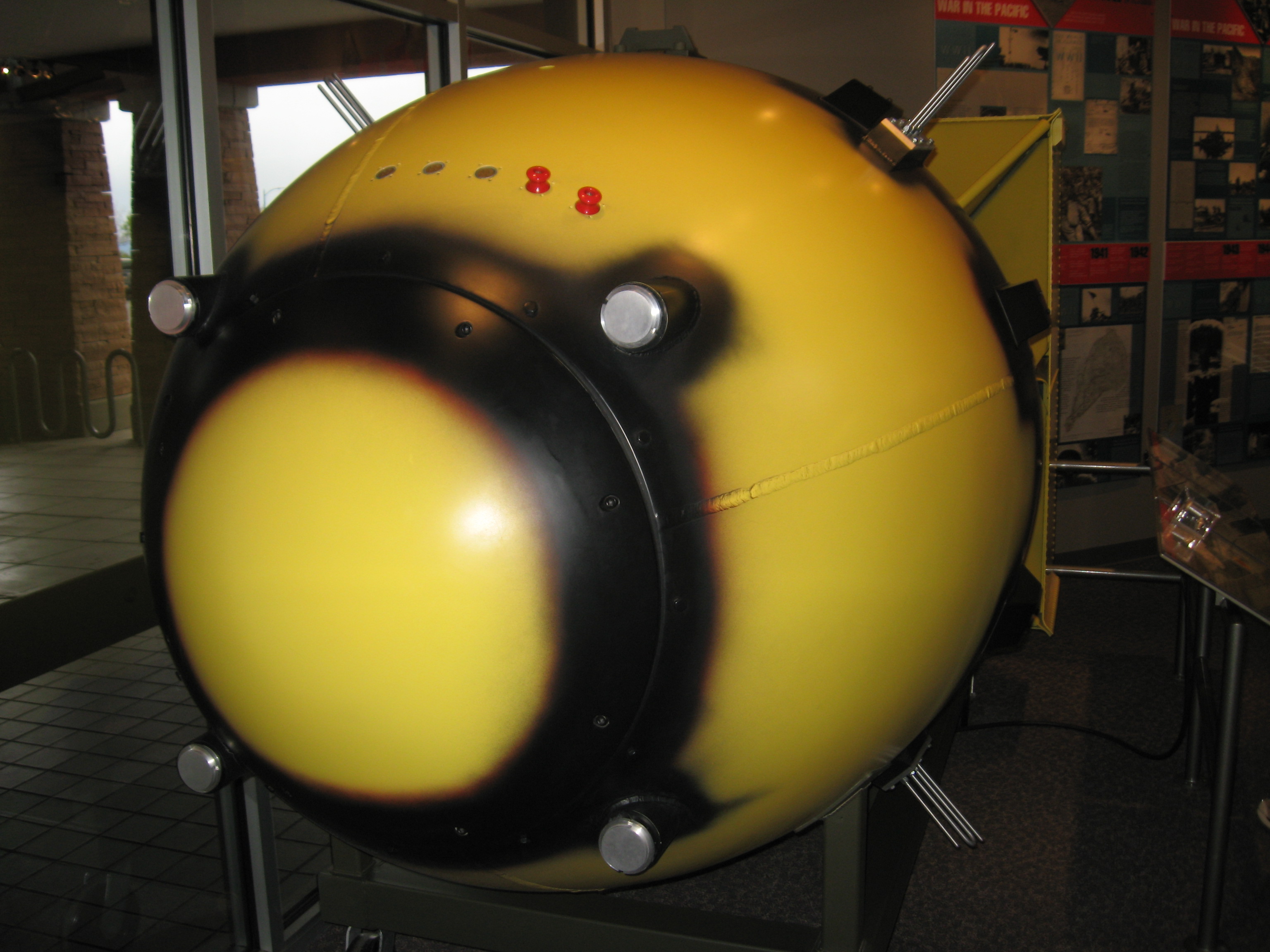
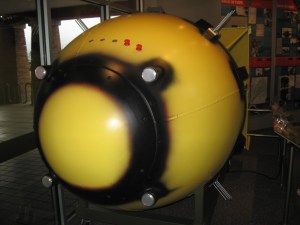
51. “The Bradbury Science Museum in Los Alamos.” This is a great museum about New Mexico’s impact on the 20th Century. Los Alamos was the place where scientists built the first atomic bombs, and the museum chronicles the history of the town.
53. “The De Vargas Street House in Santa Fe for its history, tiny museum…Built ca. 1646, it is reputedly one of the oldest homes in the country.” It sits across the street from #30.

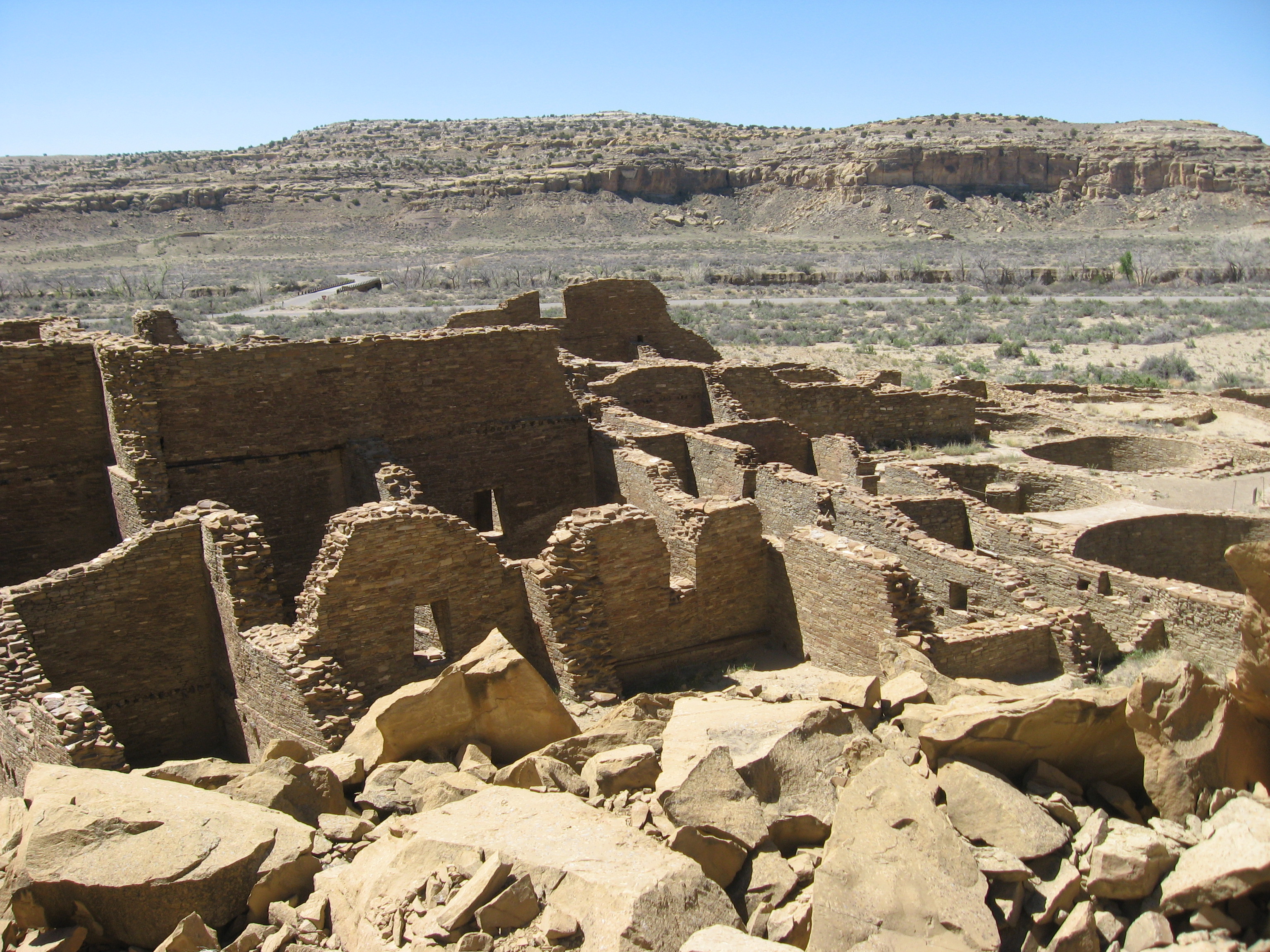
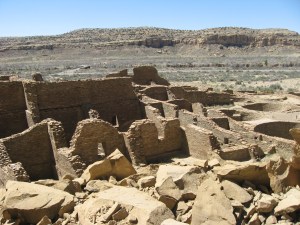
56. “Chacoan ruins…in Chaco Culture National Historic Park.” This is a great place to visit. Interesting ruins. Great mesa hike. But, it is a pain getting there.
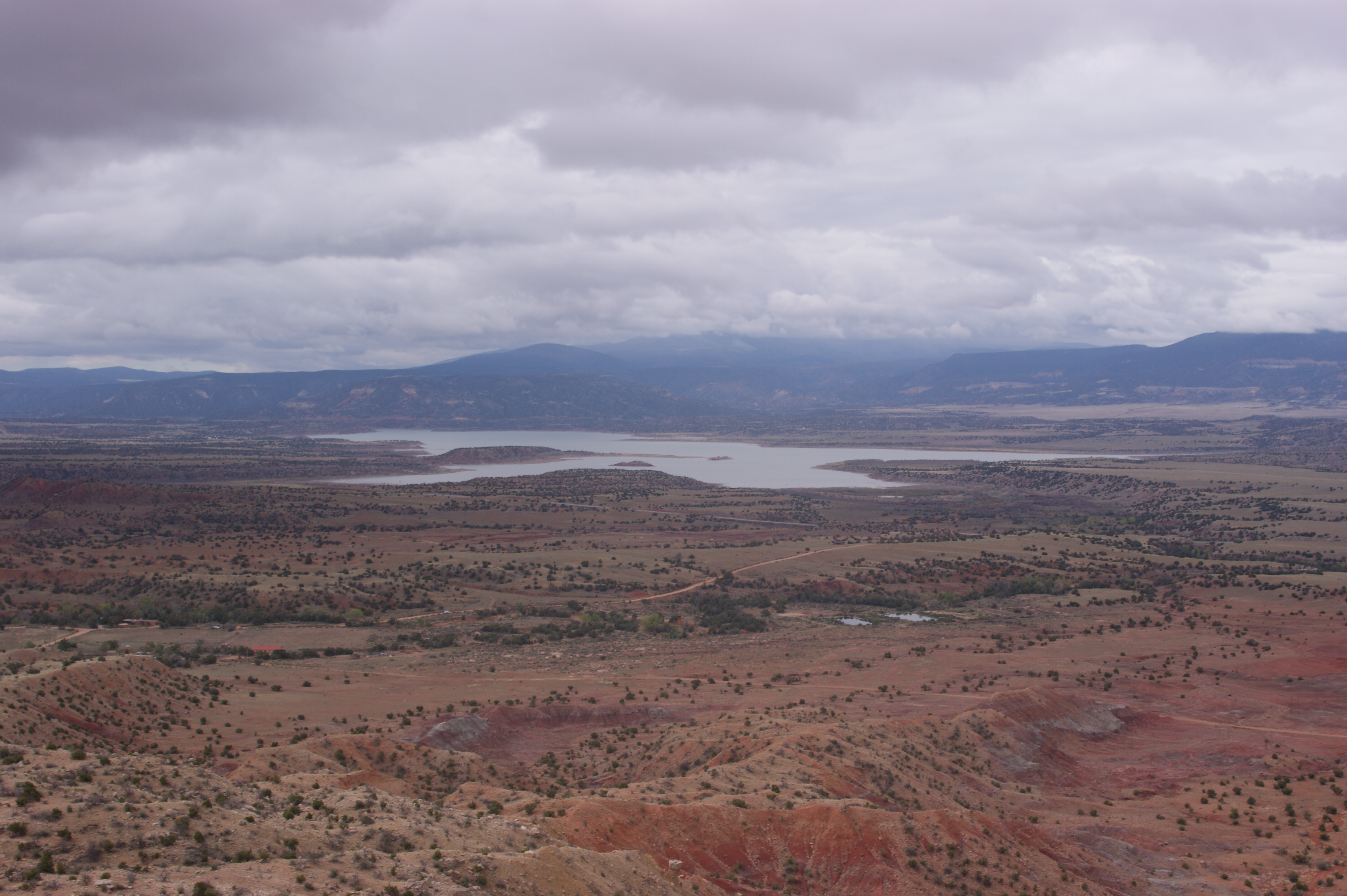
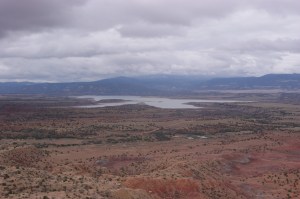
58. “Georgia O’Keefe – from the eponymous museum in Santa Fe to her Ghost Ranch and Abiquiu homes to her seeming presence everywhere in the high-desert landscapes she loved and painted.” I have been to the museum and seen her house in Ghost Ranch, but the best part of the O’Keefe experience is hiking the mesa at Ghost Ranch. It overlooks one of her favorite landscapes.
60. “Four Corners Monument, marking the only place in the United States where four states – New Mexico, Arizona, Utah and Colorado – meet.” When I was a kid, my parents searched for this place forever so I could lie down in four states at once. A few years ago,  I went as an adult and wanted to do it again. They had it fenced off for construction, and I could only walk around in four states.

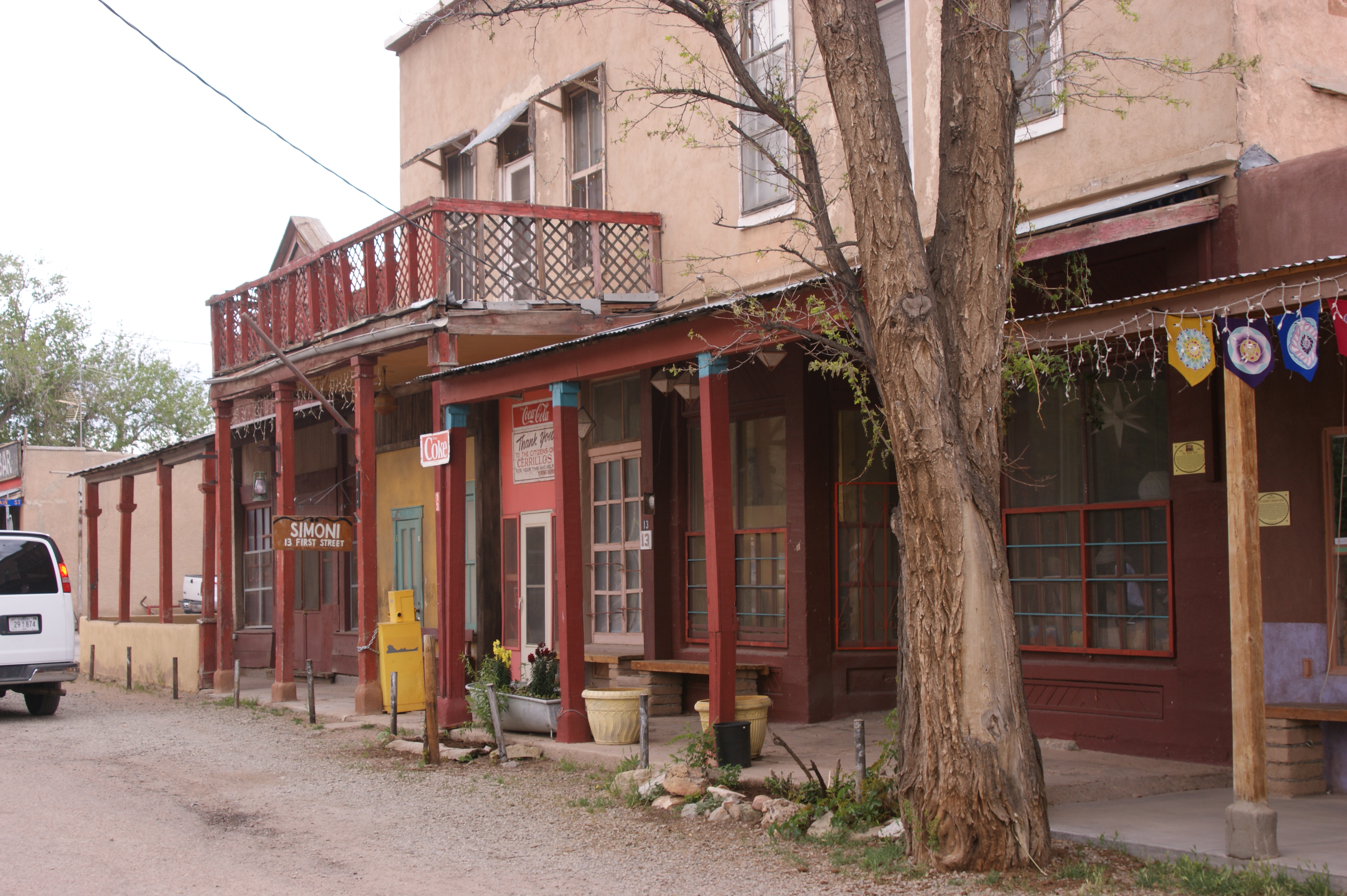
67. “Exploring old mining towns and galleries along the Turquoise Trail National Scenic Byway.” I have purchased several pieces of art in Madrid, but I think I like Cerrillos better. For a special experience, try making a concert at Two Rocks and a Hubcap.
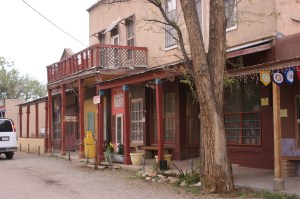
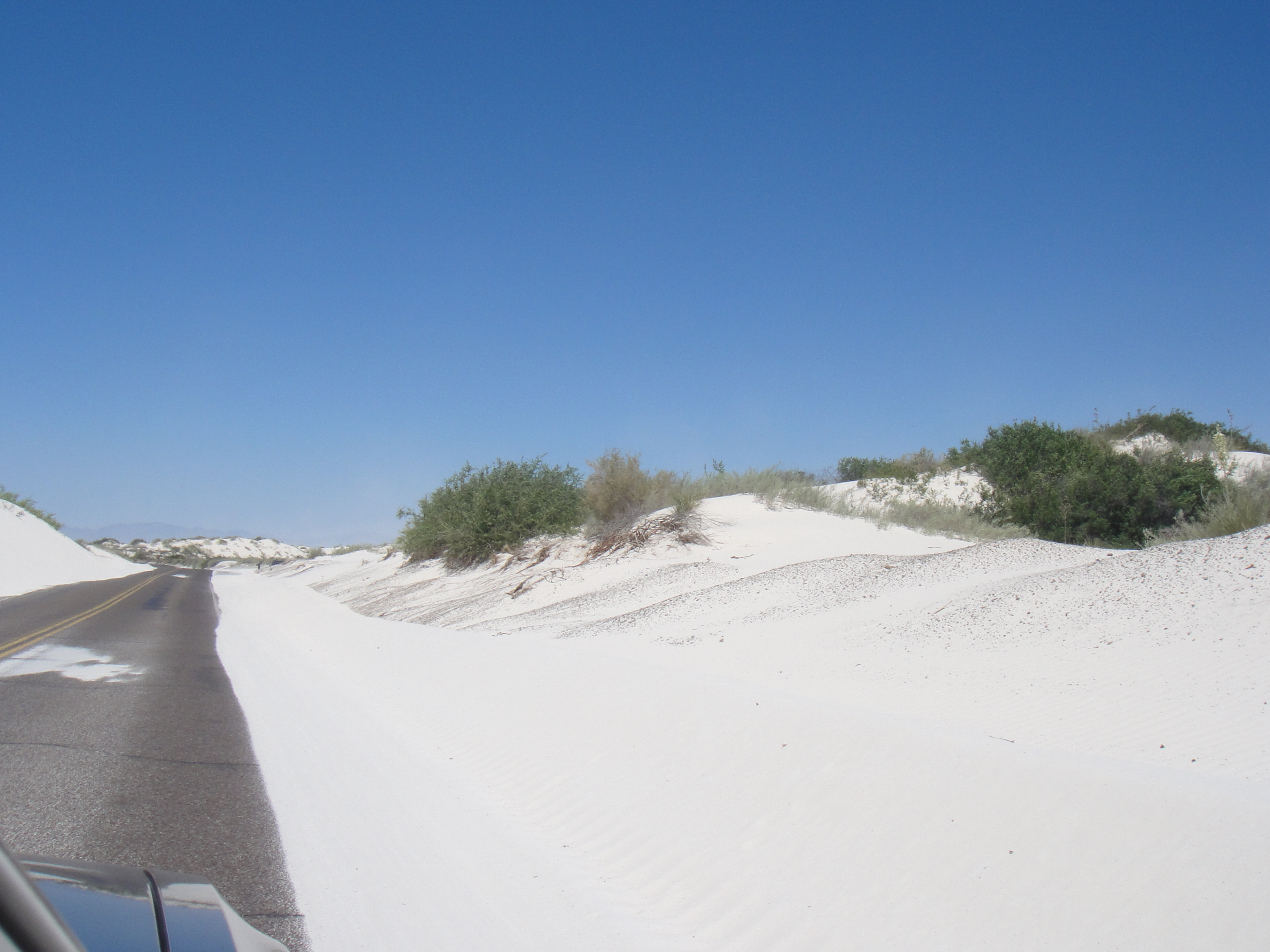
72. “The 16-mile scenic drive…at White Sands National Monument.” This is one of the strangest landscapes in the United States. You are driving along typical New Mexico landscape when there are suddenly sand dunes everywhere.
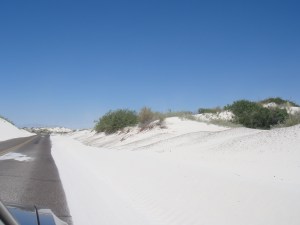
74. “Fry bread stands.” I didn’t realize until I tried this that Native Americans invented the funnel cake.

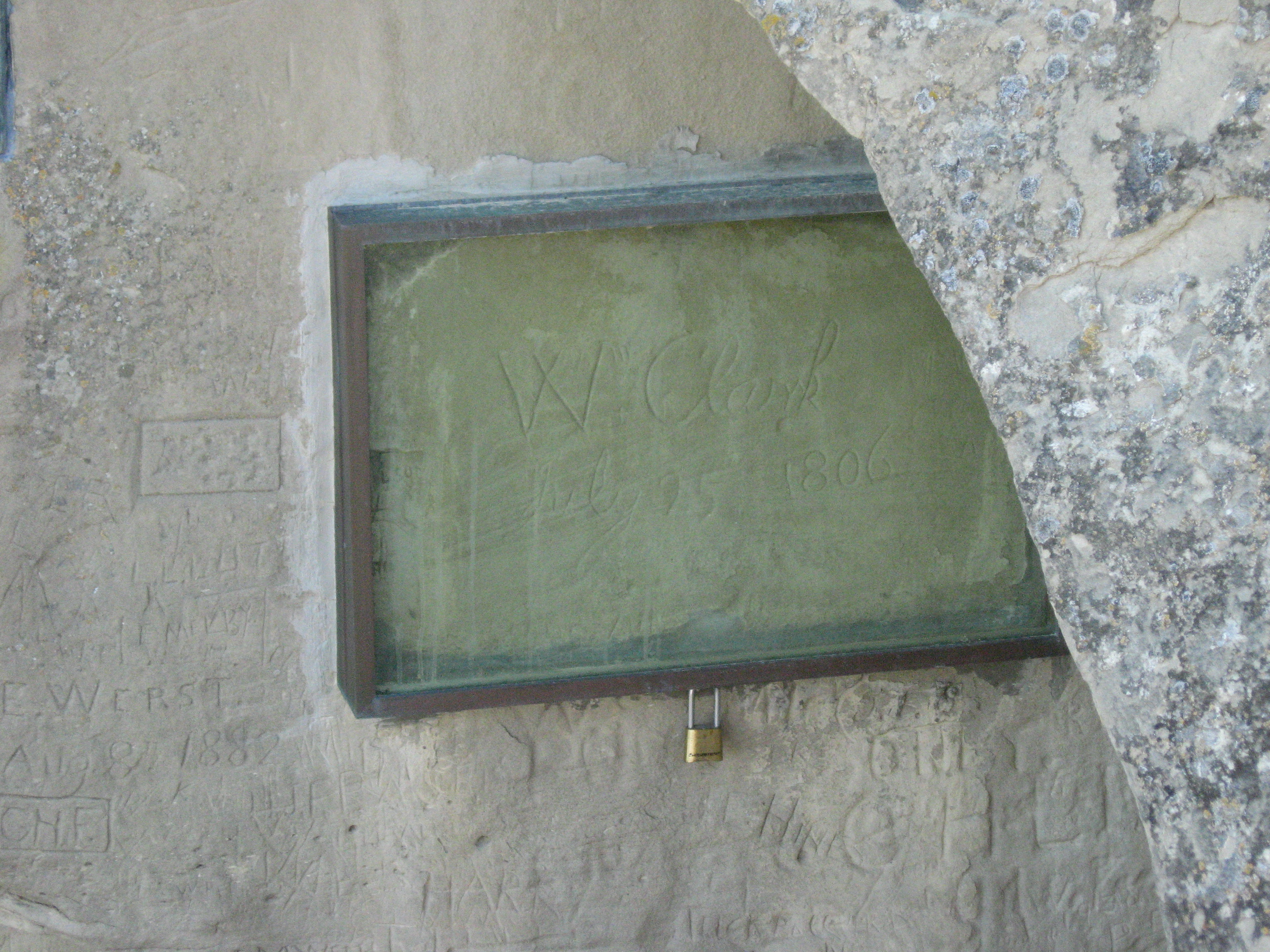
76. “Hiking Inscription Loop Trail at El Morro National Monument and taking in some 2,000 petroglyphs and Spanish inscriptions dating back to the 1600s.” This is an amazing trail because the inscriptions make you feel that you are hiking through time.

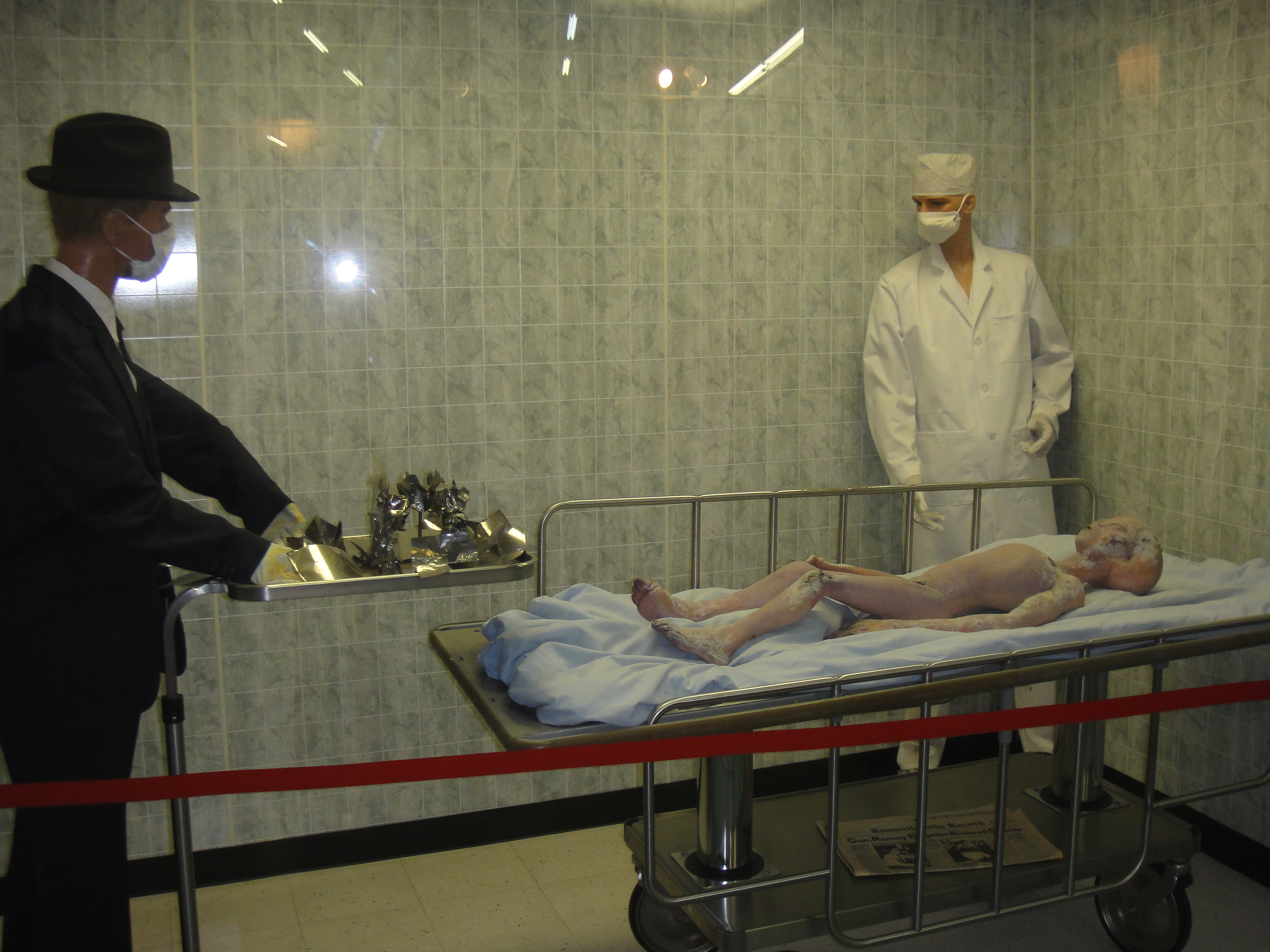
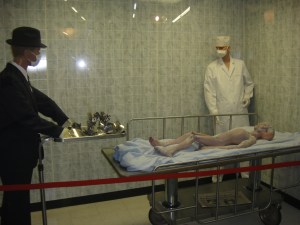
77. “An extraterrestrial day in Roswell.” The most famous UFO crash in American history happened outside of town, and the downtown museum is a perfect destination for conspiracy theorists.
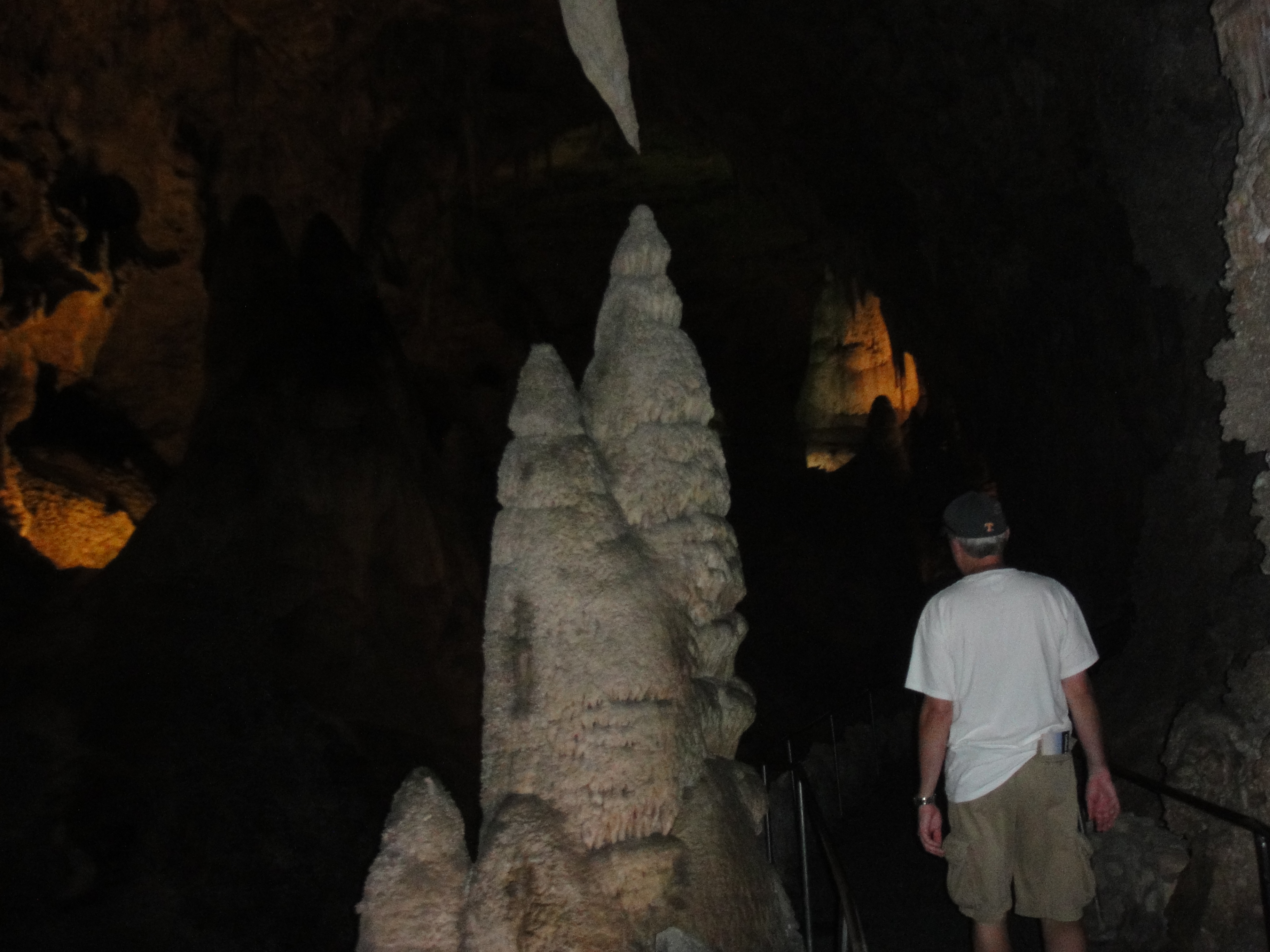
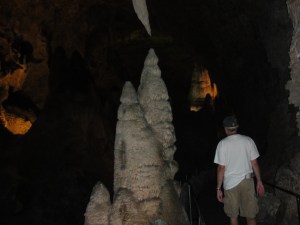
81. “Going subterranean at Carlsbad Caverns National Park.” You know a cave is cool when you hike into it and ride an elevator out of it.
85. “Ghost towns.” My favorites are Cuervo, which sits along I-40, and Shakespeare, which is in the southeast corner of the state.

86. “Hiking in a collapsed volcanic crater at Valles Caldera National Preserve.” Ok, I haven’t hiked it, but I have driven along its rim. This is the place to see the elk of #26.

87. “Stargazing at the Very Large Array in Socorro.” Ok, I went there during the day, but it is still impressive. It is also where Jodie Foster first heard the alien transmissions in Contact.

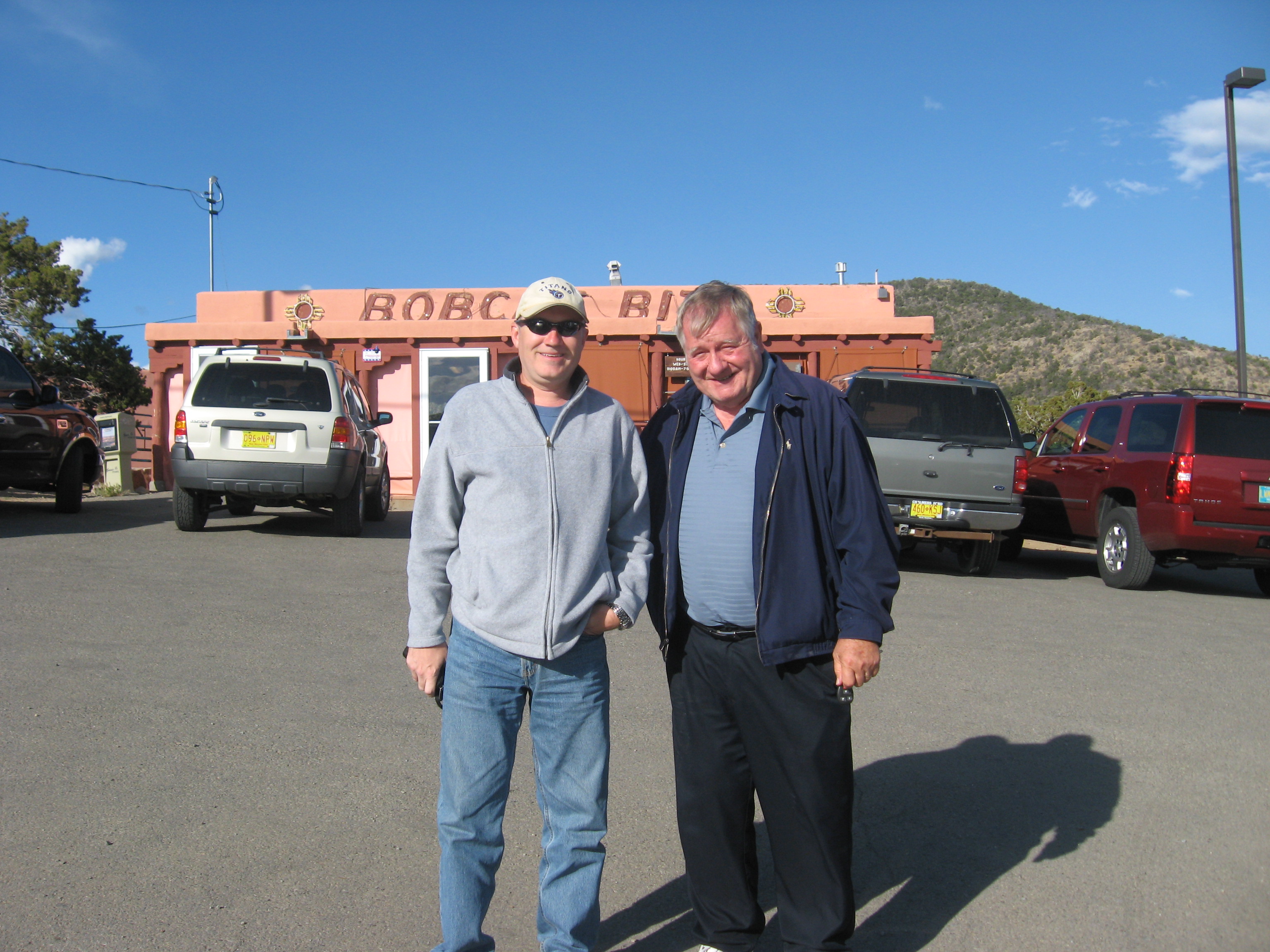
89. “Green chili cheeseburgers – at Bobcat Bite, Bert’s Burger Bowl, and all along the green chili cheeseburger trail.” I have dined at both restaurants, and Bobcat Bite is the best by far. I don’t care what Guy Fieri says.
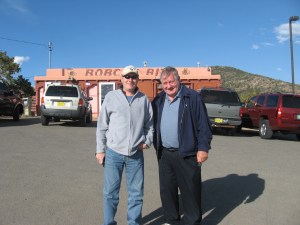
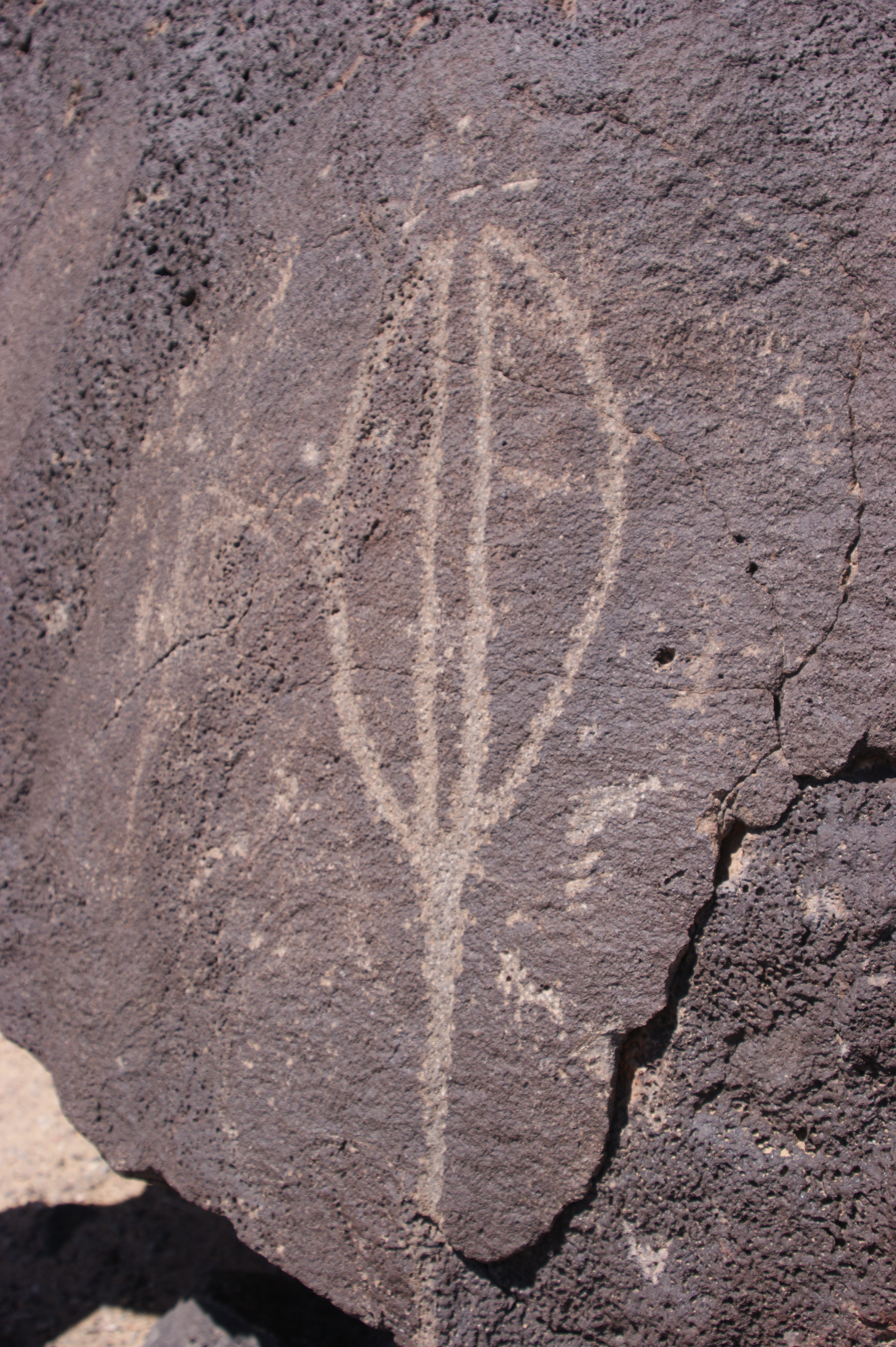
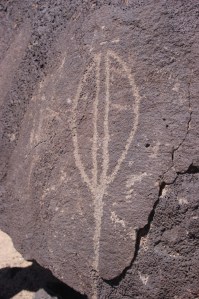
90. “An abundance of ancient ruins and petroglyphs that are now national and state monuments and historic parks.” The magazine lists a bunch of these, but I am only including the ones I have visited. Chaco Culture National Historic Park. Bandelier National Monument. El Morro National Monument. Petroglyph National Monument. Pecos National Historic Park. Coronado State Monument. I wonder what the difference is between a “historic park” and a “monument”.
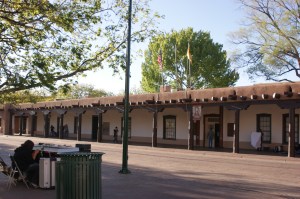
92. “A docent tour at the New Mexico History Museum/Palace of the Governors on the Plaza in Santa Fe.” The New Mexico History Museum is the best museum I have ever visited.
93. “American Indian pottery, from Maria and Julian Martinez to Barbara and Joseph Cerno.” A few years ago, I bought a piece of Martinez pottery, and it is one of my prized possessions.

95. “Historic Route 66.” You can’t go anywhere in the Albuquerque area without crossing it.

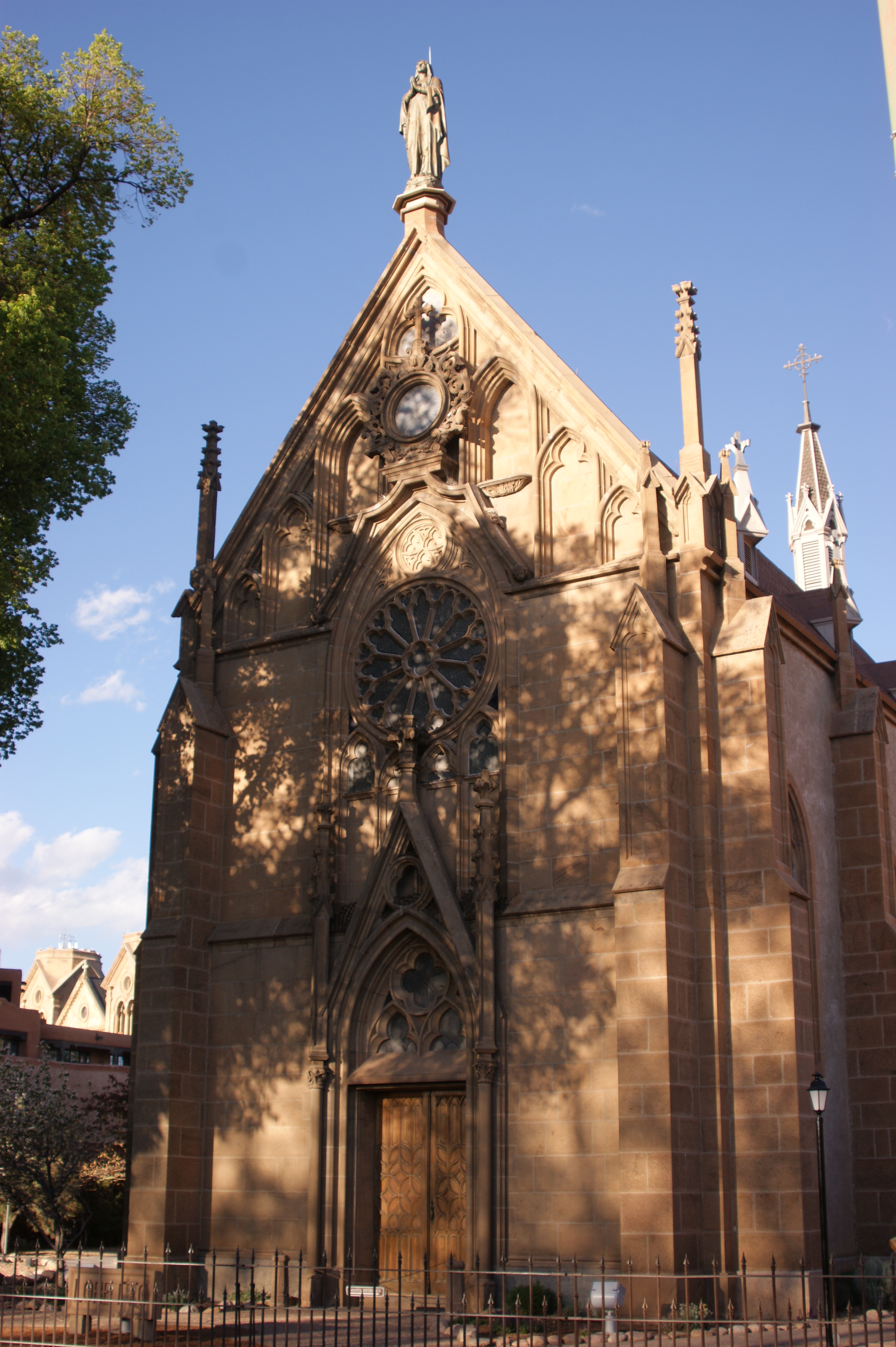
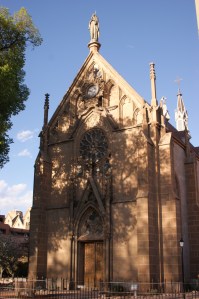
97. “The miraculous staircase in Santa Fe’s Loretto Chapel.” I saw this on That’s Incredible when I was a kid but never knew where it was. One day, I walked into this church, and, lo and behold, I found it.
There you have it – my version of New Mexico Listeria.

Listeria

11 Jul

I was at the pharmacy buying legal drugs and had to wait the required 20 minutes for them to fill my prescription. There were five druggists and one customer, so I’m not sure why it should take that long. Maybe, they were sampling their merchandise. Anyway, I entertained myself by looking at greeting cards; checking out the new wave of condoms; and, in the end, heading over to the magazine stand. There, in the middle of the too-much-about-celebrities and the too-little-about-sports, I found TIME: The 100 Most Influential People of All Time.

I know what these “list” magazines are. They are a way for magazines to make some extra money and maybe get new subscribers. They are pointless because the lists are totally subjective, and there is no way of knowing how they came up with the names. Besides, what makes 100 so special anyway? It’s just a round number. Despite all of that, I am a sucker for these types of things. I even bought Rolling Stone: 500 Greatest Songs of All Time and made sure I had all of the songs on my iPod. This, despite the fact that “Like a ROLLING STONE” by Bob Dylan was ranked Numero Uno, and “(I Can’t Get No) Satisfaction” by The ROLLING STONES came in second. Talk about subjective lists with self-promotion.

As you can probably imagine, I bought the history list, too. I am a historian who likes lists. What can I say? Now, I’m not going to go through the entire list, but a few things stood put to me.

1. There are a few people on the list who are subject to speculation in their actual existence. There’s Abraham, Jesus Christ, Confucius. Heck, some people even doubt the reality of William Shakespeare. Yet, they are on the list. Let me set this straight. I am not saying that they did not exist. They, or the inspiration for them, probably did. Also, there is no doubt of the impact that they and their followers have had on the world. I only think it is interesting that the list includes people who may not have actually been people.

2. There are four U.S. presidents on the list – George Washington, Thomas Jefferson, Abraham Lincoln and Franklin Roosevelt. I have already written about what I think of our presidents, so I won’t go into great detail. However, this brings some thoughts to mind. First, these four did a great job and left an impact on the world. Second, the other forty haven’t done much. I mean, these guys are always called “the leader of the free world” and are said to hold “the most powerful office in the world”. If that’s true, then why are there not more on the list?

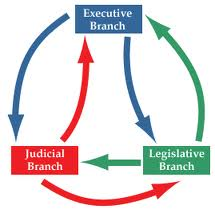
I’ll tell you why. None of that is really true. There are a lot of leaders of “the free world”, and the presidency is not even supposed to be “the most powerful office” in the United States. The three branches – executive, legislative and judicial – are equal. It’s a team effort, and the president is supposed to run the day-to-day operations. Obviously, this job description has been skewed through the years by the people in office (definitely by the four on the list), but the fact remains that the presidency is supposed be no more powerful or influential than the other areas of government.

3. One of the presidents, Roosevelt is on the list along with Winston Churchill. Undoubtedly, they made it because of their efforts against Adolph Hitler (who is also on the list) during World War II. In my opinion, all three of those people deserve their listing. I’m sure a lot of people object to Hitler’s presence, but the list is about influence, not humanity. He started a war that shaped the rest of the 20th Century – from technology to the Cold War.

Mentioning the Cold War leads me to the issue with this grouping. Where is Joseph Stalin? He was one of the Big Three who fought against Nazi Germany. In fact his nation was actually invaded by German troops. Want to know an interesting statistic? More Soviet women died in combat than American men. On top of that, his policies shaped the 20th Century as well.

4. I also find it interesting that my area of historical study, the American West, is also included. I just can’t figure out why. Meriwether Lewis, William Clark and Sacagawea make the list for their journey through the Louisiana Territory. It’s important for the United States, but I am not sure about its influence on the world. First, someone had already made the trek through Canada. Second, most of their travels went through lands already ventured into by Europeans. Third, Native Americans had been there for a long time.

Speaking – actually, writing – of Native Americans. Sitting Bull is on the list. This is one of my favorite people from history, and I will visit the Battle of Little Big Horn, the site of his greatest victory, in a few weeks. However, I don’t see how the killing of George Custer makes him one of the top 100. Sitting Bull didn’t even lead forces into battle because he was recovering from the Sun Dance. He is tattoo worthy, though.

As written earlier, I will not go through the entire list, but I will mention my favorites from each category.

In “Beacon of Spirits”, I like the inclusion of Socrates and Plato.

“Explorers and Visionaries” has Charles Darwin and Alexander Graham Bell, with whom I share a last name. Unfortunately, we are not related.

Queen Elizabeth I and Simon Bolivar are listed under “Leaders of the People”.

“Architects of Culture” includes Michelangelo and Louis Armstrong.

That’s it. If you were on the committee, then who would you put on the list?

The Good, the Bad and the Presidential

7 Jul

A few posts ago, I stuck my foot in my blog and said that I once made a list of which presidents were good and which were bad. Now, I have gotten a couple of requests to put that list here. I guess I will do it. More than likely, the list will be different that anyone else’s and will probably stir a debate. Hell, it will probably stir someone to say, “How in the world did you come up with that?”

Before creating the list, there are a few things to go over.

1. Presidential terms are complex and can’t be defined with strict parameters. All presidents make good decisions and bad decisions. That’s the nature of the office. With that being said, I will try to determine which they did the most of.

2. The nature of decisions and policies change through time. Our sensibilities are different from the sensibilities of people in the 1800s. However, hindsight is a wonderful thing, and I will use it.

3. This is the opinion of one teacher of American history, and opinions are a dime a dozen. Guess what, most people have a pocket full of them.

So, the list.

George Washington set the precedence for presidents. GOOD

John Adams got caught up in the political battle with Thomas Jefferson, his vice president. BAD

Thomas Jefferson bought the Louisiana Territory and increased the size of the nation. GOOD

James Madison got the country into a war with Great Britain but won it. GOOD

James Monroe served during the Era of Good Feelings. GOOD

John Quincy Adams was elected by the Corrupt Bargain and didn’t recover. BAD

Andrew Jackson, a hometown boy, prevented secession by South Carolina but pushed for Indian Removal. BAD

Martin Van Buren was swallowed up by an economic crisis early on. BAD

William Henry Harrison died a month after taking office. BAD

John Tyler was the first to take office upon a death, and some had a hard time accepting. BAD

James K. Polk got the country into a war with Mexico but won it. The result: California. GOOD

Zachary Taylor died after a year in office and before his policies could take full effect. BAD

Millard Fillmore got caught in the Compromise of 1850 and the splintering ideals of the nation. BAD

Franklin Pierce gor caught in the Kansas issue and the splintering ideals of the nation. BAD

James Buchanan came to office during a national tailspin and couldn’t pull it out. BAD

Abraham Lincoln brought the nation through its darkest hour. GOOD

Andrew Johnson led a nation that needed to be brought back together but lacked the ability to do it. BAD

Ulysses S. Grant had an administration full of scandals hindering his works at Reconstruction. BAD

Rutherford B. Hayes won despite receiving the least popular votes and enlarged the reservation system. BAD

James Garfield was assassinated a few months after taking office. BAD

Chester A. Arthur attempted reform in many areas, including civil service, voting rights and Indian relations. GOOD

Grover Cleveland tried to unravel the reforms of Arthur. BAD
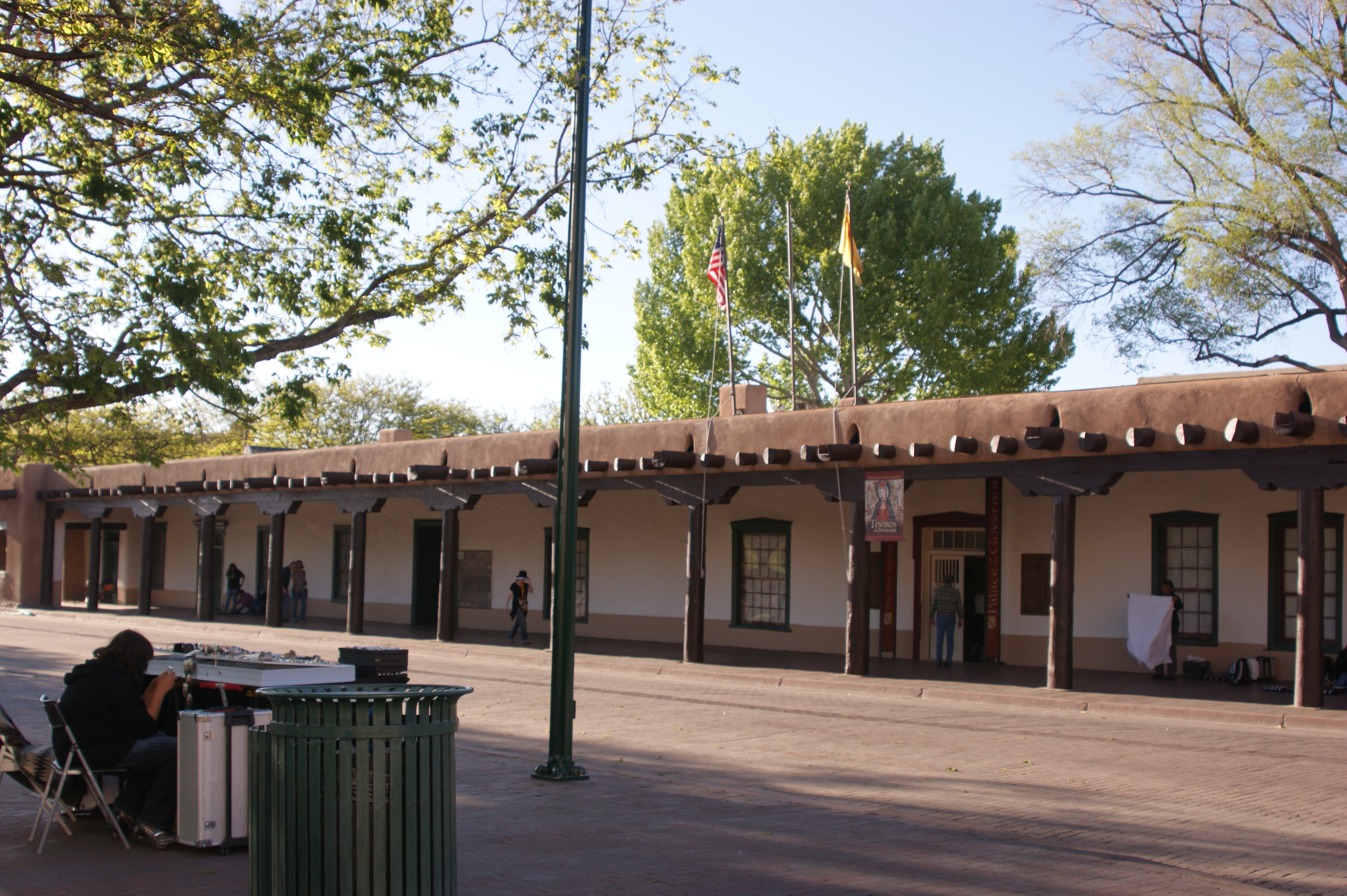
Benjamin Harrison served longer than his grandfather but he approved policies that created economic problems. BAD

Grover Cleveland returned to only get caught up in an economic panic. BAD

William McKinley got us into a war with Spain but won it. GOOD

Theodore Roosevelt was reform-minded and strengthened the nation, both domestically and internationally. GOOD

William Howard Taft could not break out of the shadow of his predecessor. BAD

Woodrow Wilson oversaw the creation of the income tax and Prohibition and failed in his post-World War I peace efforts. BAD

Warren G. Harding had an administration with every scandal imaginable. Two words: Teapot Dome. BAD

Calvin Coolidge brought trust of government back into the American psyche. GOOD

Herbert Hoover saw the stock market collapse a few months after taking office and never recovered. BAD

Franklin D. Roosevelt was a great war-time president but is overrated where the economy is concerned. GOOD

Harry S. Truman got the nation involved in Korea. BAD

Dwight Eisenhower pushed the interstate system and used the national guard to force integration. GOOD

John F. Kennedy died before his policies could take hold but not before the Bay of Pigs and the Cuban Missile Crisis. BAD

Lyndon Johnson was destroyed by the escalation of Vietnam. BAD

Richard Nixon was destroyed by Watergate. BAD

Gerald Ford attempted to get the nation past the issues of the past but was defeated for it. GOOD

Jimmy Carter was completely overwhelmed by the position. BAD

Ronald Reagan succeeded in making the nation feel good about itself and get past the issues of the past. GOOD
George H.W. Bush should not have said, “Read my lips!” BAD

Bill Clinton had personal issues but oversaw a robust time in the United States. GOOD
George W. Bush won a controversial election and faced the tragedy of 9/11 but could not lead the nation into fruitful times. BAD

Barack Obama faced tough conditions upon entering office but has not improved upon those conditions. BAD

Now, some analysis.

According to my opinion, the United States has had 15 “good” presidents and 29 “bad” presidents. The best string of “good” presidents came early when with three in a row. The longest row of “bad” presidents was five.

It seems to me that the United States has survived many years of less-than-stellar leadership. How did this happen? It happened because the American people made it happen. Perhaps, we are more important than our leaders. Perhaps, they should get out of our way and let us fix things.

There you go. My opinion. Now, let the debate begin.

The Fifth of July

5 Jul

For the Fourth of July, I spent time with some friends who invited me to their pool party and cookout. It was nice of them to ask, and I enjoyed myself very much. The day was spent swimming and hanging out by the pool. People talked, laughed and drank beer while kids ran all over the place. What could be more American than that?

Once dusk began to set in, we went to the park for a cookout and to watch the city’s fireworks show. We had the usual fare – hamburgers, hot dogs, potato salad, baked beans, and any other cookout food you might think of. Some of us guys played Cornhole, which is a terrible name for a game, until we realized that a few of the players should turn professional. How would you like to be that? A professional cornholer.

People started to pour into the park and soon the fireworks show began. Everyone looked into the sky and pretended like they had never seen a fireworks show before. Through the ooh’s and aah’s, I began to think what it must have been like for Francis Scott Key to see real bombs bursting in air at Fort McHenry. I suppose that is the historian coming out in me.

As I thought about Francis, something else entered my mind. Through the entire day’s activities, not one person mentioned what the celebration was about. They talked about having a day off and going back to work tomorrow. They talked about the upcoming football season. They also talked about how hot it has been lately. But, no one talked about it being the anniversary of our nation’s independence. Not even me, the American historian. It seems that the Fourth of July was no different from the Fifth of July.

I have been thinking about this ever since I left the gathering. Have we forgotten what the holiday is all about? Do we care? Have we gotten so comfortable with our freedoms that we take them for granted? On top of that, do we really understand our nation? Do we recognize its good qualities and its bad ones? Honestly, I am not sure.

We have a Pledge of Allegiance, but I made a pledge to myself. I will re-energize myself and make sure that I teach American history to the best of my ability. Sometimes, I get into the day-to-day grind and forget that my job is to prevent the past, with all of its complexities, from being lost. I will not forget again.

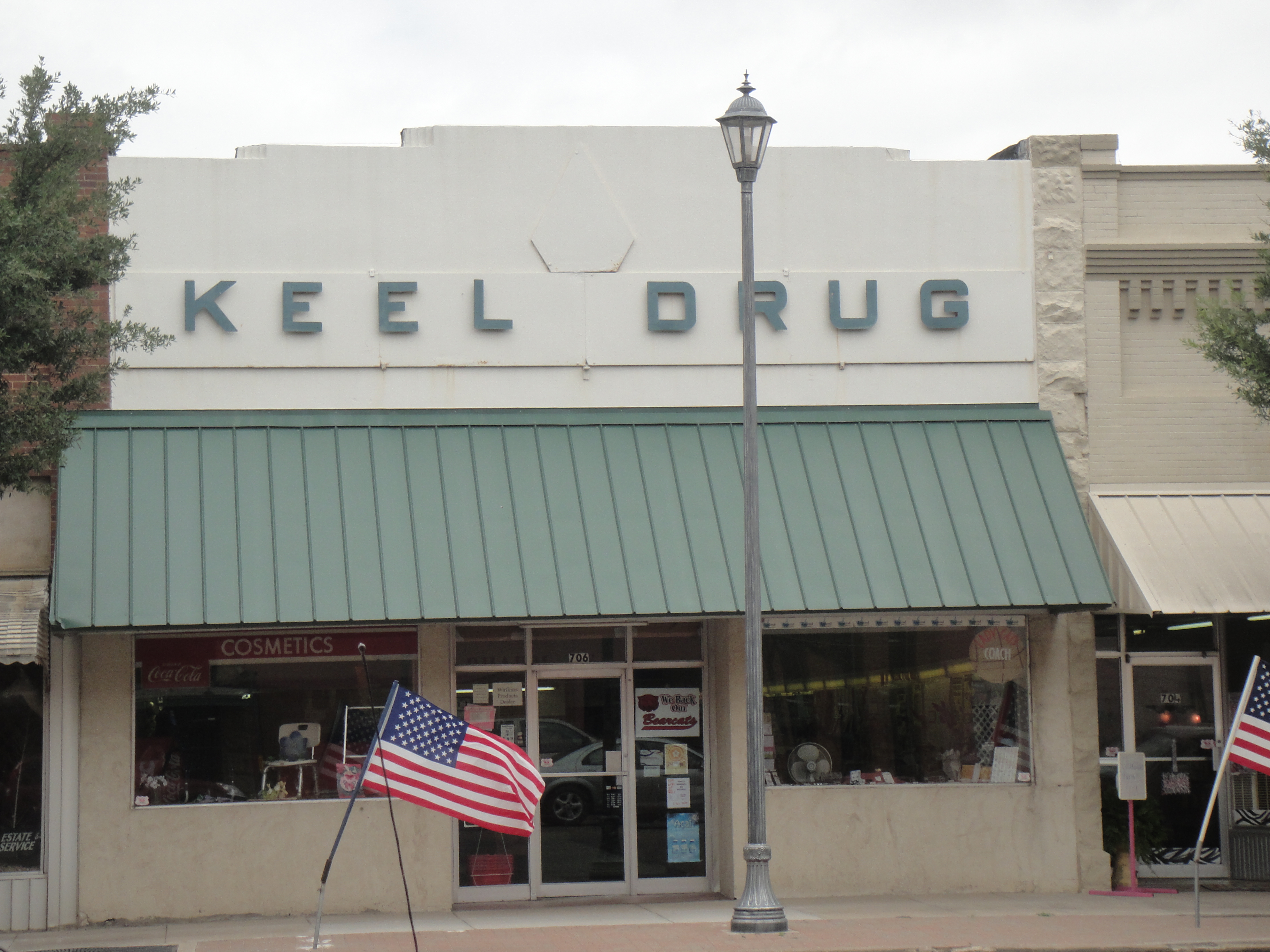
There is no way to project the whole of the United States in one photograph, but I want to end this post with, in my opinion, the most “American” photograph in my computer.

That is Keel Drug Store in the small town of Ballinger, Texas. For many years, it was owned and operated by Gene Keel, the father of my late uncle Johnny Keel. I can’t think of anything more American than a small business in a small town with a flag flying out front. Rest in Peace, Johnny. We all miss you.

I Promised Myself That I Would Not Write This Post

4 Jul

When I started this blog, I promised myself that I would stay away from politics. It is supposed to be a light-hearted blog with a few instances of seriousness from everyday life. I come to the blog world to escape from the other world, and I believe a lot of other readers to that as well. Except for a few attempts at humor at the expense of government officials, I have kept that promise to myself.

However, the Supreme Court’s decision on health care has led a lot of Internet people to provide their thoughts and opinions concerning the law and the state of politics in the United States. I have read a quite a bit; agreed with some; and, disagreed with others. Finally, I decided to break the promise I made to myself and espouse my opinions on the subject at hand.To prevent myself from going on a tangent, I will simply number my thoughts.

1. A lot of people bemoan the divisiveness of politics these days and wonder where we lost our civility. I am not sure we ever had it. Vice-president Aaron Burr killed Alexander Hamilton in a duel. Senator Charles Sumner was almost beaten to death in the Senate chamber. Oh, and there was the time where the country thought it was a good idea to split and fight a war against itself. Compared to that, I think the screams of talking heads are relatively mild.

2. I theorize that today’s divisiveness began when Hillary Clinton got on television and stated that her husband’s affair with an intern was a “vast right-wing conspiracy”. I agree that he should have never been impeached, but no Republican forced him to unzip his pants for Monica Lewinski.

With that as a backdrop, George W. Bush won the 2000 election, and those on the left could not get over it. He stole it, and it was a travesty of America’s election system. Well, he wasn’t the first person elected to the presidency without winning the popular vote. On top of that, Al Gore lost the election more than Bush won it. Everyone focuses on Florida but forgets that Gore could not win his “home” state. He forgot where he came from, but those of us in Tennessee did not forget. If he had not taken Tennesseans for granted, then Florida would not have mattered. Besides, if I was running for president and my brother was the governor of a state, then I would expect to win that state, too.

3. This brings me to the hatred of our presidents. I know a lot of people who hate- HATE I say – George W. Bush. I also know people who hate -HATE I say- Barack Obama. Depending on who you talk to, each of them is, at most, the Devil himself or, at least, the worst president in history. Here is a fact, all – I say ALL – presidents do good things AND bad things. Nobody is perfect, and nobody can make everyone happy.

I don’t believe a president can be judged accurately until a generation has passed since their time in office. There is simply too much emotion involved for an unbiased -wait, that’s impossible in history too – a close to unbiased appraisal. In the old days, people hated Thomas Jefferson, Abraham Lincoln, and probably even George Washington.

Personally, I believe a person who is willing to take on the stress of that job deserves more than our vitriol. It doesn’t matter if we think they are a dumb frat boy who can’t speak English or a foreign-born Muslim who is a communist.

4. I do not like the health care law for several reasons. First, I believe it places more burden on small businesses during economic times when we should be lifting burdens to help them succeed. We need jobs before anything, and they create jobs.

Second, I believe that the federal government should stay out of our day-to-day lives as much as possible. This country was built on independence, not dependence. This means that they should stay out of our pockets with big taxes and realize that it is our money and not theirs. In fact, a flat 10% tax should work fine. It also means that they should stay out of the bedrooms of consenting adults and out of the decisions of pregnant women.

Telling us that we have to buy something is, in my opinion, interfering with our personal decisions. People say that it is good because everyone needs health insurance, but the road to Hell is paved with good intentions. Telling us we have to buy a product is a slippery slope. What happens next? Will we have to buy an electric car from GM? Will a prohibition be placed on unhealthy activities such as smoking, drinking alcohol and eating fast food? You may think this is crazy, but we had prohibition once before. And, it was a disaster.

Simply, I do not like the health care law because the government should not be able to tell us what to do. It sets bad precedent.

I guess that’s all I have to say. I thought about going through all of the presidents and writing about the things they did while in office. That would take forever though. One day during a meeting, I got bored and listed the presidents. I then marked my opinion of them by putting a + by the ones I thought did a good job and a – by the ones I thought did a bad job. Maybe, I will put that list on the blog one day.

Only the Rocks Live Forever

3 Jul

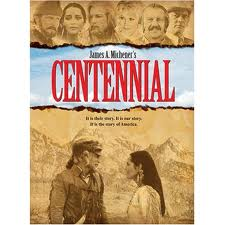
My dad and I just finished our multi-week project of watching Centennial, the 1970s miniseries covering the history of a fictional Colorado town. Lasting over 26 hours, the movie follows the lives of people who influenced the area and help found the town. Native Americans. Trappers. Mountain men. Pioneers. Farmers. Cowboys. The list goes on and on. All of the people you can think of from the history of the West are represented.

As we watched Centennial, several ideas swept through my mind. First was the fact that this was a well-made movie, and, although it was based on a work of fiction, accurately portrayed the history of the West better than just about any movie I have seen. It showed the lives of ordinary people and the complexities they faced. After all, they were living in a hard land that was taken from someone else.

Once my mind wrapped itself around the quality of the movie, the storyline began to remind me why I chose history as a profession. In the final episode, a historian shows up to research the town for an article. When he arrives in the village of 2,000 people, he wonders why he has been given the assignment of writing about a town he had never heard of with founders who only the locals remembered. Then, he began to hear the stories of the characters that we had been watching.

I suppose that I am not making sense, but the historian discovered that the little town of Centennial had an interesting history of regular people living regular lives. That’s what history is really about. Sometimes, we get caught up in the deeds of famous people and forget that history is made by everyone.

My next thought – actually, feeling – was a sense of sadness that hit me on several levels. Centennial takes the viewer through several generations of families, which means we are watching their lives and their deaths. We see them starting life with youthful exuberance and ending it after triumphs and tragedies. History isn’t just about the lives of people but also about their deaths.

As I watched the lives of these characters pass before my eyes, I also realized that my dad, like the older men in the movie, has already lived the majority of his life. He is the rock of our family and has accomplished more than I could ever imagine. Yet, he is getting more feeble as time passes, and there will be a time when he will pass away. Then, it will truly be up to my brother and me to carry on the beliefs and ideals of our family.

My dad and I have done a lot of things together. He took me to my first University of Tennessee football game when I was 6, and we have been going ever since. It’s just that he doesn’t make it to as many games as he used to. Together, we have traveled through all 50 states because he wanted me to see historic sites and natural wonders. I saw that watching this movie is another thing that we could do together. As we watched, he would have me pause it to tell him the real history of what the movie was portraying.

As the last episode ended, I was sad because a movie that I enjoyed and invested in had come to an end. I was sad because this experience with my dad had come to an end, and I fear the time when I will not be able to have more experiences with him. I was sad because the movie reminded me something that I had forgotten as I teach about people in the pages of history books. As a line in Centennial says, “Only the rocks live forever.”

109 in the Shade

29 Jun

The thermometer on my car registered 109 degrees a few minutes ago. As the old folks around here say, it’s hotter than blazes, with blazes being the Bible Belt term for Hell.

It’s hot in the South during this time of year, but this is way out of the norm. Add the fact that it has barely rained in a month, and things are getting a little parched. Local boy, Al Gore, must be jumping for joy. With the mercury hitting 109, I figured it would be a good opportunity to honor that important number. So, here are all things One Zero Nine.

109 – the atomic number for meitnerium. However, I am not scientifically-minded enough to tell you what meitnerium is.

Highway 109 – a state highway that runs from the Tennessee/Kentucky border to my town. Along the way, it passes through such places as Portland and Gallatin. Once, I went on a date with a girl who lived on this road, but she wouldn’t return my calls afterward. I wonder what happened.

109 Department Store – a shopping destination in Japan that was designed to attract 30-something females. Instead, it became a haven for those in the Gyaru subculture. I don’t know what that is, so I Google-imaged it. Looks like girls trying to be living Anime characters.

Starbase 109 – I am not sure how to describe this, so you might want to check it out here.

109th Congress – This bunch, led by Nancy Pelosi and Harry Reid, was known as the “Do Nothing Congress”. Damn, I wish the Washington crowd would start doing nothing again. An inactive politician is a lot better than a proactive one. That way they can’t mess anything up.

109 AD – Kush was under the rule of King Teqerideamani.

109 BC – Spartacus – leader of rebel slaves; inspiration for a Kirk Douglas movie; inspiration for a cool television show with lots of sex and violence – was born.

That’s it. Hopefully, the temperature hasn’t climbed as I have been writing this.