Seeing a Whiter Shade of Pale

12 Jul

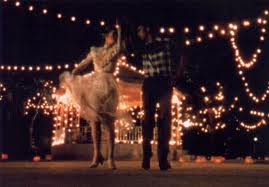
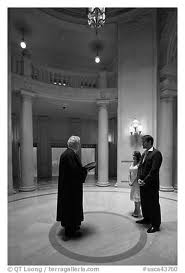
I have always been fascinated by Procol Harum’s “A Whiter Shade of Pale“. It is a song that takes me into a magical, dreamlike world where the atmosphere is slightly askew. In this world, a man and woman dance as the crowd cheers them on. When they are alone, he whispers something into her ear, and she suddenly leaves. What did he say? Was it his view of her future with him? Was it something she knew she must get away from? Whatever it was, it turned her cold as the blood drained from her face and made her run. After she leaves, he sits despondent until another woman enters his world. Unfortunately for him, the story repeats itself.

We skipped the light fandango

Turned cartwheels ‘cross the floor

I was feeling kind of seasick

But the crowd called out for more

The room was humming harder

As the ceiling flew away

When we called out for another drink

The waiter brought a tray

And so it was that later

As the miller told his tale

That her face at first turned ghostly

Turned a whiter shade of pale

She said there is no reason

And the truth is plain to see

That I wander through my playing cards

And would not let her be

One of sixteen vestal virgins

Who were leaving for the coast

And although my eyes were open

They might just as well been closed

And so it was later

As the miller told his tale

That her face at first just ghostly

Turned a whiter shade of pale

Listeria

11 Jul

I was at the pharmacy buying legal drugs and had to wait the required 20 minutes for them to fill my prescription. There were five druggists and one customer, so I’m not sure why it should take that long. Maybe, they were sampling their merchandise. Anyway, I entertained myself by looking at greeting cards; checking out the new wave of condoms; and, in the end, heading over to the magazine stand. There, in the middle of the too-much-about-celebrities and the too-little-about-sports, I found TIME: The 100 Most Influential People of All Time.

I know what these “list” magazines are. They are a way for magazines to make some extra money and maybe get new subscribers. They are pointless because the lists are totally subjective, and there is no way of knowing how they came up with the names. Besides, what makes 100 so special anyway? It’s just a round number. Despite all of that, I am a sucker for these types of things. I even bought Rolling Stone: 500 Greatest Songs of All Time and made sure I had all of the songs on my iPod. This, despite the fact that “Like a ROLLING STONE” by Bob Dylan was ranked Numero Uno, and “(I Can’t Get No) Satisfaction” by The ROLLING STONES came in second. Talk about subjective lists with self-promotion.

As you can probably imagine, I bought the history list, too. I am a historian who likes lists. What can I say? Now, I’m not going to go through the entire list, but a few things stood put to me.

1. There are a few people on the list who are subject to speculation in their actual existence. There’s Abraham, Jesus Christ, Confucius. Heck, some people even doubt the reality of William Shakespeare. Yet, they are on the list. Let me set this straight. I am not saying that they did not exist. They, or the inspiration for them, probably did. Also, there is no doubt of the impact that they and their followers have had on the world. I only think it is interesting that the list includes people who may not have actually been people.

2. There are four U.S. presidents on the list – George Washington, Thomas Jefferson, Abraham Lincoln and Franklin Roosevelt. I have already written about what I think of our presidents, so I won’t go into great detail. However, this brings some thoughts to mind. First, these four did a great job and left an impact on the world. Second, the other forty haven’t done much. I mean, these guys are always called “the leader of the free world” and are said to hold “the most powerful office in the world”. If that’s true, then why are there not more on the list?

I’ll tell you why. None of that is really true. There are a lot of leaders of “the free world”, and the presidency is not even supposed to be “the most powerful office” in the United States. The three branches – executive, legislative and judicial – are equal. It’s a team effort, and the president is supposed to run the day-to-day operations. Obviously, this job description has been skewed through the years by the people in office (definitely by the four on the list), but the fact remains that the presidency is supposed be no more powerful or influential than the other areas of government.

3. One of the presidents, Roosevelt is on the list along with Winston Churchill. Undoubtedly, they made it because of their efforts against Adolph Hitler (who is also on the list) during World War II. In my opinion, all three of those people deserve their listing. I’m sure a lot of people object to Hitler’s presence, but the list is about influence, not humanity. He started a war that shaped the rest of the 20th Century – from technology to the Cold War.

Mentioning the Cold War leads me to the issue with this grouping. Where is Joseph Stalin? He was one of the Big Three who fought against Nazi Germany. In fact his nation was actually invaded by German troops. Want to know an interesting statistic? More Soviet women died in combat than American men. On top of that, his policies shaped the 20th Century as well.

4. I also find it interesting that my area of historical study, the American West, is also included. I just can’t figure out why. Meriwether Lewis, William Clark and Sacagawea make the list for their journey through the Louisiana Territory. It’s important for the United States, but I am not sure about its influence on the world. First, someone had already made the trek through Canada. Second, most of their travels went through lands already ventured into by Europeans. Third, Native Americans had been there for a long time.

Speaking – actually, writing – of Native Americans. Sitting Bull is on the list. This is one of my favorite people from history, and I will visit the Battle of Little Big Horn, the site of his greatest victory, in a few weeks. However, I don’t see how the killing of George Custer makes him one of the top 100. Sitting Bull didn’t even lead forces into battle because he was recovering from the Sun Dance. He is tattoo worthy, though.

As written earlier, I will not go through the entire list, but I will mention my favorites from each category.

In “Beacon of Spirits”, I like the inclusion of Socrates and Plato.

“Explorers and Visionaries” has Charles Darwin and Alexander Graham Bell, with whom I share a last name. Unfortunately, we are not related.

Queen Elizabeth I and Simon Bolivar are listed under “Leaders of the People”.

“Architects of Culture” includes Michelangelo and Louis Armstrong.

That’s it. If you were on the committee, then who would you put on the list?

Aimless Wanderings of the Mind

9 Jul

Yesterday, some friends invited me to spend the night on a houseboat. Figuring that there would be a lot of late night commotion on the boat, I took my iPod in case I needed some solitude for sleep. As it turned out, everyone conked out fast from a day filled with activity, but I plugged the iPod into my ears anyway. The Guns n’ Roses version of “Knockin’ on Heaven’s Door” came on and the following took place in my mind.

I immediately thought of the original Bob Dylan version as it played over the death scene of Slim Pickens in Pat Garrett and Billy the Kid, one of my favorite westerns.

From there, I thought about one of the times I saw Bob Dylan in concert. He and Willie Nelson had a tour where they played in minor league baseball stadiums. As I watched them from the infield, I kept wondering what the backstage party must have been like.

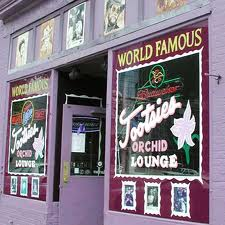
Then, I started thinking about a local legend involving Willie Nelson. Tootsie’s Orchid Lounge is a famous honky-tonk in Nashville where singers and players would congregate between sets of the Grand Ole Opry.

It seems that one night Willie was in Tootsie’s drowning his sorrows at the bar. He wasn’t making it in Nashville, and, in a moment of depression, he walked outside and sprawled in the middle of Broadway. His intent was to be run over by a car. Fortunately, they got him out of the street; he went to Texas; grew out his hair; and became a legend.

When this entered my mind, I started thinking about the time I saw Willie with Ray Price and Merle Haggard. Price’s biggest hit was “For the Good Times“, which happened to be written by Kris Kristofferson, the one who played Billy the Kid in Pat Garrett and Billy the Kid.

The other person on the bill, Merle Haggard, is one of my all-time favorites. He performed a song in a movie I recently watched, and I started thinking about a song that appeared in a John Wayne movie called Chisum, an inaccurate retelling of the story of Billy the Kid.

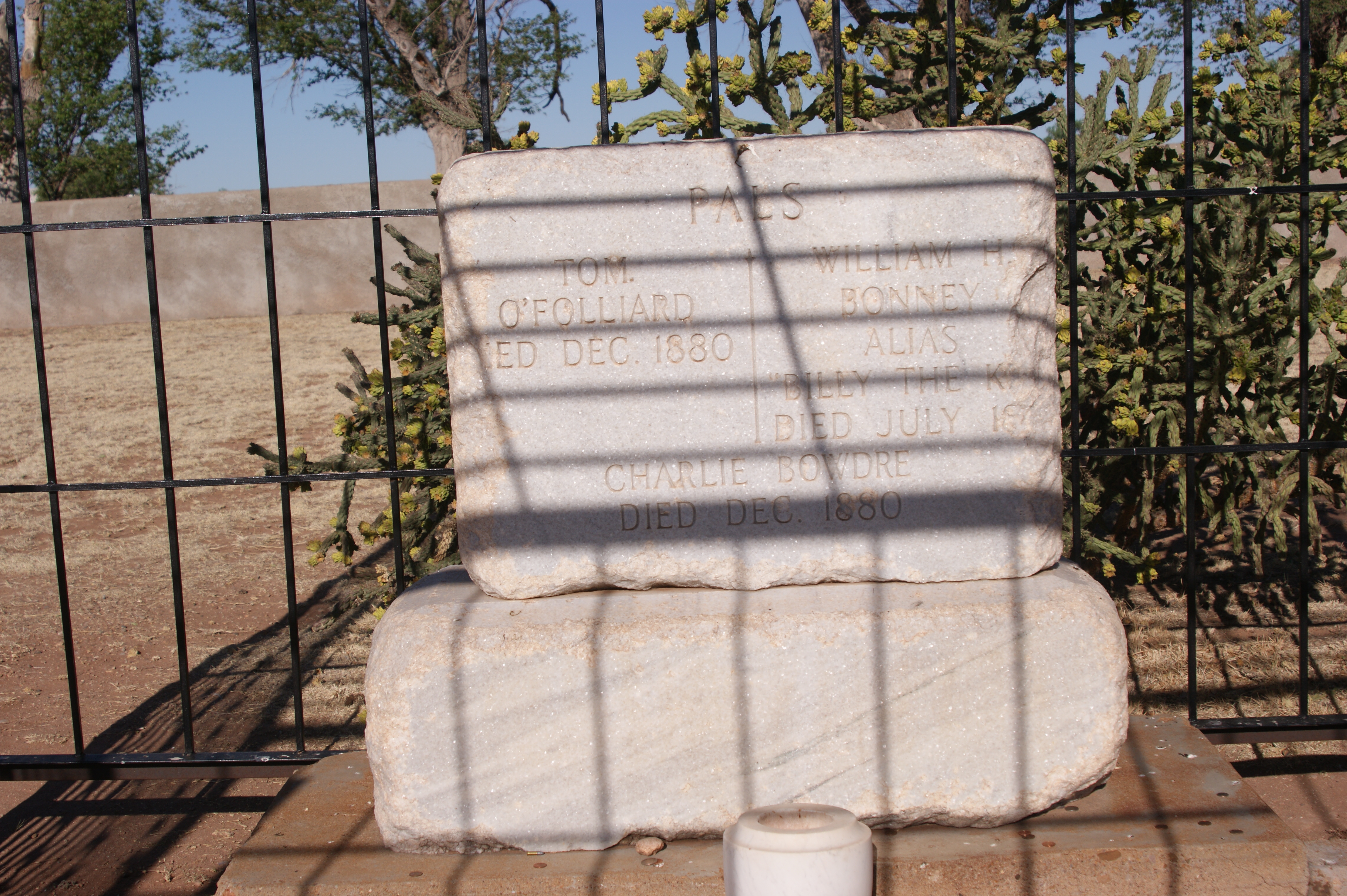
As you can see, Billy the Kid and a bunch of connections to his pop cultural self kept entering my mind. That’s when I started thinking about the last time I visited his grave.At least, that’s his headstone. Some people claim that Billy the Kid got away and lived to be an old man. That’s doubtful. Without a doubt, a flood swept through the cemetery and washed away all of the markers. It may have even carried off a few bodies. So, Billy is probably not anywhere near this piece of rock. However, I started thinking, “What if they had buried him above ground like they do in New Orleans?”

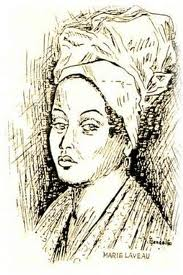
Obviously, this started me down another tread of thought. Earlier this year, we took some students on a field trip to the French Quarter (I know. Cool teacher.), and we toured the City of the Dead, one of their above ground cemeteries. One of the most interesting graves was that of Marie Laveau, voodoo queen of New Orleans.

The grave has offerings left behind by people searching for a blessing. I thought about that, but I also thought about a song by Redbone called “The Witch Queen of New Orleans“.

New Orleans. It’s a cool city, and a lot of movies have been made there. They started running through my mind, but one that I saw the other day stuck out. It was Live and Let Die, the James Bond film that has the scene with an agent watching a funeral parade in the French Quarter. When he asks whose funeral it, he is stabbed and placed in the coffin. That’s when the parade really cranks up. Then, the theme song by Paul McCartney and Wings entered my brain.

That’s when it hit me. Holy crap. “Live and Let Die” was another movie song that was covered by Guns n’ Roses.

By this time, my mind was mush, and I mercifully faded out.

The Good, the Bad and the Presidential

7 Jul

A few posts ago, I stuck my foot in my blog and said that I once made a list of which presidents were good and which were bad. Now, I have gotten a couple of requests to put that list here. I guess I will do it. More than likely, the list will be different that anyone else’s and will probably stir a debate. Hell, it will probably stir someone to say, “How in the world did you come up with that?”

Before creating the list, there are a few things to go over.

1. Presidential terms are complex and can’t be defined with strict parameters. All presidents make good decisions and bad decisions. That’s the nature of the office. With that being said, I will try to determine which they did the most of.

2. The nature of decisions and policies change through time. Our sensibilities are different from the sensibilities of people in the 1800s. However, hindsight is a wonderful thing, and I will use it.

3. This is the opinion of one teacher of American history, and opinions are a dime a dozen. Guess what, most people have a pocket full of them.

So, the list.

George Washington set the precedence for presidents. GOOD

John Adams got caught up in the political battle with Thomas Jefferson, his vice president. BAD

Thomas Jefferson bought the Louisiana Territory and increased the size of the nation. GOOD

James Madison got the country into a war with Great Britain but won it. GOOD

James Monroe served during the Era of Good Feelings. GOOD

John Quincy Adams was elected by the Corrupt Bargain and didn’t recover. BAD

Andrew Jackson, a hometown boy, prevented secession by South Carolina but pushed for Indian Removal. BAD

Martin Van Buren was swallowed up by an economic crisis early on. BAD

William Henry Harrison died a month after taking office. BAD

John Tyler was the first to take office upon a death, and some had a hard time accepting. BAD

James K. Polk got the country into a war with Mexico but won it. The result: California. GOOD

Zachary Taylor died after a year in office and before his policies could take full effect. BAD

Millard Fillmore got caught in the Compromise of 1850 and the splintering ideals of the nation. BAD

Franklin Pierce gor caught in the Kansas issue and the splintering ideals of the nation. BAD

James Buchanan came to office during a national tailspin and couldn’t pull it out. BAD

Abraham Lincoln brought the nation through its darkest hour. GOOD

Andrew Johnson led a nation that needed to be brought back together but lacked the ability to do it. BAD

Ulysses S. Grant had an administration full of scandals hindering his works at Reconstruction. BAD

Rutherford B. Hayes won despite receiving the least popular votes and enlarged the reservation system. BAD

James Garfield was assassinated a few months after taking office. BAD

Chester A. Arthur attempted reform in many areas, including civil service, voting rights and Indian relations. GOOD

Grover Cleveland tried to unravel the reforms of Arthur. BAD

Benjamin Harrison served longer than his grandfather but he approved policies that created economic problems. BAD

Grover Cleveland returned to only get caught up in an economic panic. BAD

William McKinley got us into a war with Spain but won it. GOOD

Theodore Roosevelt was reform-minded and strengthened the nation, both domestically and internationally. GOOD

William Howard Taft could not break out of the shadow of his predecessor. BAD

Woodrow Wilson oversaw the creation of the income tax and Prohibition and failed in his post-World War I peace efforts. BAD

Warren G. Harding had an administration with every scandal imaginable. Two words: Teapot Dome. BAD

Calvin Coolidge brought trust of government back into the American psyche. GOOD

Herbert Hoover saw the stock market collapse a few months after taking office and never recovered. BAD

Franklin D. Roosevelt was a great war-time president but is overrated where the economy is concerned. GOOD

Harry S. Truman got the nation involved in Korea. BAD

Dwight Eisenhower pushed the interstate system and used the national guard to force integration. GOOD

John F. Kennedy died before his policies could take hold but not before the Bay of Pigs and the Cuban Missile Crisis. BAD

Lyndon Johnson was destroyed by the escalation of Vietnam. BAD

Richard Nixon was destroyed by Watergate. BAD

Gerald Ford attempted to get the nation past the issues of the past but was defeated for it. GOOD

Jimmy Carter was completely overwhelmed by the position. BAD

Ronald Reagan succeeded in making the nation feel good about itself and get past the issues of the past. GOOD

George H.W. Bush should not have said, “Read my lips!” BAD

Bill Clinton had personal issues but oversaw a robust time in the United States. GOOD

George W. Bush won a controversial election and faced the tragedy of 9/11 but could not lead the nation into fruitful times. BAD

Barack Obama faced tough conditions upon entering office but has not improved upon those conditions. BAD

Now, some analysis.

According to my opinion, the United States has had 15 “good” presidents and 29 “bad” presidents. The best string of “good” presidents came early when with three in a row. The longest row of “bad” presidents was five.

It seems to me that the United States has survived many years of less-than-stellar leadership. How did this happen? It happened because the American people made it happen. Perhaps, we are more important than our leaders. Perhaps, they should get out of our way and let us fix things.

There you go. My opinion. Now, let the debate begin.

The Fifth of July

5 Jul

For the Fourth of July, I spent time with some friends who invited me to their pool party and cookout. It was nice of them to ask, and I enjoyed myself very much. The day was spent swimming and hanging out by the pool. People talked, laughed and drank beer while kids ran all over the place. What could be more American than that?

Once dusk began to set in, we went to the park for a cookout and to watch the city’s fireworks show. We had the usual fare – hamburgers, hot dogs, potato salad, baked beans, and any other cookout food you might think of. Some of us guys played Cornhole, which is a terrible name for a game, until we realized that a few of the players should turn professional. How would you like to be that? A professional cornholer.

People started to pour into the park and soon the fireworks show began. Everyone looked into the sky and pretended like they had never seen a fireworks show before. Through the ooh’s and aah’s, I began to think what it must have been like for Francis Scott Key to see real bombs bursting in air at Fort McHenry. I suppose that is the historian coming out in me.

As I thought about Francis, something else entered my mind. Through the entire day’s activities, not one person mentioned what the celebration was about. They talked about having a day off and going back to work tomorrow. They talked about the upcoming football season. They also talked about how hot it has been lately. But, no one talked about it being the anniversary of our nation’s independence. Not even me, the American historian. It seems that the Fourth of July was no different from the Fifth of July.

I have been thinking about this ever since I left the gathering. Have we forgotten what the holiday is all about? Do we care? Have we gotten so comfortable with our freedoms that we take them for granted? On top of that, do we really understand our nation? Do we recognize its good qualities and its bad ones? Honestly, I am not sure.

We have a Pledge of Allegiance, but I made a pledge to myself. I will re-energize myself and make sure that I teach American history to the best of my ability. Sometimes, I get into the day-to-day grind and forget that my job is to prevent the past, with all of its complexities, from being lost. I will not forget again.

There is no way to project the whole of the United States in one photograph, but I want to end this post with, in my opinion, the most “American” photograph in my computer.

That is Keel Drug Store in the small town of Ballinger, Texas. For many years, it was owned and operated by Gene Keel, the father of my late uncle Johnny Keel. I can’t think of anything more American than a small business in a small town with a flag flying out front. Rest in Peace, Johnny. We all miss you.

I Promised Myself That I Would Not Write This Post

4 Jul

When I started this blog, I promised myself that I would stay away from politics. It is supposed to be a light-hearted blog with a few instances of seriousness from everyday life. I come to the blog world to escape from the other world, and I believe a lot of other readers to that as well. Except for a few attempts at humor at the expense of government officials, I have kept that promise to myself.

However, the Supreme Court’s decision on health care has led a lot of Internet people to provide their thoughts and opinions concerning the law and the state of politics in the United States. I have read a quite a bit; agreed with some; and, disagreed with others. Finally, I decided to break the promise I made to myself and espouse my opinions on the subject at hand.To prevent myself from going on a tangent, I will simply number my thoughts.

1. A lot of people bemoan the divisiveness of politics these days and wonder where we lost our civility. I am not sure we ever had it. Vice-president Aaron Burr killed Alexander Hamilton in a duel. Senator Charles Sumner was almost beaten to death in the Senate chamber. Oh, and there was the time where the country thought it was a good idea to split and fight a war against itself. Compared to that, I think the screams of talking heads are relatively mild.

2. I theorize that today’s divisiveness began when Hillary Clinton got on television and stated that her husband’s affair with an intern was a “vast right-wing conspiracy”. I agree that he should have never been impeached, but no Republican forced him to unzip his pants for Monica Lewinski.

With that as a backdrop, George W. Bush won the 2000 election, and those on the left could not get over it. He stole it, and it was a travesty of America’s election system. Well, he wasn’t the first person elected to the presidency without winning the popular vote. On top of that, Al Gore lost the election more than Bush won it. Everyone focuses on Florida but forgets that Gore could not win his “home” state. He forgot where he came from, but those of us in Tennessee did not forget. If he had not taken Tennesseans for granted, then Florida would not have mattered. Besides, if I was running for president and my brother was the governor of a state, then I would expect to win that state, too.

3. This brings me to the hatred of our presidents. I know a lot of people who hate- HATE I say – George W. Bush. I also know people who hate -HATE I say- Barack Obama. Depending on who you talk to, each of them is, at most, the Devil himself or, at least, the worst president in history. Here is a fact, all – I say ALL – presidents do good things AND bad things. Nobody is perfect, and nobody can make everyone happy.

I don’t believe a president can be judged accurately until a generation has passed since their time in office. There is simply too much emotion involved for an unbiased -wait, that’s impossible in history too – a close to unbiased appraisal. In the old days, people hated Thomas Jefferson, Abraham Lincoln, and probably even George Washington.

Personally, I believe a person who is willing to take on the stress of that job deserves more than our vitriol. It doesn’t matter if we think they are a dumb frat boy who can’t speak English or a foreign-born Muslim who is a communist.

4. I do not like the health care law for several reasons. First, I believe it places more burden on small businesses during economic times when we should be lifting burdens to help them succeed. We need jobs before anything, and they create jobs.

Second, I believe that the federal government should stay out of our day-to-day lives as much as possible. This country was built on independence, not dependence. This means that they should stay out of our pockets with big taxes and realize that it is our money and not theirs. In fact, a flat 10% tax should work fine. It also means that they should stay out of the bedrooms of consenting adults and out of the decisions of pregnant women.

Telling us that we have to buy something is, in my opinion, interfering with our personal decisions. People say that it is good because everyone needs health insurance, but the road to Hell is paved with good intentions. Telling us we have to buy a product is a slippery slope. What happens next? Will we have to buy an electric car from GM? Will a prohibition be placed on unhealthy activities such as smoking, drinking alcohol and eating fast food? You may think this is crazy, but we had prohibition once before. And, it was a disaster.

Simply, I do not like the health care law because the government should not be able to tell us what to do. It sets bad precedent.

I guess that’s all I have to say. I thought about going through all of the presidents and writing about the things they did while in office. That would take forever though. One day during a meeting, I got bored and listed the presidents. I then marked my opinion of them by putting a + by the ones I thought did a good job and a – by the ones I thought did a bad job. Maybe, I will put that list on the blog one day.

In Memory of Andy Griffith

3 Jul

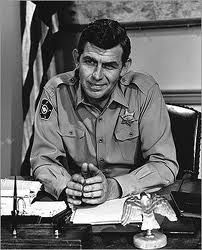
Yesterday, I watched the last episode of Centennial, which featured Andy Griffith. This morning I woke to the news that Andy Griffith had died. Everything that can be written will show up on the Internet in the next several hours, and there is not much that I can add. Except, The Andy Griffith Show is my favorite television show, and he portrayed my favorite television dad.

In the early days of this blog, I wrote a post about my fascination with his show, and I feel that it is appropriate to link it here.

Rest in Peace Mr. Griffith. You provided millions with laughter and enjoyment.

Only the Rocks Live Forever

3 Jul

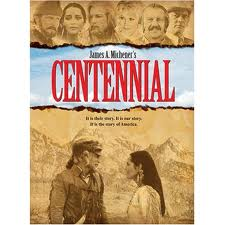
My dad and I just finished our multi-week project of watching Centennial, the 1970s miniseries covering the history of a fictional Colorado town. Lasting over 26 hours, the movie follows the lives of people who influenced the area and help found the town. Native Americans. Trappers. Mountain men. Pioneers. Farmers. Cowboys. The list goes on and on. All of the people you can think of from the history of the West are represented.

As we watched Centennial, several ideas swept through my mind. First was the fact that this was a well-made movie, and, although it was based on a work of fiction, accurately portrayed the history of the West better than just about any movie I have seen. It showed the lives of ordinary people and the complexities they faced. After all, they were living in a hard land that was taken from someone else.

Once my mind wrapped itself around the quality of the movie, the storyline began to remind me why I chose history as a profession. In the final episode, a historian shows up to research the town for an article. When he arrives in the village of 2,000 people, he wonders why he has been given the assignment of writing about a town he had never heard of with founders who only the locals remembered. Then, he began to hear the stories of the characters that we had been watching.

I suppose that I am not making sense, but the historian discovered that the little town of Centennial had an interesting history of regular people living regular lives. That’s what history is really about. Sometimes, we get caught up in the deeds of famous people and forget that history is made by everyone.

My next thought – actually, feeling – was a sense of sadness that hit me on several levels. Centennial takes the viewer through several generations of families, which means we are watching their lives and their deaths. We see them starting life with youthful exuberance and ending it after triumphs and tragedies. History isn’t just about the lives of people but also about their deaths.

As I watched the lives of these characters pass before my eyes, I also realized that my dad, like the older men in the movie, has already lived the majority of his life. He is the rock of our family and has accomplished more than I could ever imagine. Yet, he is getting more feeble as time passes, and there will be a time when he will pass away. Then, it will truly be up to my brother and me to carry on the beliefs and ideals of our family.

My dad and I have done a lot of things together. He took me to my first University of Tennessee football game when I was 6, and we have been going ever since. It’s just that he doesn’t make it to as many games as he used to. Together, we have traveled through all 50 states because he wanted me to see historic sites and natural wonders. I saw that watching this movie is another thing that we could do together. As we watched, he would have me pause it to tell him the real history of what the movie was portraying.
As the last episode ended, I was sad because a movie that I enjoyed and invested in had come to an end. I was sad because this experience with my dad had come to an end, and I fear the time when I will not be able to have more experiences with him. I was sad because the movie reminded me something that I had forgotten as I teach about people in the pages of history books. As a line in Centennial says, “Only the rocks live forever.”

Badge of Imagery

2 Jul

One of my favorite songs is Badge by Cream. When I saw Eric Clapton in concert, this was the song I most wanted him to play. Luckily, he played it before bringing his special guest, Vince Gill, on stage. Vince is the Nashville equivalent of bird shit. You see him everywhere. Anyway, Clapton played Badge, and I was lost in the guitars riffs and the words.

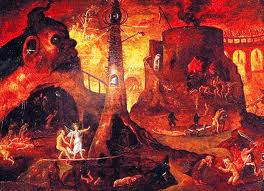
I was so inspired by Clapton’s performance that I wrote a short story based on the words. I’ve thought about posting excerpts from the story, but it is kind of dark. All of this is weird because I have no idea what the song is about. The lyrics sound nonsensical, but I reckon a lot of songs do. No matter. I know what I visualize when I hear the song. As I did with Somewhere Down the Crazy River, I have decided to visualize Badge in blogosphere form.
Thinkin’ ’bout the times you drove in my car.

Thinkin’ that I might have drove you too far.

And, I’m thinkin’ ’bout the love that you laid on my table.

I told you not to wander ’round in the dark.

I told you ’bout the swans, that they live in the park.

Then, I told you ’bout our kid, now he’s married to Mabel.

Yes, I told you that the light goes up and down.

Don’t you notice how the wheel goes ’round?

And, you better pick yourself up from the ground

Before they bring the curtain down.

Yes, before they bring the curtain down.

Talkin’ ’bout a girl that looks quite like you.

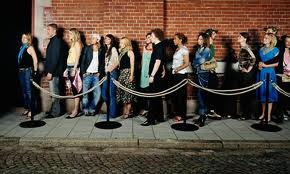
She didn’t have time to wait in the queue.

She cried away her life since she fell off the cradle.

Guess what. After all of that, the song still doesn’t make any sense.

109 in the Shade

29 Jun

The thermometer on my car registered 109 degrees a few minutes ago. As the old folks around here say, it’s hotter than blazes, with blazes being the Bible Belt term for Hell.

It’s hot in the South during this time of year, but this is way out of the norm. Add the fact that it has barely rained in a month, and things are getting a little parched. Local boy, Al Gore, must be jumping for joy. With the mercury hitting 109, I figured it would be a good opportunity to honor that important number. So, here are all things One Zero Nine.

109 – the atomic number for meitnerium. However, I am not scientifically-minded enough to tell you what meitnerium is.

Highway 109 – a state highway that runs from the Tennessee/Kentucky border to my town. Along the way, it passes through such places as Portland and Gallatin. Once, I went on a date with a girl who lived on this road, but she wouldn’t return my calls afterward. I wonder what happened.

109 Department Store – a shopping destination in Japan that was designed to attract 30-something females. Instead, it became a haven for those in the Gyaru subculture. I don’t know what that is, so I Google-imaged it. Looks like girls trying to be living Anime characters.

Starbase 109 – I am not sure how to describe this, so you might want to check it out here.

109th Congress – This bunch, led by Nancy Pelosi and Harry Reid, was known as the “Do Nothing Congress”. Damn, I wish the Washington crowd would start doing nothing again. An inactive politician is a lot better than a proactive one. That way they can’t mess anything up.

109 AD – Kush was under the rule of King Teqerideamani.

109 BC – Spartacus – leader of rebel slaves; inspiration for a Kirk Douglas movie; inspiration for a cool television show with lots of sex and violence – was born.

That’s it. Hopefully, the temperature hasn’t climbed as I have been writing this.