I Went Down to the Crossroad

15 Mar

I just returned from an excursion to Tunica, Mississippi with my parents. I gambled and lost. I ate a lot of food. I did not find any prostitutes. However, the highlight of the trip was a drive south on Highway 61 to Clarksdale, Mississippi, a town that I have been wanting to visit for a long time.

I only knew a couple of things about Clarksdale. It is one of the places that claims to be home to the crossroad where Robert Johnson sold his soul to the Devil in return for being a great Blues guitarist. The junction of Highway 61 and Highway 49 is marked by a sign commemorating the spot.Clarksdale 5
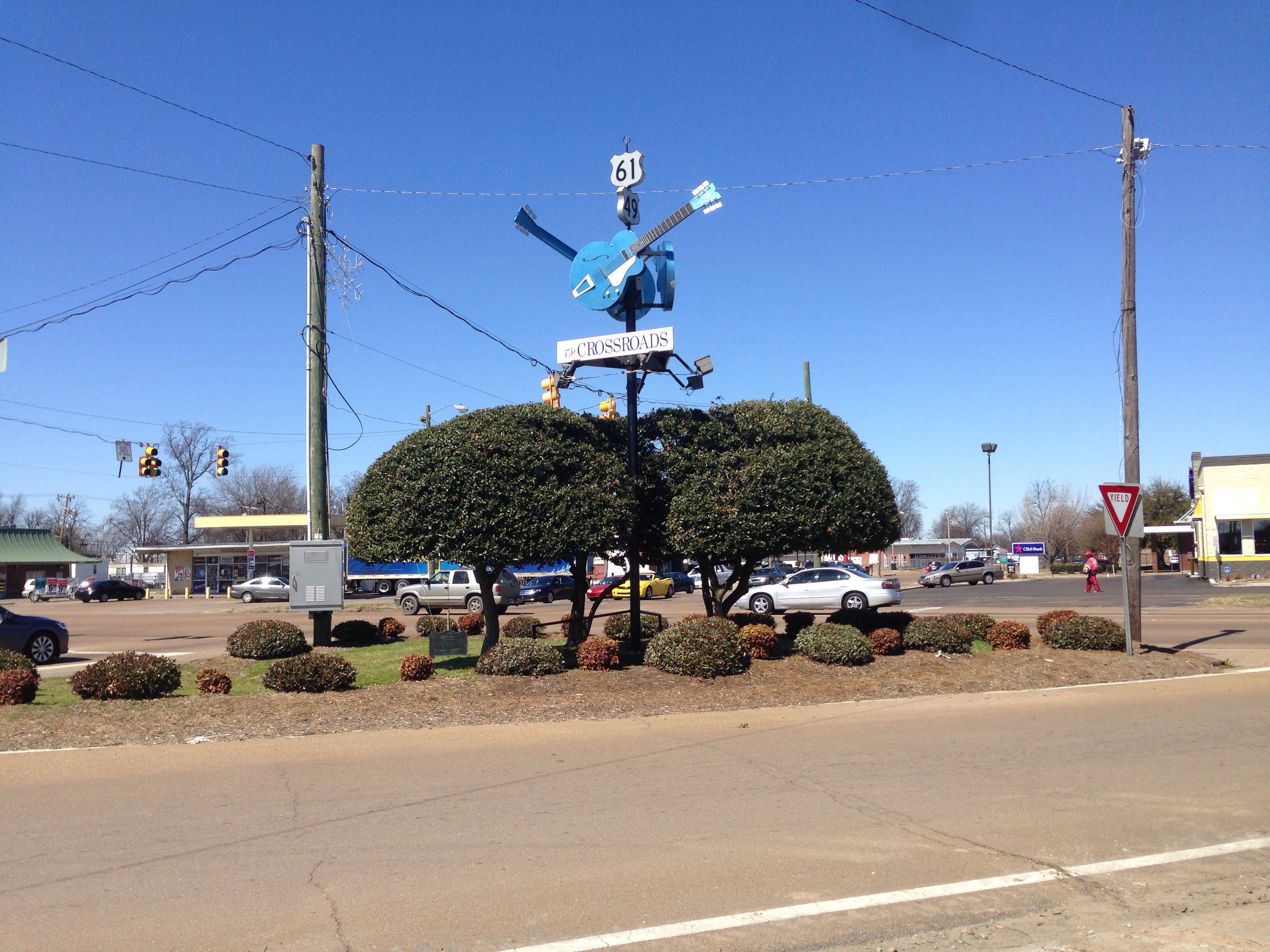
As I got out to take a picture, I wondered if this was the real crossroad. Then, I wondered why I was wondering about a place that claims to be the location of an event that is more myth than fact.

No matter what happened at what crossroad, Clarksdale has built itself as the center of the Blues universe because of that legend. It hosts music festivals and is home to our next destination, the Delta Blues Museum.Clarksdale 1
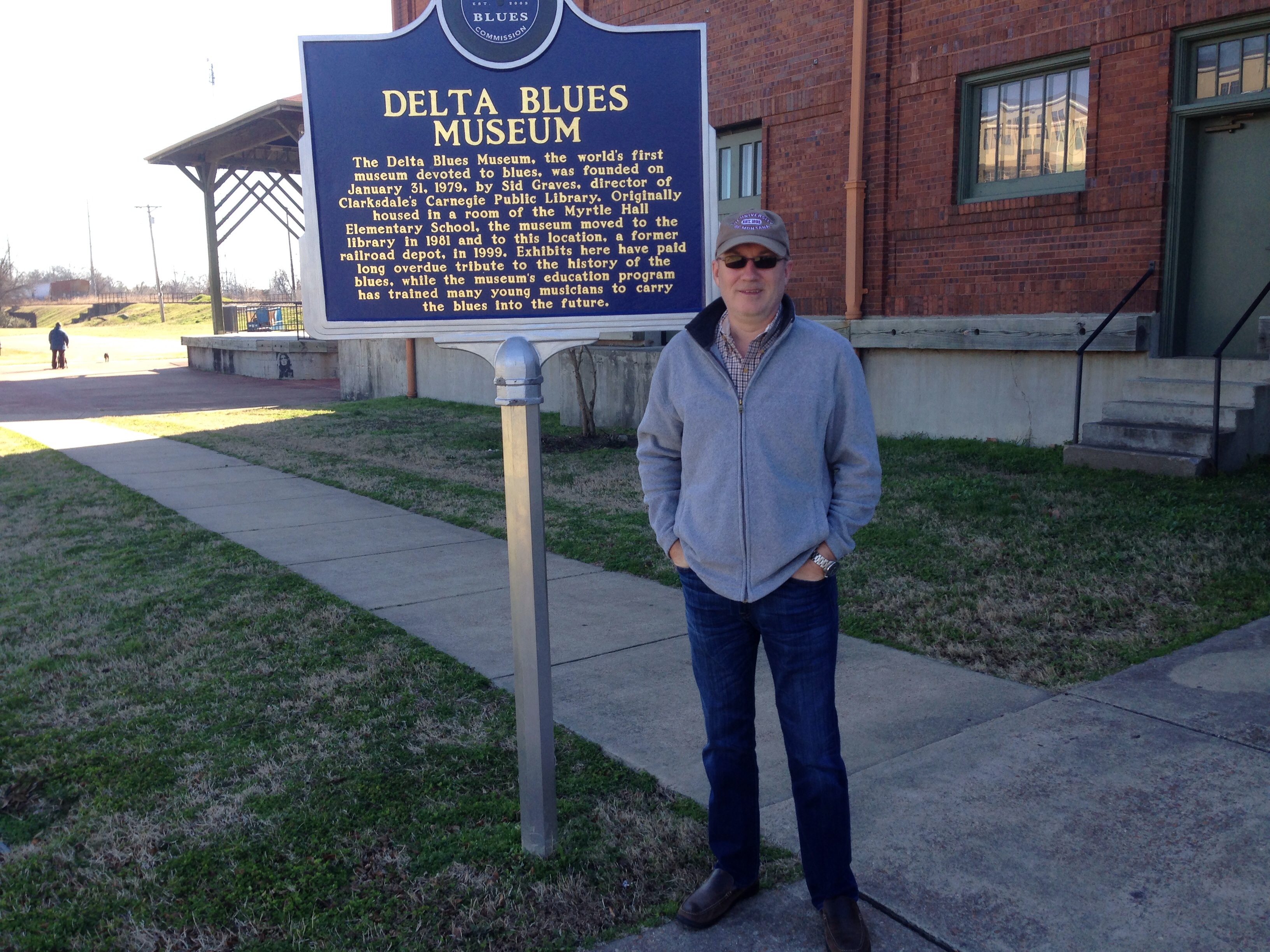
This is a cool museum with all kinds of interesting artifacts. It is also where I learned that there is more to the town’s legacy than a legend at a highway crossing. It is the birthplace of Sam Cooke, John Lee Hooker and Ike Turner, who is famous for being the abusive husband of Tina Turner. Before that, he was known as the piano player on “Rocket 88“, which is considered by many to be the first Rock n’ Roll recording.

People who lived in Clarksdale include the aforementioned Robert Johnson, Muddy Waters and W.C. Handy.

At the museum, I picked up a town map that marked all of the historic locations. That is when I found out that a couple of other famous people lived in Clarksdale.

Charlie Conerly, a hometown hero, was quarterback for the New York Giants throughout the 1950s. However, the biggest surprise was discovering that Tennessee Williams lived there as a child when his grandfather was assigned to a local parish.

The town is not that large, and it did not take long to find the historic markers. We started with the marker for W.C. Handy, known as “Father of the Blues.” The museum claims that is more to good marketing than actual influence.Clarksdale 2

Next, we drove across downtown to the Tennessee Williams Park, which sits around the corner from his grandfather’s church.Clarksdale 3
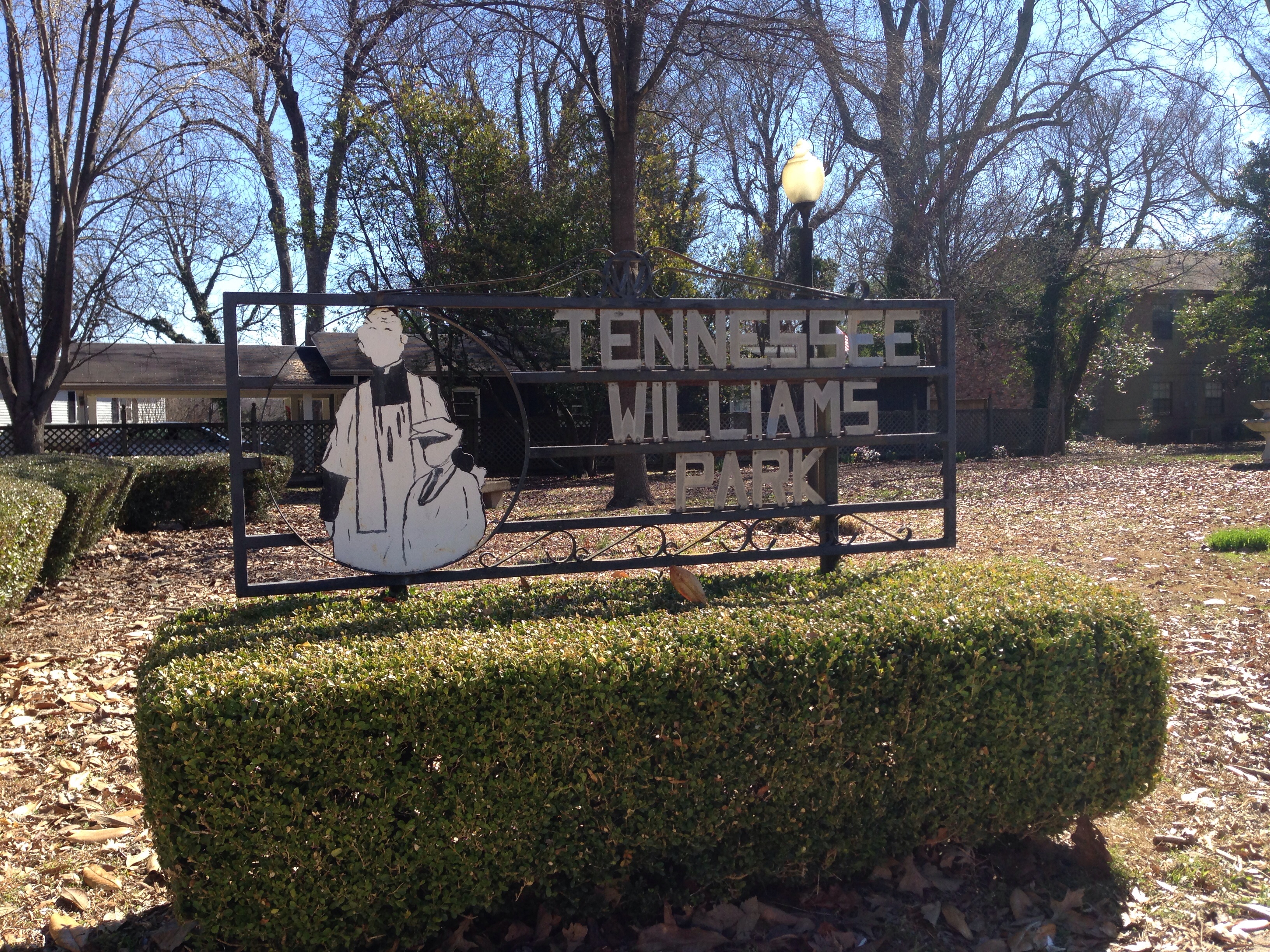
This is where I learned that Williams got some of his characters from people he knew in Clarksdale. Down the street sits the Cutrer Mansion, the home of Blanche Cutrer and her husband. It seems to me that there is a character in one of his plays named Blanche.

After taking a drive past the palatial homes in this neighborhood, we went back across town to the other thing I knew about Clarksdale. It is home to Ground Zero Blues Club, owned by Morgan Freeman.Clarksdale 4

Here are my parents in front of the Ground Zero sign.Clarksdale 6
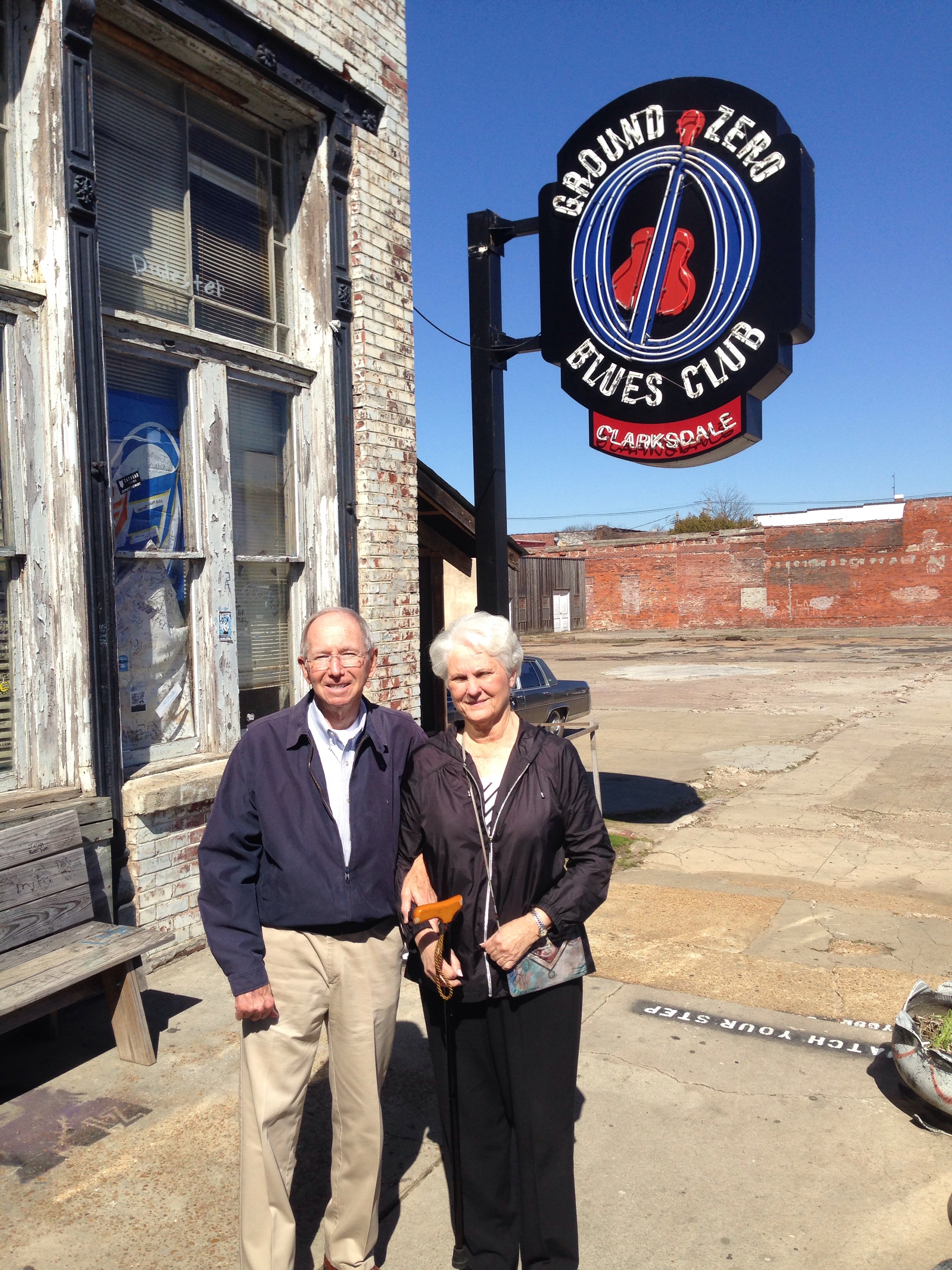
The club served lunch during the day, but we were disappointed. It was not that great. However, the waitress did a good job. My mom asked a lot of questions about Morgan Freeman, and I am sure that they were questions that the waitress has heard many times. He lives in Mississippi when he is not filming and comes by quite often. In fact, he has an apartment upstairs. He is humble but, as the waitress described, “smells like money.” I reckon that was her way of saying that he tries to hide his success, but everyone knows he is rich and famous.

We finished our meal and drove past the famous crossroad on our way out of town. However, that is when I started thinking about the place we had just seen and how it may have looked back in the old days. I started by wondering how the crossroad looked back then. If Robert Johnson made his way to this place, then was it a dirt crossing in the middle of cotton fields like I have always imagined? Or, was it a group of shacks on the outskirts of town where people lived and survived?

Whatever it looked like, I imagine that it was completely different from the neighborhood Tennessee Williams and Blanche Cutrer lived in. That was the home of the landed gentry who owned the cotton fields surrounding the town and the businesses within the town.

Clarksdale’s downtown, which can be walked across easily, is an interesting place. Although the buildings are now old and worn, they are signs that Clarksdale was once a thriving place. The buildings are multi-storied and must have been grand in their day. There are facades of banks and other lucrative businesses. There is no doubt that this was once a place of money.

However, that money flowed to one side of town. The other side of town, literally the other side of the tracks, was where those who left the fields of sharecropping to make their way, congregated and lived. This is where the Blues could be heard, and small African-American owned businesses could be found.

The two sides of town were within walking distance but were worlds apart. Downtown must have been the intersection. I could see people like Brick, Maggie the Cat and Big Daddy walking the streets and talking about “those people” when they saw them across the street. In the real world, “those people” were Sam Cooke, Muddy Waters, John Lee Hooker and Robert Johnson.

I wonder what the landed gentry would think about the modern version of their town. While their houses remain, they are not why people travel to Clarksdale. People come to Clarksdale because of the music that was made on the other side of the tracks. People come to Clarksdale because of the music that was inspired by the conditions that people on the other side of the tracks found themselves in. People come to Clarksdale to celebrate their accomplishments and not the accomplishments of the ones who thought they would be remembered.

By the way, the richest man in town is an African-American who “smells like money.”

As we drove out of town, I wondered what the landed gentry would think about that.
The Makers of Legend

11 Mar

This semester, I am teaching Expansion of the United States and had my students read The Searchers: The Making of an American Legend by Glenn Frankel, an excellent study of how a historical event can get turned into a movie.

The book is chronological, and the reader can see how the story continues to evolve as different people use it for different reasons. I will not go into great detail, but, as the story gets passed on, those who tell it do so with various reasons. In the end, the story barely resembles the reality, and the reality, to many, would be more interesting.

I chose this book because I want my students to know that there is more to history than what happened in the past. History is also about who interprets it and when they do that. I believe it is as much about the people looking into the past as it is about people who lived in the past.

One of my favorite movie lines comes from The Man Who Shot Liberty Valance. When Senator Ransom Stoddard finished telling reporters about his life and what happened in the town of Shinbone, Maxwell Scott, the newspaper editor, rips up the notes and throws them into the fire.Print the Legend

Ransom Stoddard: You’re not going to use the story, Mr. Scott?

Maxwell Scott: No, sir. This is the West, sir. When the legend becomes fact, print the legend.

That line conveys the difficulty that historians of the American West, or any other history, faces when trying to find out what happened way back then. Dime novels. Newspapers. Journals. Diaries. Inaccuracies and embellishments can be found everywhere.

However, it is not just those who record history who cause problems. Those who took part in history do the same. In the book I mentioned, the story was being told incorrectly from almost the beginning, and those incorrect accounts were coming from people who were there.

This brings me to a video I stumbled upon while scanning through YouTube. It is called The American West of John Ford and should be watched by anyone who likes the Western genre. John Wayne, James Stewart and Henry Fonda reminisce about working with Ford and take turns interviewing him.

During those interviews, all of them freely admit that Ford was not interested in depicting historical accuracy. He was interested in telling stories within a Western backdrop. He used the genre to study the human condition. However, there was one part of the documentary that got my attention.

While talking about My Darling Clementine, about the actions at the OK Corral, Ford said that Wyatt Earp had personally told him what happened at the gunfight and drew a map for him. In the movie, Ford depicted the gunfight just as Earp had described. According to Earp, a stagecoach came by, and he used it for cover to get closer to those he was after.

I have read a ton about Wyatt Earp and the OK Corral. I have been to Tombstone, Arizona and stood where the gunfight took place. At no point have I ever heard about a stagecoach being used as cover. It could have happened, but that would be a new take on it for me. Hopefully, a historian can tell me that I am wrong, but I do not think a stagecoach had anything to do with it.

So, who are the makers of legend? Was it John Ford, a director who admitted to not caring about historical accuracy? Was it Wyatt Earp who could have embellished a story to impress his Hollywood friends? Was it the director of the documentary who included that story in his movie? Is it me for writing about it?

The Yard Dog Award – Lights, Camera, Action

8 Mar

Last night, it hit me. I know who should receive the first Yard Dog Award.Yard Dog

Almost a year ago, there was some activity at a house in our neighborhood. When my wife drove by, she saw some activity. There were a lot of cars and people taking stuff into the house. My good friend who lives down the street saw the same thing. Unfortunately, I did not see anything because I was at our university’s graduation.

Anyway, they did not think anything about it. They could have been having a party or some other sort of get together. Well, a get together it was. The next week, my friend who lives down the street told me that they were filming a porn movie. Yep. They filmed a porn movie in our neighborhood.

Since that time, we have heard more about the story. The police were called. One neighbor went over and tried to beat someone up. Another neighbor called authorities and kept screaming, “It’s Sodom and Gomorrah! It’s Sodom and Gomorrah!”

Everyone was up in arms except for those of us who did not know what was going on until after the fact. If my wife and my friend had realized what it was all about, then they may have paid closer attention.

With all of that being said, the first Yard Dog Award goes to the people who filmed a porn movie in our neighborhood.

A Dog Named Whiskers

5 Mar

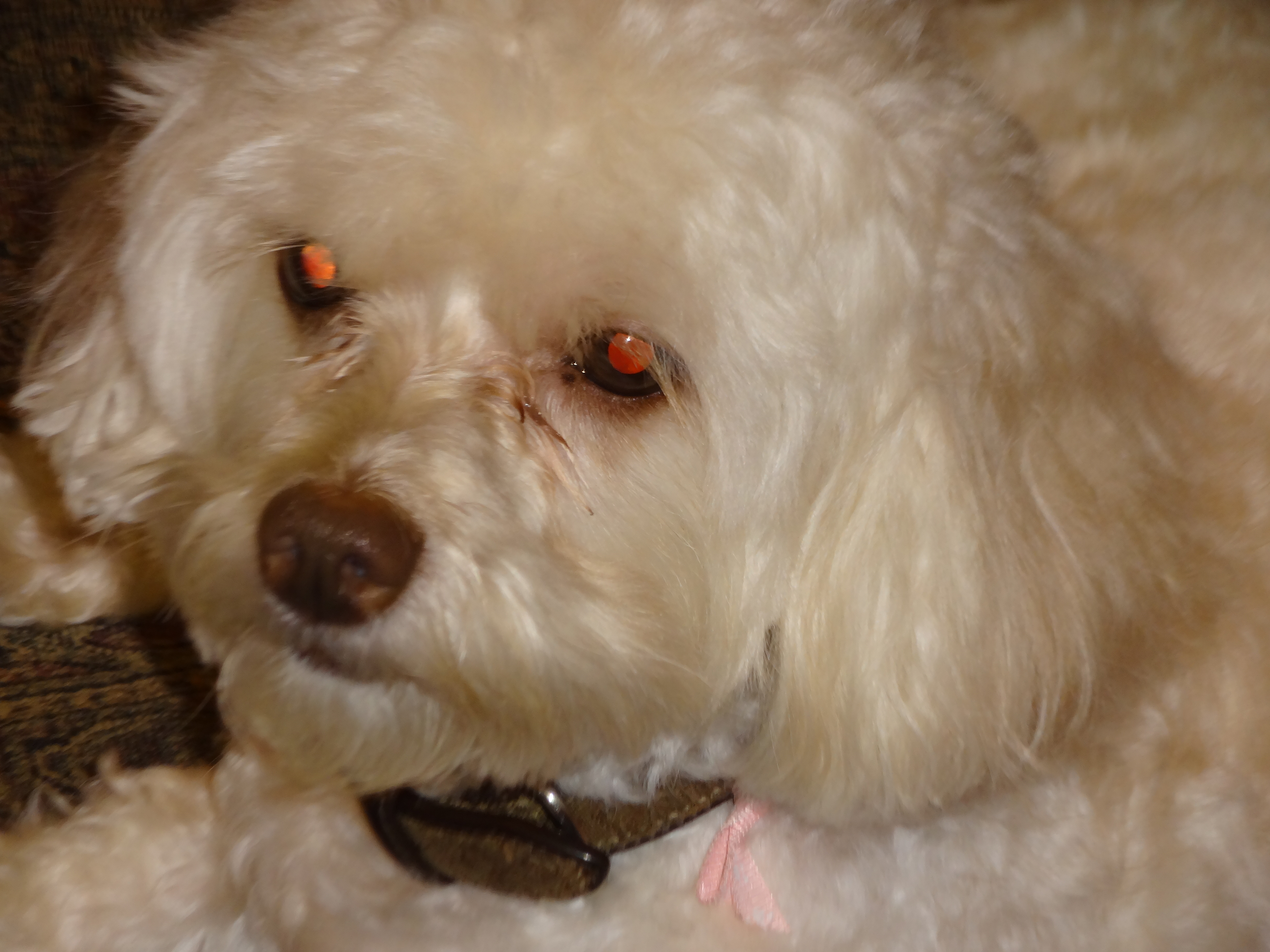
I have noticed that lot of people blog about their pets. Turtles. Cats. Dogs. Animals seem to make good stories. We have a dog named Daisy.Cancun 214

In that picture, she looks like a devil dog, but she is a good pet. She is smart and tough. I have seen her back down deer, and, one time, she stared down a possum. Daisy is a little dog, but intruders need to watch out if they come around here.

Daisy is the only pet I have ever had. Actually, I had a pet calf once. He was black but had a white face. One day, the calf was gone, and my dad gave me $900 to put in the bank. At some point, I realized that he was auctioned at the local sale barn.

I guess I should say that Daisy is the only pet that I have had for a long period of time. When I was a little kid, my parents bought a dog for me. I have no idea what kind of dog he was. I only remember that he was brown and had floppy ears. For some reason, I named him Whiskers.

He was only a puppy, and he moved around a lot. I can remember playing with him on the back porch. However, Whiskers did not stay around very long. My dad traveled a lot and probably did not have the time to take care of him. My mom still has an intense fear of dogs. When she was a kid, her aunt would babysit her. To keep my mom from leaving the house, her aunt told her that the dogs outside would get her. That left a huge impression.

So, a dad who did not have time to take care of a dog and a mom who was terrified of dogs bought Whiskers for me. That had a happy ending written all over it. I have no idea how long Whiskers was around, but it was not long before he was gone. They must have come to the conclusion that it was not a good idea. Maybe, they felt that I was not playing with him enough.

Whatever the reason, Whiskers was my pet for a short time. I have no idea where they took him, but I have always hoped it was somewhere good. Through the years, I have wondered about Whiskers. Did he have a good life? I hope he did.

Now, we have Daisy, but I have always thought that one day I would have another dog named Whiskers.

Remember: No Matter Where You Go, There You Are

4 Mar

I have been saying that line, or something similar for many years. However, it was not until today that I realized where I picked it up.

This winter, the South has been hit with some rough weather. There has been ice, snow and freezing temperatures. However, in this little pocket of the South, we have only gotten the cold air. No precipitation. People have been calling it the Snow Dome, a shield protecting us from the fate of others.

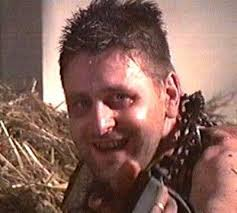
Whenever I read something about the Snow Dome, my mind goes to the 1980s and Mad Max: Beyond Thunderdome, the second best movie in the Mad Max trilogy. Today, the Snow Dome failed, and ice descended upon us. I took to Twitter and blamed Aunty Entity for hiring Max to fight Master Blaster, an event that ended the Thunderdome era.Mad Max

That sparked some movie quote exchange between me and one of the Twitter folks out there. That, in turn, led me to discover that the saying I have been quoting all these years came from that movie.

Remember: no matter where you go, there you are.

When I use it, people usually look at me like I am crazy. However, I think it is a profound statement that means we cannot run away from ourselves. We all have problems and issues that need to be resolved. We have worries. We have stress. We have psychological aspects to ourselves that we would like to ignore.

Some people think they can get away from all of that by moving to another part of the world. Some people think they can get away from all of that by getting away from the people in our lives and throwing ourselves into the world of others. Some people think they can get away from all of that by losing themselves in an artificial high.

However, we cannot get away from all of that because it is all part of who we are.

No matter where you go, there you are. We cannot run away from ourselves and our internal problems. We can only face them and deal with them the best we can. Sometimes, like in my case, a good therapist is the answer, but that is not the only way.

Each of us is unique, with unique problems and unique ways of dealing with them.

Just keep in mind the wise words of Pigkiller, who I have unknowingly been quoting all of these years.Pigkiller

No matter where you go, there you are.

The Yard Dog Award

3 Mar

There is an old saying in these parts that is used to describe someone who has done something that would not be acceptable in polite society.

“You are as common as a yard dog.”Yard Dog

I have heard it said many times, and it even became a contest of sorts for me and my college roommates. We came up with the Yard Dog Award, and the roommate who acted the most common that week could proudly display the trophy in their room. Yes, we had a trophy made. I have no idea who won it the most, but Robert, Greg, Chris and I all did our best to dominate the competition.

A few weeks ago, Robert and I went out on the town, and we started talking about the award. The main question was – “What happened to the trophy?” It is lost to the ages.

However, I have decided to resurrect the Yard Dog Award for this blog. Occasionally, I will find someone out there who deserves the trophy and explain why that is. This is just an introduction, and I have no one in mind. If any of you have a nominee, then please let me know. Surely, you know someone who is common enough to receive it.

What Hath Bell Wrought

28 Feb

This week, I have been telling my classes about some of the technological advances of the late 1800s. That was a time when inventors experimented in labs throughout the world to develop the next great invention. One of those, the telephone, greatly impacted communication and continues to be an integral part of our lives.

(Interesting Trivia: The telephone was up and running before George Custer was killed at Little Big Horn; before Wyatt Earp became a lawman in Dodge City; before Jesse and Frank James attempted a failed bank robbery in Northfield, Minnesota; and before Rutherford B. Hayes was elected president.)

Alexander Graham Bell is known by most as the inventor of the telephone. Of course, there has been debate about who invented it first, but he is the one who took the invention and made it a part of everyday life. This post is not about who invented it. Instead, it is about what we discussed in class.

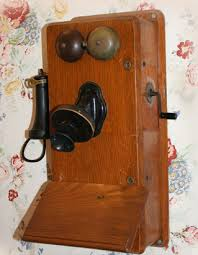
I took the students through the evolution of the phone. We talked about party lines and how neighbors could listen to your conversations if they were so inclined.Party Line

We talked about how operators used to connect calls by sticking wires in the proper sockets.Operator

We talked about rotary dials, when people had to stick their hands in the proper holes and turn the dial. Then, they listened to it click as it moved back into place.Rotary Phone

We talked about phones with long cords that became tangled and stretched.Phone Cord

In short, we talked about things that they had never seen.

The telephone was a great invention and has alter the direction of humanity. However, I noticed something as I talked about the history of the telephone. Several of the students were not listening because they were playing around with their iPhones and Droids. While I was going over the virtues of the telephone, they were taking part in the bad side of the telephone.

For teachers, or anyone else who needs to have the attention of a group of people, telephones are the work of Satan. They are distractions for the ones using them, and they are distractions for the rest of us. These things have become attachments that people cannot do without.

On the first day of class, I tell everyone to stay off their phones. No texting. No tweeting. Put them away and do not look at them. I may as well be whistling in the wind. People cannot put down their phones. I am convinced that Steve Jobs was the most successful drug dealer in the history of the world. We cannot do without his product.

Just once, I would like to go back to the old days and have a class where no phone was in the room. Students would still daydream or stare out of the window. At least there would not be the blatant act of picking up a phone and looking at it and providing physical proof that they just do not care.

Ironically, I had to stop talking about the history of the telephone to tell people to get off their phones. As I walked out of class, I began to wonder what hath Bell wrought.

There Is Not Much Quite Like

27 Feb

While walking on the treadmill, I started thinking about how lucky I have been. That luck has come in numerous ways, but I was specifically thinking about travel. My mind went to some of the great places I have visited and the great sights I have seen.

There is not much quite like…

drinking wine in the chateau of Inglenook Vineyards.Honeymoon 016

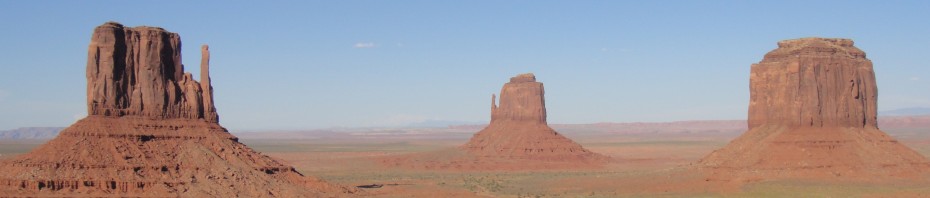
catching the sun set over the buttes of Monument Valley.West 2010 232

hearing the water break on the USS Arizona Memorial at Pearl Harbor.

leaving an offering at the grave of Wild Bill Hickok in Deadwood, South Dakota.

watching the Potomac River flow behind George Washington’s home at Mount Vernon.

feeling the power of water rushing over Niagara Falls.

zip-lining through the trees of north Georgia.

climbing the mesa at Ghost Ranch and looking the landscape often painted by Georgia O’Keefe.SONY DSC

sitting on the porch of the Old Faithful Lodge and watching buffalo roam through the geysers.

lying in the grass of Jackson Square and eating a beignet from Cafe Du Monde.

floating down the Rhine River and looking at the castle ruins passing by.

staring at the presidential faces of Mount Rushmore.

playing Blackjack at a Las Vegas table and watching the chips come and go.

touring Graceland and seeing The Outlaw Josey Wales playing in the TV Room.

hanging out on a beach in Cancun and watching my stepdaughter play volleyball.Cancun - Volleyball

strolling through the Vatican and trying to get a glimpse of the pope.

reading a book by a pool in Costa Rica.

climbing a waterfall in Jamaica.

being mesmerized by the killer whales and bald eagles in Glacier Bay.

dancing to “Me and Mrs. Jones” in a nightclub in Chicago.

standing in silence at the bombing memorial in Oklahoma City.SONY DSC

trying to see the tops of the Giant Sequoia in California.

driving through Hereford, Texas and passing thousands of head of cattle.

betting on Jai Alai in Florida.

lounging on the couch and watching television with my wife.

The Fab(ricated) Four

25 Feb

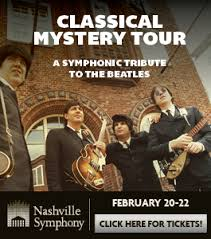
This weekend, my wife and I went to the Nashville Symphony with her dad. We do this quite often, as it is always a great performance in a great venue. However, this performance was a little different. The Classical Mystery Tour is a band that impersonates The Beatles with the backing of an orchestra.Classical Mystery Tour

I had read great reviews about the show but was not prepared for how cool it was. Impersonators can be hit or miss, and these guys definitely hit. They had the voices. They had the mannerisms. “Paul” played a left-handed guitar when he was actually right-handed. They also had the clothes. The band started with the mid 1960s suit look and changed into the Sgt. Pepper look. Then, they went to a 1970s style with “John” wearing his famous white suit.

I liked the entire show, but a few moments stood out. Hearing “Live and Let Die” with an orchestra was awesome. I know it is not a Beatles song and saying it was my favorite could be considered sacrilege, but it was awesome. I also liked “Imagine”, another solo effort. When it comes to actual songs by The Beatles, their rendition of “The Long and Winding Road” was great.

It was during “The Long and Winding Road” that my mind starting going to places other than the Schermerhorn Symphony Center. It went to a young man lying in the dark with his headphones on. That was me, and that is what I used to do every night before going to sleep. I cannot count the number of nights that I woke up with music still playing in my ears.

“The Long and Winding Road” was exactly the type song I would listen to. It is slow, melodic and, in my mind, kind of sad. Of course, I like all kinds of songs and have a fondness for heavy metal, but the slow and sad ones have always held an attraction for me.

As I listened in the dark, I would imagine myself being the sad one in the song. I would bring up any heartbreak or hurt that I had experienced and used it to bring up a melancholy mood. It may have been fatalistic and was definitely emotional martyrdom. However, that was me. I was always bad about imagining myself as the one in the movie who gave up the girl for a later cause. I guess that would make me Humphrey Bogart in Casablanca.

In the dark, I would listen to these sad songs and play movies in my mind. In those movies, I was always the one who watched others walk away or was the one who was doing the walking away. I guess that is why I ended up having a good time in therapy.

I do not do that anymore. I still listen to sad songs, and they still entertain me. However, I do not place myself inside of them. I listen to them as an outsider who is happy with where he has ended up in life. Placing myself in sad songs probably meant that I was not happy with where I was in life. Now, that is not the case. I am happy with where I am.

That is a song with a different verse. That is also where my mind went as “Paul” sat at the piano and sang “The Long and Winding Road” as the orchestral sounds filled the room.

Picture This – Little Bighorn

24 Feb

Montana 2012 and Other Stuff 126

On June 25, 1876, George Custer and part of the 7th Cavalry charged into a Sioux encampment on the banks of the Little Bighorn River. The events that followed would become one of the most famous battles and most famous defeats in American history.

Many people in this part of the country can go to a Civil War battlefield and know the details of what happened there. I can do that at Little Bighorn. I first visited the battlefield in Montana when I was a kid and have been back several times. However, it was not the event that first gained my attention. It was the white markers scattered around the landscape.

At some point after the battle, marble markers were placed where soldiers had fallen. Some of them are not accurate, and they have since caused controversy. Native Americans have wondered where the markers for their fallen have been. In recent years, a few markers have been placed for killed warriors.

This post is not about the inaccuracies or the controversy. It is about the effect. For me, the markers make the battle seem like it happened a few days ago. I can scan the battlefield and see where people fell. I can see where some made a stand and others died alone. I can look at the markers and see the battle in my mind. I can listen to the wind and hear the sounds of the fight.

Civil War battlefields do not provide the same effect for me. I can study a battle and know the troop movements, but the land looks like a peaceful field. At Little Bighorn, the individual markers remind me that blood was shed on the expanse.

A few years ago, I went to the battlefield with my dad, my brother and my nephews. We stood on Last Stand Hill, where Custer’s body was discovered, and my nephew filmed me talking about the battle. I looked over the landscape and pointed to where everything happened. I provided accounts from warriors and military records. It was a thrill to be able to do that on site.

When I finished, I turned around to find a busload of people listening to me. Apparently, I had drawn a crowd. I answered a lot of questions, but I really wanted to tell them to look at the markers. They are why I have read so much about the battle. They are the genesis for why I studied the American West. For me, they are what makes Little Bighorn a spiritual place.